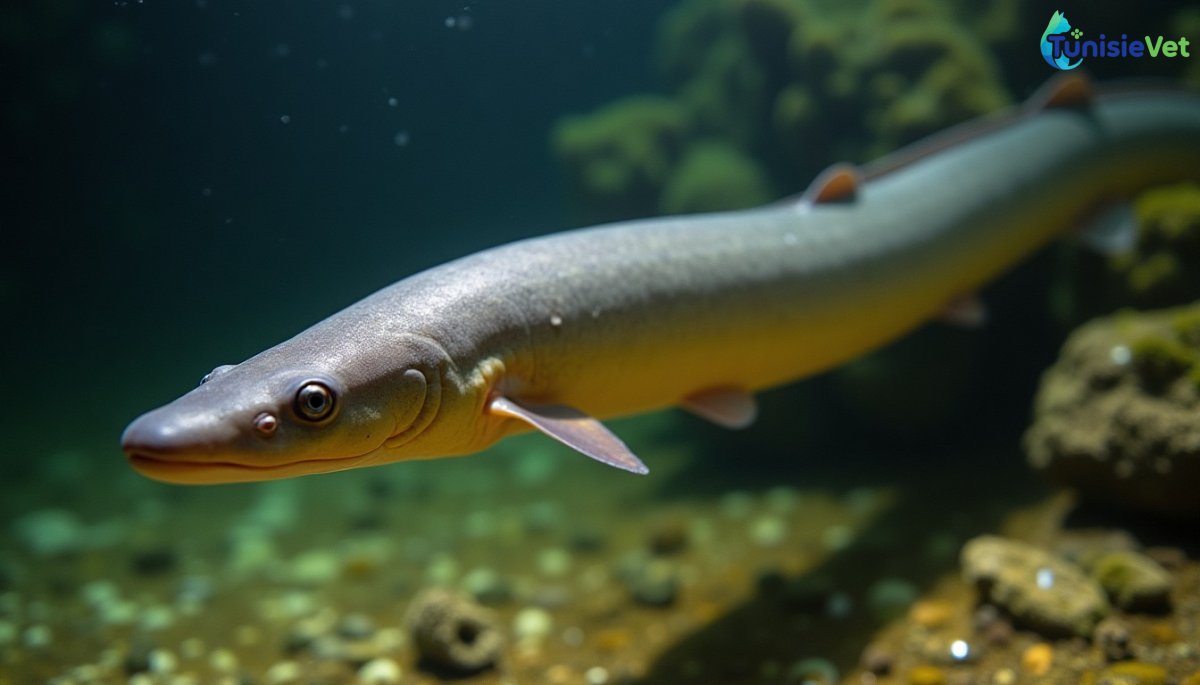
How can a fish with no pectoral fins paralyze its prey from a distance, without ever touching it? The electric eel relies on a trick few animals share. Its secret lies in thousands of muscle-derived cells that have turned into tiny batteries.
Publicité
Publicité
Each of these cells produces only a very weak voltage, around 150 mV. But they are stacked in series, like batteries in a flashlight, so their voltages add up. When they discharge together, the total can reach several hundred volts, with a current of up to 1 A.
The shock is not only about electrocution. Rapid bursts, around 400 Hz, activate the prey's motor nerves from a distance, forcing its muscles to contract against its will. In one cited experiment, immobilization occurred on average 2.9 ms after the discharge. Researchers have not yet settled exactly where the signal is relayed.
When the prey is hard to handle, the eel seizes it in its jaws and wedges it between the two poles of its electric organ.