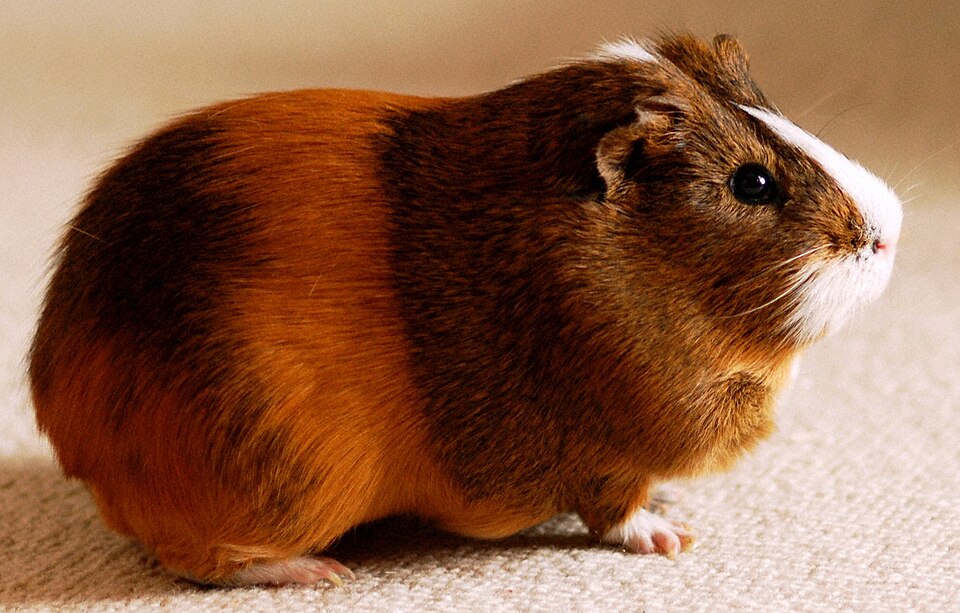
Guinea pigs squeal because they have a rich and codified vocal repertoire, each sound corresponding to a specific context: the famous “wheek” signals food anticipation, often associated with the sound of the refrigerator or the bag of pellets. It is a gregarious species for which sound communication is vital, including towards humans.
Publicité
Publicité
A learned and social language
The “wheek”, this high-pitched and repeated cry, is not only innate: Inge pigs raised in captivity quickly associate it with signals announcing food (door opening, crinkling of packaging) and emit it more and more loudly as learning is reinforced. This cry carries far, a trait inherited from their gregarious life in social groups where information must circulate quickly between individuals dispersed in the vegetation.
Other vocalizations code different emotional states. Cooing, a low, modulated sound close to a purr, appears during soothing contact, between a mother and her young or between partners who groom each other. Conversely, clicking teeth, dry and repeated, signals annoyance or a threat, often accompanied by a frozen posture or a backward movement, warning before a possible bite.
The repertoire also includes growls during courtship, high-pitched cries of pain or fear, and small chirps whose function remains debated among researchers. This vocal diversity reflects the complex social organization of the species, naturally living in small hierarchical groups.
Loneliness, a proven stress factor
The guinea pig is an obligate social species: in captivity, an isolated individual vocalizes differently, sometimes with a general reduction in sound exchanges, an indirect sign of discomfort. Maintaining in pairs or groups is therefore recommended to preserve the normal expression of this repertoire and the well-being of the animal. If marked changes in vocalizations or apathy appear, a veterinary consultation remains the preferred approach.