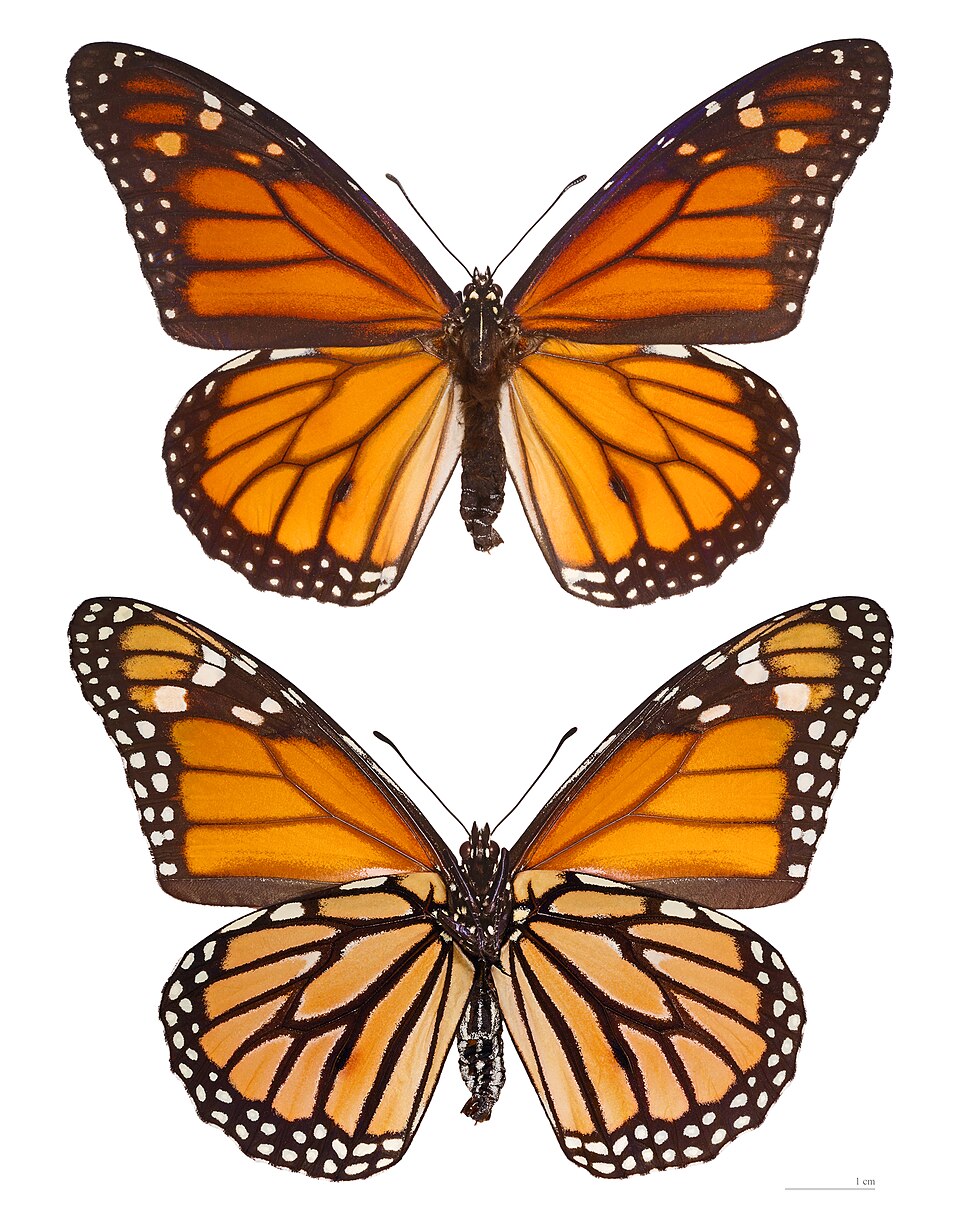
In the chrysalis, the monarch caterpillar does not simply transform: most of its tissues are digested into a cellular soup, from which groups of cells already present from the egg, the imaginal discs, develop to build the wings, legs and antennae of the adult butterfly.
Publicité
Publicité
An almost total reconstruction, but not absolute
A few days after the formation of the chrysalis, the caterpillar releases enzymes which liquefy most of its muscles, its intestine and its skin. This histolysis process, however, leaves certain elements intact: the central nervous system, part of the respiratory tracheas, and especially the imaginal discs, small clusters of undifferentiated cells placed in reserve since the embryonic stage. Each of these discs is programmed to give a specific organ of the adult: a pair for each wing, one for each leg, one for the antennae. Nourished by the surrounding cellular mush, they multiply and differentiate within a few days to reconstitute an entirely new body, adapted to flight rather than the crawling, grinding life of the caterpillar.
What makes the case of the monarch particularly studied is the persistence of the nervous system through this cellular chaos. Olfactory conditioning experiments showed that caterpillars exposed to an odor associated with a slight unpleasant stimulus continued, once they became butterflies, to avoid this same odor. Part of the memory acquired in the larval state therefore goes through metamorphosis, even though the body which carries it has been almost entirely dismantled and rebuilt.
Why this discovery marked research
This result was surprising because it suggested that specific neuronal circuits, and not the entire nervous system, survive histolysis rather than being recreated from scratch. The subject remains debated: the exact mechanisms of conservation of this memory, and its real extent in other species of lepidoptera, are not yet fully elucidated. It nevertheless illustrates that the metamorphosis of the monarch, although radical on an anatomical level, does not start completely from scratch on a neurological level.