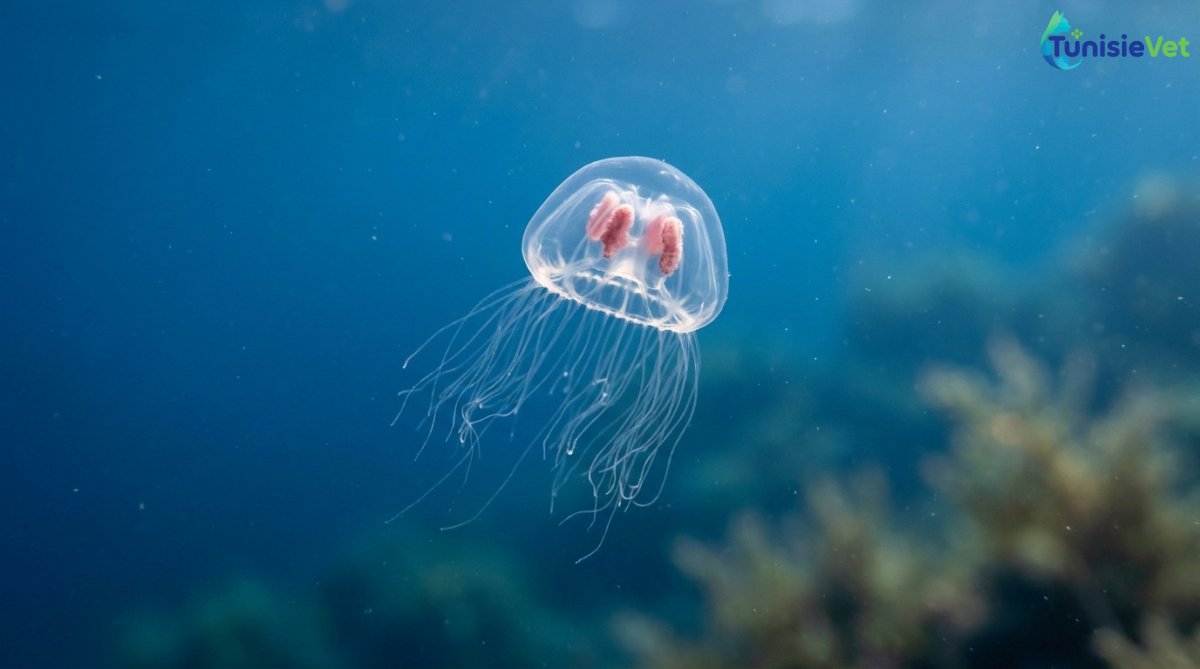
In a small Mediterranean jellyfish, death is not always the final word. When an individual is injured, weakened or ageing, it does not necessarily disappear: it seems to rewind its own life. How is that possible?
Publicité
Publicité
The species concerned, Turritopsis dohrnii, responds to physical damage, unfavourable conditions or ageing by reverse development. The jellyfish first turns into a mass of poorly specialised cells, called a cyst. This cyst then transforms into a polyp, a fixed juvenile stage that normally comes before the jellyfish in the life cycle.
The most striking part happens inside the cyst. During this transformation, a fully mature cell can switch to another cell type, a process called transdifferentiation. Gene expression analyses suggest that DNA repair and telomere maintenance are strongly active there, while classic cell division appears to be slowed. These are leads, not proof.
It would be wrong to conclude that these jellyfish are immortal. They remain vulnerable to predators and disease, and the importance of this phenomenon in nature has yet to be established.