Records & extremesOcean & seaAfricaEuropeAsiaAmericasOceaniaPolar regions
Which animal has the biggest brain?
494 views · 1 month ago
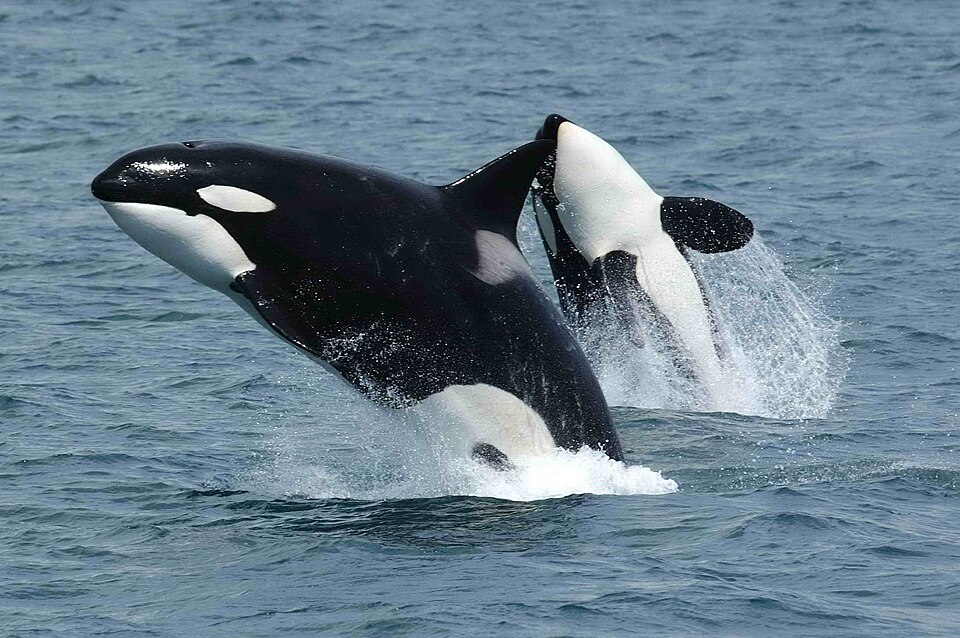
The largest brain by absolute mass belongs to the sperm whale, at nearly 8 kg, far ahead of the orca (roughly 5 to 6 kg) and humans (about 1.3 to 1.4 kg). But raw mass does not measure intelligence: when compared to body size, the orca ranks among the very top mammals, just behind humans.
Encephalization quotient, a more meaningful measure
The encephalization quotient (EQ) compares the actual brain mass of a species to the mass expected for an animal of the same body weight. The sperm whale, despite its record-breaking brain, has a modest EQ because its body is enormous: the brain is proportionally small relative to it. The orca, which weighs on average 3 to 6 tonnes for a brain of around 5 kg, has an estimated EQ between 2.5 and 3, compared with roughly 7 for humans and 1 for most large land mammals such as horses or cattle.
This large brain is also marked by a highly folded neocortex, with a cortical surface area that exceeds the human surface when unfolded. This architecture is linked to the complex social behaviours documented in orcas: vocal dialects unique to each family group, hunting techniques passed on culturally through cooperative strategies, and fine echolocation allowing them to locate prey several tens of metres away in the darkness of the deep.
A debated measure
The EQ remains an imperfect tool and is debated by researchers: it does not account for how brain functions are distributed, nor for the fact that certain areas of the cetacean brain are dedicated to acoustic processing rather than cognitive abilities directly comparable to those of primates. Comparing human and cetacean intelligence based on a single figure therefore simplifies a much more complex biological reality, where lifestyle, sensory environment, and social organisation play a role at least as decisive as brain size.