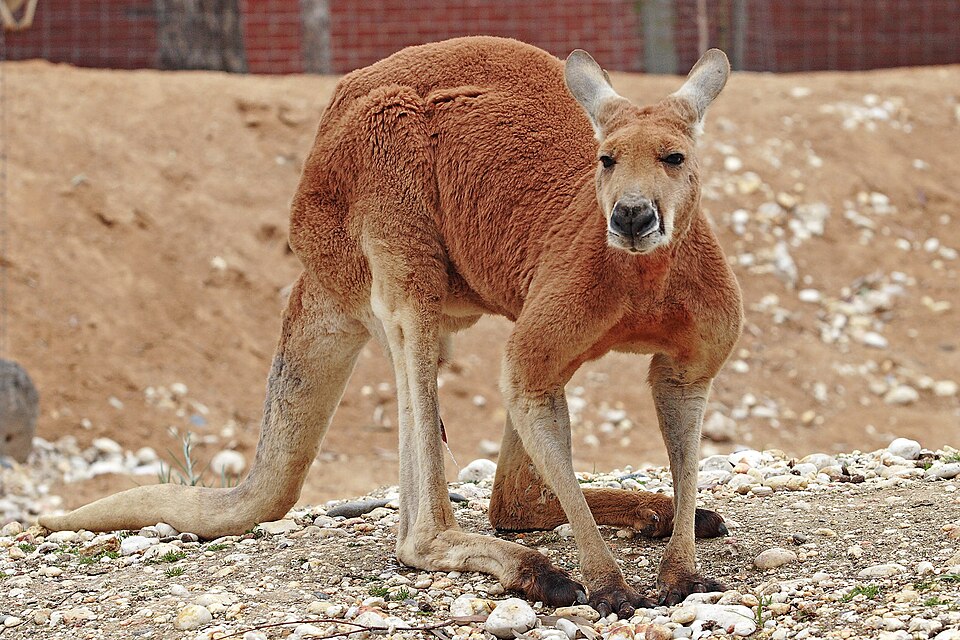
How does the baby kangaroo reach its mother's pouch?
63 views · 1 month ago
The newborn red kangaroo, as big as a bean (about 2 cm, less than a gram), climbs alone from the genital opening of its mother to the pouch, in an ascent of approximately 3 to 5 minutes, guided by smell and without any maternal assistance.
A birth at an embryonic stage
After a very short gestation, of around 30 to 35 days, the The female gives birth to an almost incomplete embryo: the rear legs and eyes are not functional, but the front limbs are already muscular and clawed. It is with these forearms alone that the newborn progresses by swimming through the maternal fur, following a moist path that the mother would have licked beforehand, and orienting itself thanks to already active olfactory receptors which detect the smell of the pouch.
Once entering the pouch, it attaches itself to one of the four teats, which swells slightly in its mouth to prevent it from coming loose during the very first weeks. It will continue its development there for several months, the pouch playing the role of an external uterus where the growth of the eyes, ears and hind legs ends.
Embryo diapause, a waiting strategy
The red kangaroo can suspend the development of an embryo at a very early stage (blastocyst) thanks to embryonic diapause: as long as the previous young occupies the pouch and actively suckles, this embryo remains in dormancy, sometimes several months, before resuming its development as soon as the pocket is freed. This mechanism allows the female to simultaneously carry a paused embryo, a suckling young in the pouch and an older still dependent young outside the pouch, an adaptation particularly useful in the arid and unpredictable environments where the species lives.