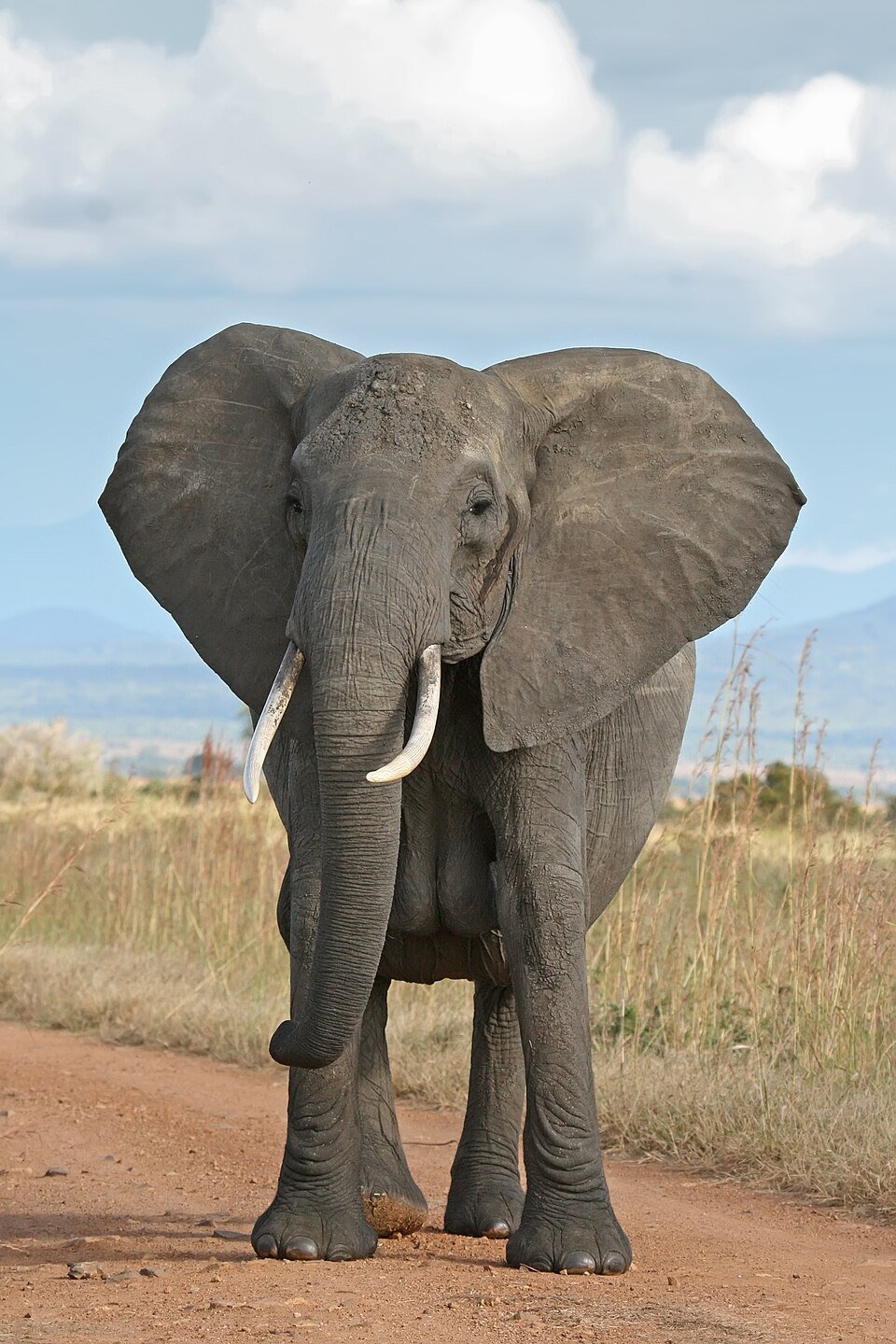
The gestation of the savannah elephant lasts approximately 22 months, or almost two years: it is the longest of all land mammals. This exceptional duration is explained by the very advanced development of the child's brain and body before birth.
Why such a long gestation?
An elephant calf is already born heavy, often around 100 kg, and above all equipped with a brain that is largely developed compared to that of other newborns of large mammals. This level of cerebral maturity is essential: from the first hours of its life, the little one must be able to get up, walk and follow the herd during its daily movements, sometimes over long distances in search of water and food. An immature brain would not allow this early motor autonomy, which is vital in an environment where predators lie in wait for the weakest.
This prolonged maturation in utero takes time: the major motor and sensory functions must be sufficiently wired before birth, unlike species where the little one remains hidden or carried during its first weeks. In the elephant, there is no protective “nest”: the newborn immediately evolves within the social group, which imposes this biological compromise between gestation length and degree of precocity.
A very economical reproduction
This strategy results in considerable maternal investment: a female only gives birth to one calf at a time, twins being rare, and the interval between two births generally lasts around 4 to 6 years, the time for the previous baby elephant to grow and become less dependent. This slow rate of reproduction, associated with late sexual maturity (around 10-12 years for females), makes elephant populations particularly vulnerable to poaching or destruction of their habitat, because their capacity to compensate for losses is naturally low.