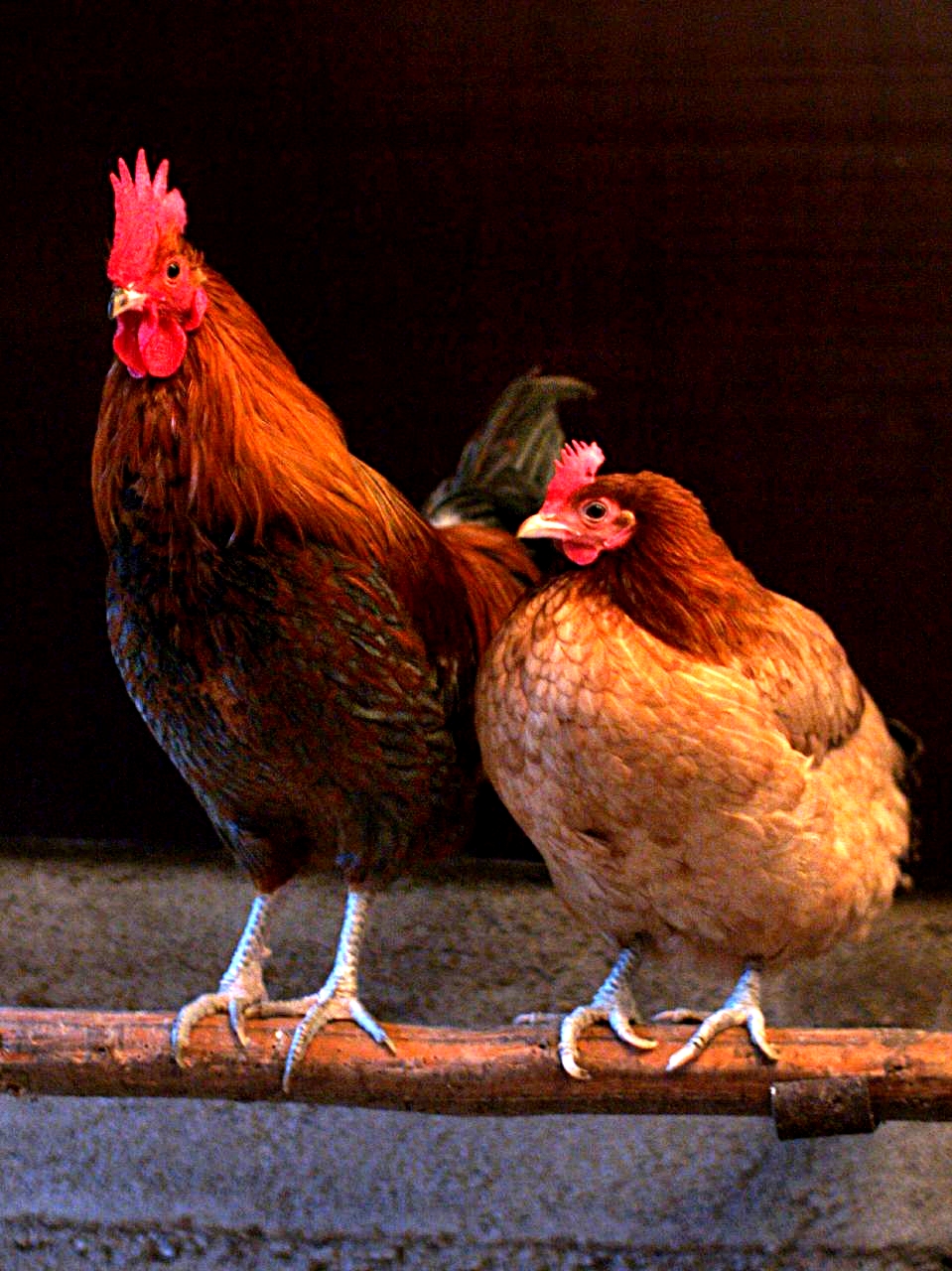
A hen lays eggs even without a rooster because ovulation is part of its natural physiological cycle, completely independent of fertilization. The rooster only intervenes to fertilize the egg, not to trigger its formation: without him, the hen simply produces unfertilized eggs, as complete and edible as the others.
A regulated hormonal cycle, not a need for reproduction
In the chicken, the left ovary regularly releases an egg according to a hormonal rhythm controlled by light and the age of the animal, a bit like the menstrual cycle in other vertebrates, but without the need for prior mating. This cyclical ovulation occurs whether or not a rooster is present: it is a trait shared by many female birds and vertebrates, in which gamete production is autonomous.
Once the ovum is released, it enters the oviduct where the white (albumen), the shell membranes and then the calcareous shell are successively formed. This journey lasts approximately 24 to 26 hours, which explains why a hen in good shape can lay almost one egg per day. If a rooster is present and mating has taken place in the preceding days, sperm stored in glands of the oviduct can fertilize the egg as soon as it is released, before the shell forms; otherwise, the egg continues to form normally, but remains sterile.
A common confusion among amateur breeders
Many new breeders wrongly think that the presence of a rooster is essential for their hens to lay eggs: this is a very widespread misconception. In reality, the rooster is only necessary if one wishes to obtain chicks by incubation. Without it, the hen continues to lay eggs normally, provided that its needs for light, food and comfort are met; in the event of a marked decline or unexplained cessation of laying, it is better to consult a veterinarian to rule out a pathological cause.