Veterinary case
Baby alpaca suffers spine infection causing ataxia
⚠️ This information is provided for awareness only and does not replace an examination by a veterinarian.
🤖 Summary produced automatically from the scientific publication cited at the bottom of the page.
A baby alpaca stumbles and refuses to move - imaging reveals a serious infection between two neck vertebrae.
What happened?
A 2-month-old female Huacaya alpaca cria was brought to the vet because she had been walking unsteadily for about 5 weeks. General examination seemed normal, but the animal refused to move and showed clear neck pain when handled.
What did the vet find?
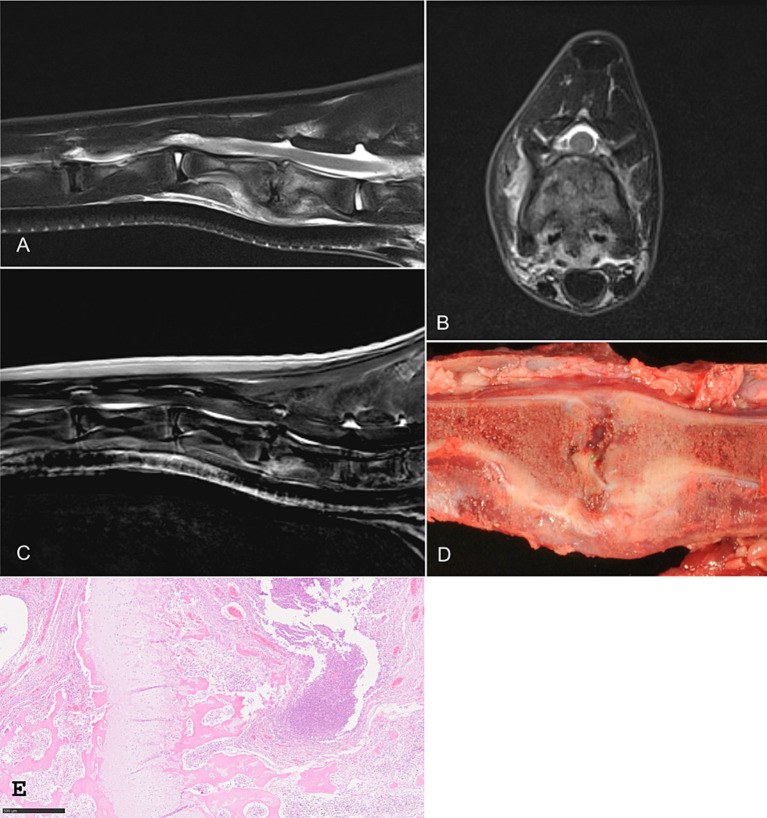
The vet found mild ataxia (difficulty placing the legs properly), a stiff and painful neck, but normal reflexes. A blood test showed a raised inflammation marker. An MRI of the neck revealed that two vertebrae (C5 and C6) and the disc between them were damaged, with inflammation signs around them, suggesting a spinal infection with involvement of nearby muscles.
What did the vet do?
ℹ️ Treatment given to THIS animal, decided by its veterinarian. It is not a prescription: never apply it without veterinary advice.
Given the severity of the condition and its rapid progression, the owners decided with the vet not to pursue further treatment and chose humane euthanasia to spare the animal suffering.
What happened next?
The necropsy confirmed a severe, chronic bone infection between the two neck vertebrae, with infected tissue formation and abnormal bone growth, explaining the pain and gait problems observed.
Advice for the farmer
In young alpacas, an unsteady gait or lameness lasting several weeks should alert the owner quickly: the earlier the diagnosis, the better the chances of treating a spinal infection before it becomes irreversible.
Source
- Source
- PubMed Central
- Title
- Case Report: Neurological examination, computed tomography, and magnetic resonance imaging in South American camelids and a dromedary.
- Authors
- Sickinger M, Farke D, Schmidt ML, Schmidt MJ.
- Year
- 2026
- DOI
- 10.3389/fvets.2026.1798164
- Licence
- CC BY