
Heat Stroke in Animals: Signs and Life-Saving Steps

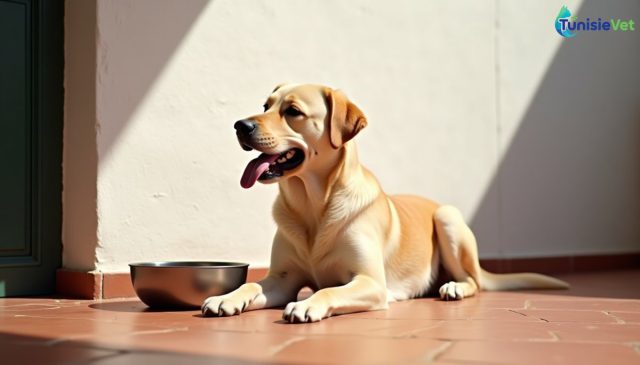
A heat stroke in animals is an emergency: the body temperature rises too high and the animal can no longer cool itself down. Heavy panting, weakness, excessive drooling or collapse must raise the alarm. This article helps you recognise heat stress in dogs, cats, sheep, goats and cows, then apply simple measures against the Tunisian heat.
The TunisieVet app to care for your pet
Vets, adoption and products




1. Why Tunisian heat is dangerous for animals
In Tunisia, summers are hot and the air can feel heavy along the coast. In the South, the sun and the dry wind quickly exhaust an animal without shelter. Animals do not cool down the way we do.
- Dog: it sweats very little, mainly through its paw pads, and cools itself mostly by panting.
- Cat: it sweats a little through its paw pads and grooms itself to cool down. It rarely pants, so this is a serious sign.
- Ruminants: the large amount of heat produced by digestion adds to that of the sun.
The most vulnerable are the young, older animals, overweight animals, pregnant females and short-muzzled breeds. Animals with thick or dark coats also suffer more.
2. Recognising signs of heat stress in dogs and cats
Heat stress in dogs and cats often starts quietly. The earlier you act, the better the animal's chances of recovery.
| Species | Early signs | Severe signs (emergency) |
|---|---|---|
| Dog | Heavy panting, tongue very extended, seeking coolness, intense thirst | Thick saliva, very red or pale gums, vomiting, collapse, seizures |
| Cat | Restlessness, damp paws, lying stretched out on the floor, excessive grooming | Open mouth, rapid breathing, prostration, loss of balance |
3. Spotting distress in sheep, goats and cattle
Sheep and goats
They breathe fast, mouths slightly open, bunch together in the shade and eat less. Sheep with thick wool are more exposed. An animal that staggers or lies apart from the group is in danger.
Cow
Rapid breathing, drooling, tail movements, refusal to move. Milk production often drops. A cow that lies down and cannot get up requires an immediate call to a vet.
4. Preventive measures: shade, water, ventilation
- Shade: provide shelter that stays shaded throughout the day. Check its position at different times of day, and add a roof or netting if needed.
- Water: fresh, clean water at all times, in several containers, sheltered from the sun. Change it often.
- Ventilation: let air circulate in the barn, sheepfold or house. A fan helps, provided the animal can move away from it.
- Cool floor: tiles, concrete or a dampened area for lying down.
- Never in a vehicle: never leave an animal in a car, even with the windows slightly open.
5. Adjusting walk and work schedules
Walk the dog early in the morning or late in the evening, and avoid the middle of the day. Test the ground with the back of your hand: if it burns, it will injure the paw pads. For working animals, such as horses or donkeys, work during the cool hours and schedule breaks in the shade with water. For the flock, lead grazing at dawn and dusk, and keep the animals sheltered during the hot hours.
6. What to do in case of heat stroke?
- Move the animal to the shade, into a well-ventilated place.
- Wet it gradually with lukewarm to cool water, especially the belly, armpits and legs.
- Offer water without forcing it to drink.
- Avoid icy water and ice cubes: cooling too abruptly can worsen its condition.
- Call a veterinarian without delay, even if the animal seems to be getting better.
To quickly find a professional near you, consult the directory of veterinarians in Tunisia. Complications can appear several hours after the episode.
In summary
- Spot early signs such as heavy panting, weakness and excessive drooling.
- Ensure lasting shade, fresh water and circulating air.
- Schedule walks and work for the cool hours.
- In case of distress, cool the animal gently and call the veterinarian.
Frequently asked questions
Can you wet a dog to cool it down?
Yes, with lukewarm to cool water, starting with the legs and belly. Avoid icy water.
What temperature is dangerous for an animal?
There is no single threshold: humidity, age, breed and exertion all matter. As soon as an animal pants heavily at rest, act.
Can a cat suffer heat stroke at home?
Yes, in a closed room or under an overheated conservatory. Keep water, shade and fresh air within its reach.
Conclusion
Preventing heat stroke in animals mainly requires foresight: shade, water, air and adjusted schedules. If in doubt, talk to your veterinarian, who can tailor the advice to your animal or your farm.
Leave a comment
Be the first to comment on this article.
