
Epidemiology: The Complete Guide to Getting Started

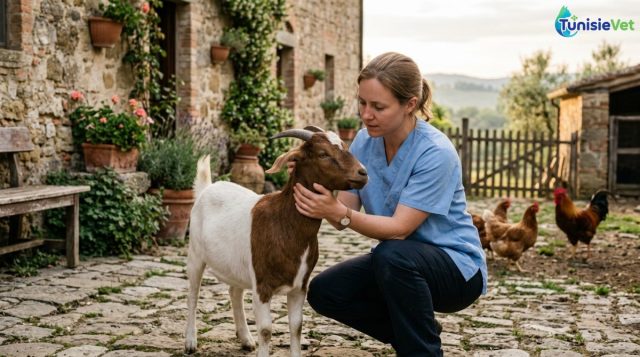
Epidemiology is the science that studies how diseases appear, spread, and are controlled within an animal population. Understanding its fundamentals helps any new owner or livestock breeder spot health problems earlier, limit their spread, and communicate effectively with a veterinarian. This practical guide presents essential concepts, common mistakes, and the right reflexes to adopt in your daily routine.
1. Understanding epidemiology and its purpose
Epidemiology goes beyond simply counting sick animals. It seeks to understand why a disease emerges, how it spreads, and what factors promote its transmission through a herd, backyard poultry operation, or multi-animal household.
For livestock keepers and pet owners, this approach enables a shift from case-by-case reactions to genuine collective prevention. It applies equally to a poultry farm, a household with multiple cats, or a dog breeding operation.
The three key questions in epidemiology
- Who is affected: which animals, what age, which sex, what health status?
- How the disease spreads: direct contact, water, feed, insects, airborne transmission?
- Why now: seasonal change, newly introduced animal, stress, overcrowding?
2. Core concepts you need to know before starting
Certain terms appear constantly when discussing animal population health. Mastering them prevents confusion and facilitates communication with an animal health professional.
| Term | Simple meaning | Practical example |
|---|---|---|
| Incubation | Time between infection and first visible signs | An animal can transmit the disease before appearing sick |
| Contagiousness | Ease with which a disease spreads | Some diseases propagate rapidly in group settings |
| Reservoir | Host or environment where the pathogen persists | Stagnant water, soiled bedding, wild rodents |
| Vector | Organism carrying the infectious agent | Ticks, flies, mosquitoes |
| Quarantine | Temporary isolation of a suspect animal | New animal kept separate before group integration |
3. Recognizing signs of epidemic dynamics
A single case has different implications than a series of cases clustered in time. Distinguishing between these two situations is an essential reflex for any owner or breeder.
- Multiple animals show similar symptoms within a short timeframe.
- Signs appear in a logical geographic pattern, such as from one enclosure to another.
- A recently introduced animal precedes the appearance of initial cases.
- Mortality or morbidity increases noticeably compared to the group's baseline.
When several of these elements combine, it is advisable to contact a veterinarian quickly rather than waiting for the situation to worsen.
4. Common mistakes beginners make
Certain widespread habits unintentionally promote disease spread within a livestock operation or multi-animal household.
Monitoring errors
- Failing to observe animal behavior and appetite daily.
- Waiting for multiple animals to be affected before taking action.
- Overlooking subtle signs such as decreased activity or the animal isolating from the group.
Health management errors
- Introducing a new animal without a quarantine period.
- Sharing equipment (water troughs, bedding, tools) between different groups without cleaning.
- Neglecting regular disinfection of living spaces.
- Ignoring veterinary advice under the assumption that "it will go away on its own."
5. Good practices to limit disease spread
Prevention relies on simple, regularly repeated actions far more than on emergency measures applied in crisis situations.
- Observe daily: appetite, behavior, fecal appearance, breathing patterns.
- Isolate immediately any animal showing unusual signs.
- Quarantine all newcomers before integrating them into the group.
- Clean and disinfect living areas and shared equipment regularly.
- Limit contact with external or stray animals.
- Keep a simple record of observed cases, useful for identifying trends.
- Consult a veterinarian at the first sign of concern rather than as a last resort.
These basic veterinary tips apply equally to small family operations and larger commercial enterprises.
6. When and why to consult a veterinarian
An animal health professional can identify the probable cause of a problem, recommend appropriate measures, and, if necessary, refer you for additional testing. Early intervention often prevents disease spread throughout the entire group.
It is advisable to consult as soon as abnormal behavior affects multiple animals or when a single individual shows marked symptoms that persist. To find a professional near you, you can check the veterinarian directory to obtain advice tailored to your situation.
In summary
- Epidemiology helps you understand how diseases emerge and spread through an animal group.
- Daily observation of animal behavior enables early detection.
- Quarantining new animals is an essential practice.
- Regular equipment and space cleaning limits transmission.
- A veterinarian should be consulted at the first signs of concern, not only when the situation worsens.
Frequently asked questions
Does epidemiology apply to small family-run operations?
Yes, the same principles apply regardless of group size. Even with just a few animals, observation, quarantine, and hygiene remain essential for limiting disease spread.
How often should I observe my animals to detect a problem?
Daily observation is recommended, particularly focusing on appetite, behavior, and general appearance. This routine allows you to quickly spot any unusual changes in one or more animals.
How long should a new animal stay in quarantine?
The exact duration depends on the species and local health situation, which is why a veterinarian should be consulted to adapt it to your circumstances. As a general rule, a sufficiently long isolation period allows you to monitor for any symptom development before introducing the animal to the main group.
Adopting the right epidemiological reflexes in your daily management transforms health oversight for a livestock operation or multi-animal household. When in doubt, seeking veterinary advice remains the best way to durably protect your animals' health.
Leave a comment
Be the first to comment on this article.

TunisieVet in your pocket 📱🐾 Access your veterinary services wherever you are. [ Download the app ]
Learn more