Pet Passport: Your Complete Getting Started Guide

A pet passport is the official document that brings together your companion's identity, vaccination history, and health status—essential whenever travel, adoption, or a veterinary checkup requires proof. This practical guide explains what it's for, how to obtain one, the mistakes newcomers often make, and the right habits to adopt so you're never caught off guard.
1. What Is a Pet Passport and Why Do You Need It?
A pet passport is an official booklet that consolidates essential information about a companion animal: the owner's details, the animal's physical description, identification number (microchip or tattoo), vaccination history, and any antiparasitic treatments received. It serves as documented proof during travel, border control, adoption, or simply to demonstrate that the animal is being properly monitored for health and safety.
This document doesn't replace the traditional health record, but it pulls together key information in a standardized, widely recognized format—making it easier to communicate with authorities, transport companies, or a new veterinarian.
Which Animals Need It?
- Dogs and cats, for travel and adoptions
- Ferrets, in similar situations
- Horses, with a document specific to their health monitoring
- Other companion animals, on your veterinarian's recommendation depending on context
2. How to Get Your Pet's Passport
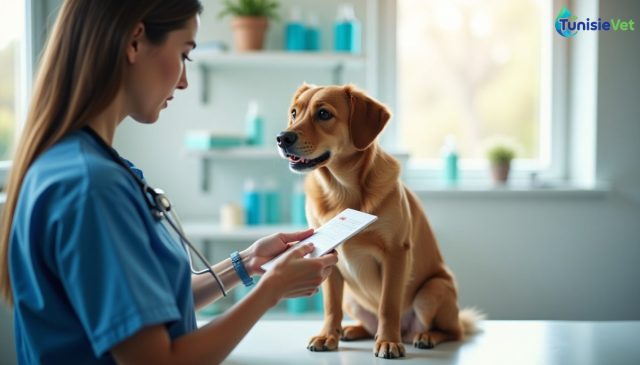
The process is straightforward and must always be done through a licensed veterinarian—never on your own. Here are the typical steps to follow.
- Animal identification: microchipping or verification of an existing tattoo, a mandatory prerequisite before any passport can be issued.
- Clinical examination: the veterinarian checks your pet's overall health before validating the document.
- Vaccination updates: all mandatory and recommended vaccines are recorded with their dates.
- Document issuance: the passport is completed, signed, and stamped by the veterinarian, who is the only person authorized to enter new information.
For this process, it's advisable to consult recognized professionals: you can check the veterinarian directory to find a practitioner near you.
3. What Information Should Be in a Pet Passport
A well-maintained passport should include several categories of information, regularly updated.
| Section | Expected Content | Update Frequency |
|---|---|---|
| Identification | Microchip number, species, breed, sex, colour | Once only, at identification |
| Vaccination | Date, vaccine type, validity period | According to annual vaccination schedule |
| Antiparasitic Treatments | Internal and external treatments administered | Each time treatment is given |
| Health Monitoring | Veterinarian notes, significant procedures | At each visit |
Keeping these sections current gives you a complete and reliable picture of your pet's health—useful information for any new professional you may consult.
4. Common Mistakes Beginner Pet Owners Make
Certain mistakes come up repeatedly among new pet owners and can complicate future procedures.
- Forgetting to have your pet identified before requesting the passport, even though this is a mandatory first step.
- Letting vaccinations expire without scheduling booster appointments on time.
- Losing the document or allowing it to deteriorate, making some information illegible.
- Attempting to fill in sections yourself, when only an authorized veterinarian can do so validly.
- Failing to report a change of address or ownership, which renders the document outdated.
These mistakes are easily avoidable with a little organization and regular checkups at the same veterinary clinic, where the staff already knows your pet's history.
5. Smart Habits for Stress-Free Record Keeping
A few simple routines will help keep your passport current and ready to use whenever needed.
- Schedule vaccination reminders as soon as you leave your previous appointment.
- Store the passport in a protective sleeve, away from moisture.
- Before any trip, confirm that the document covers the entire period of your travel.
- Take a digital photo of the document as backup, so you always have a copy on hand.
- Report any loss or damage to your veterinarian promptly to get a replacement.
Special Case: Adoption
When adopting, always ask for the pet's passport from the previous owner or the rescue organization. If one doesn't exist yet, this is a good time to create it within the first few days at your veterinary clinic. You can also visit our dedicated pet adoption page to prepare for this step with confidence.
In Summary
- A pet passport combines identity, vaccination history, and health monitoring in one official document.
- It can only be obtained through a licensed veterinarian, after your pet has been identified.
- Check regularly that information stays current, especially vaccinations.
- Avoid common pitfalls: lost documents, missed boosters, self-filled sections.
- A trusted veterinarian makes ongoing care straightforward throughout your pet's life.
Frequently Asked Questions
Is a pet passport legally required?
It's strongly recommended and often mandatory for travel or when authorities request proof. Even if there's no strict legal requirement in your country, it remains an invaluable tool for demonstrating your pet's health and vaccination status.
How often should I update my pet's passport?
Every vaccination, booster, or antiparasitic treatment should be recorded as soon as it's done. An annual check with your veterinarian helps ensure nothing has been missed or overlooked.
What should I do if I lose my pet's passport?
Contact the veterinarian who issued it immediately to request a replacement based on the records kept in your pet's file. Microchip identification makes this process much easier to carry out.
Keeping your pet's passport up to date is a simple step that makes every stage of their life smoother—from the first vaccine to your next trip. For any questions or updates needed, the veterinarian directory helps you quickly find a trusted professional.
Leave a comment
Be the first to comment on this article.