Photo: Figure 1 — Samarelli R, Otranto D, Miglianti M, Bezerra-Santos MA, Giusiano G. (PubMed Central, 2026)
⚠️ This information is provided for awareness only and does not replace an examination by a veterinarian.
🤖 Summary produced automatically from the scientific publication cited at the bottom of the page.
Two hairless patches led the vet to discover a fungal infection.
What happened?
A young English Setter was brought to a vet in southern Italy because of sores on two legs. He lived outdoors and regularly trained for hunting, coming into contact with soil and vegetation.
🔎 What did the vet find?
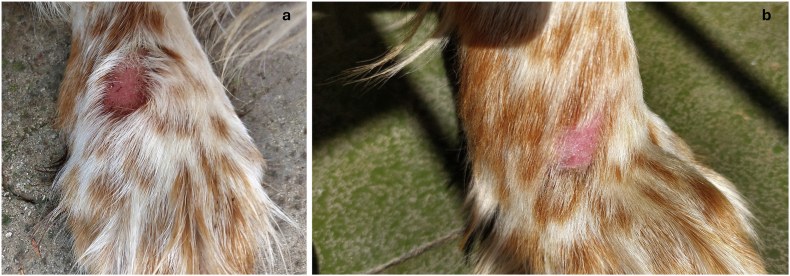
The vet found two round, hairless patches with redness and fine flakes of skin, one on the right front leg and one on the right hind leg. The dog showed no apparent itching or pain when touched. Tests confirmed ringworm caused by a fungus found in soil.
Publicité
Publicité
🩺 What did the vet do?
ℹ️ Treatment given to THIS animal, decided by its veterinarian. It is not a prescription: never apply it without veterinary advice.
While awaiting the test results, an antiseptic was applied to the patches daily. Once the fungus was identified, the dog received an antifungal cream for three weeks.
🖼️ The case in pictures
①Before treatment
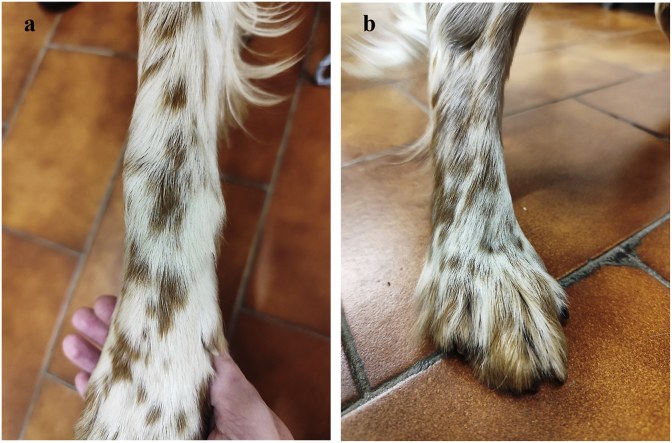
②After treatment
✅ What happened next?
The patches had cleared by the end of treatment. Two weeks later, the hair had grown back, and a follow-up test found no fungal growth.
⚠️ Advice for the farmer
If you notice a hairless patch on your dog, have a vet examine it. Different skin problems can look alike.
Publicité
📚 Source
Source
PubMed Central
Title
Canine dermatophytosis due to Arthroderma uncinatum: case report and diagnostic considerations.
Authors
Samarelli R, Otranto D, Miglianti M, Bezerra-Santos MA, Giusiano G.