Veterinary case
H9N2 bird flu strikes a broiler farm
⚠️ This information is provided for awareness only and does not replace an examination by a veterinarian.
🤖 Summary produced automatically from the scientific publication cited at the bottom of the page.
On a broiler farm in Mozambique, a sudden wave of deaths led to the first-ever detection in the country of an H9N2 bird flu virus linked to a distant region.
What happened?
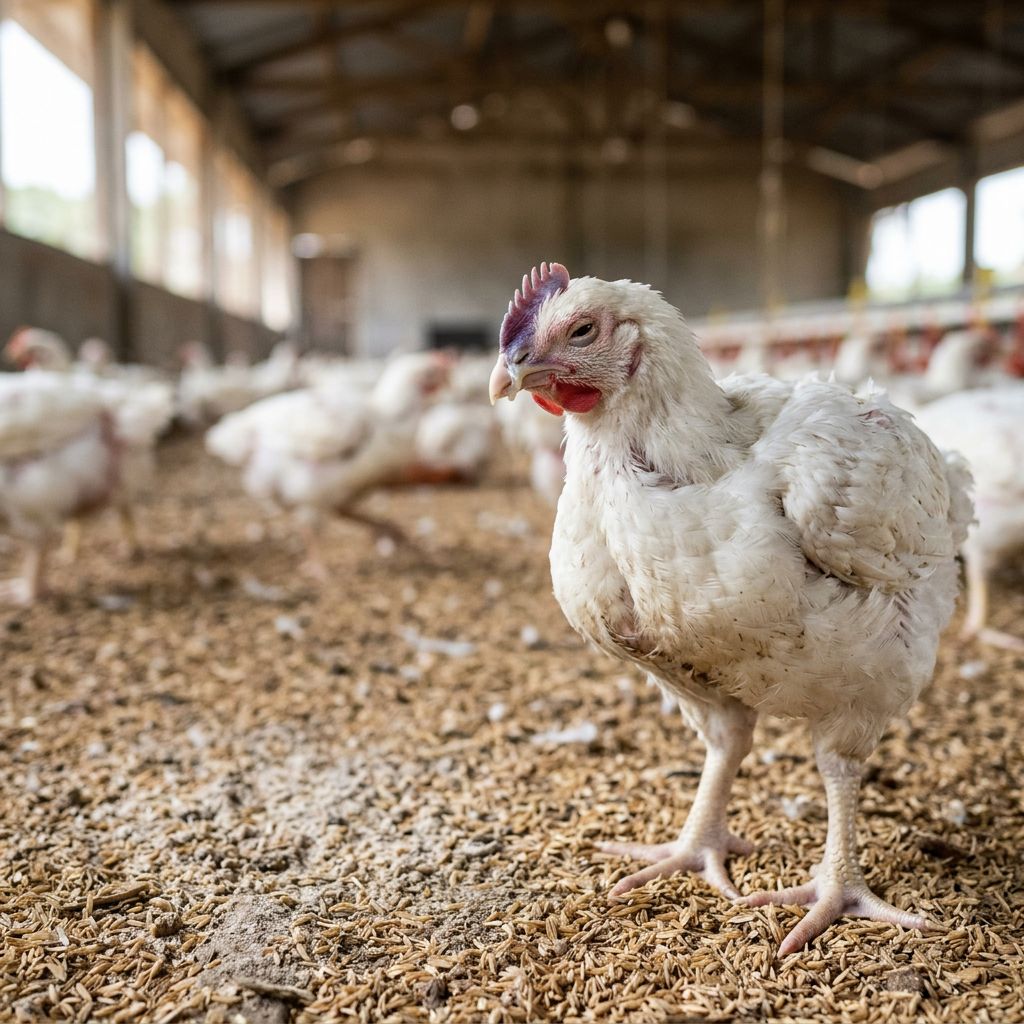
In July 2025, a farmer in Matola district received 1,500 day-old chicks for fattening. Three weeks later, some birds began showing signs of illness: lethargy, yellowish diarrhea, coughing, and nasal and eye discharge. Deaths climbed to 15-20 birds per day, reaching about 350 (23% of the flock). Worried about further losses, the farmer sold 500 apparently healthy birds to local vendors before the authorities were alerted.
What did the vet find?
Veterinarians examined carcasses sent to the central laboratory. They found facial swelling, a bluish discoloration of the comb and wattles, and nasal discharge. Internally, the lungs were congested and inflamed. Laboratory tests confirmed Type A influenza virus of the H9 subtype, while ruling out H5, H7 and other common poultry respiratory diseases. Full genome sequencing identified the virus precisely as H9N2, genetically closer to strains circulating in the Middle East than to African strains.
What did the vet do?
ℹ️ Treatment given to THIS animal, decided by its veterinarian. It is not a prescription: never apply it without veterinary advice.
There was no treatment that could cure birds already infected with this virus. A multi-agency team visited the site to assess the scale of the outbreak and inspect nearby farms. Under official supervision, all birds on the affected farm, both sick and apparently healthy, were culled and destroyed, along with the feed and litter, and the equipment was disinfected.
What happened next?
This is the first time this H9N2 virus has been detected in Mozambique. The investigation showed that other farms that had bought chicks from the same source had similar signs, with one losing 50% of its flock. The culling and destruction measures helped contain the spread on the affected farm.
Advice for the farmer
Protect your flock by limiting visitors and vehicles on the farm, using properly disinfected footbaths, and applying the all-in all-out system between each batch.
Source
- Source
- PubMed Central
- Title
- Case Report: Detection and characterization of avian influenza virus H9N2 in a broiler farm in Mozambique, 2025.
- Authors
- Monjane IVA, Nhabomba V, Tamele E, Djedje H, Sussuro A, Van-Dúnem TM, Mandlate I, Arone DM, Massicame ZE, Massingue J, Tivane AR, Chilaúle JJ, Zacarias D, Chaúque D, Mulungo D, Lamien CE, Meki IK, Dundon WG.
- Year
- 2026
- DOI
- 10.3389/fvets.2026.1765651
- Licence
- CC BY