📍 Brazil — Belém, Pará, Brazil🐈 Cats🎂 12 years old🩺 Surgery5 Views
Share :
Photo: Figure 1 — Feio JV, de Carvalho EL. (PubMed Central, 2026)
⚠️ This information is provided for awareness only and does not replace an examination by a veterinarian.
🤖 Summary produced automatically from the scientific publication cited at the bottom of the page.
A cat returns with a bleeding tumor on an ear already operated once: the vet must remove the whole ear canal to save her.
What happened?
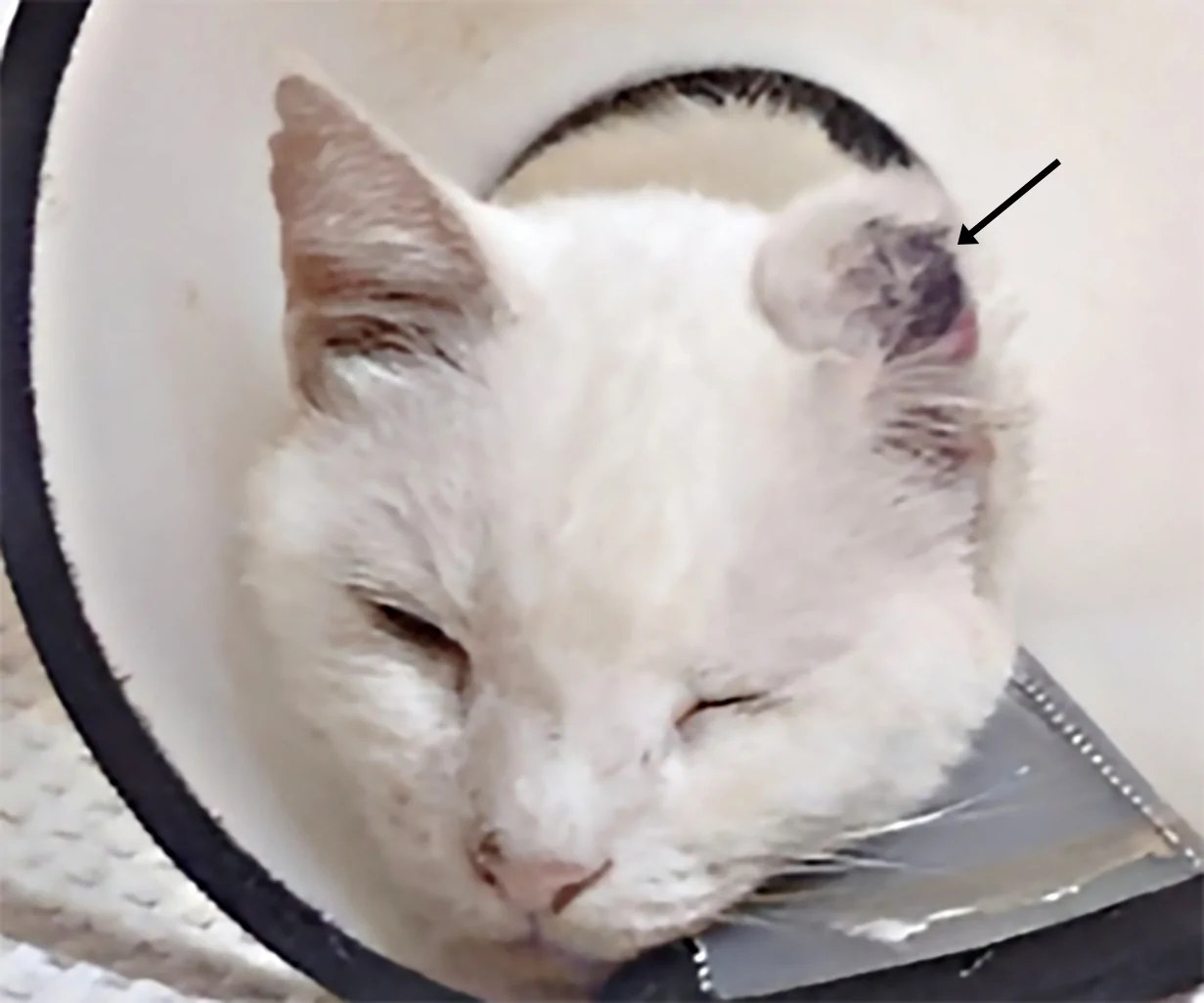
This 12-year-old white cat had already had her ear flap removed for a tumor that was never analyzed. The tumor came back on the same ear, and the cat was in pain, constantly trying to scratch the area. The wound was bleeding heavily, and the cat was thin despite a good appetite.
🔎 What did the vet find?
The vet found a tumor bleeding so heavily that it was impossible to take a sample to analyze it directly. Blood tests showed severe anemia and signs of infection. A chest X-ray showed no visible spread of the disease. The final diagnosis, obtained after surgery, confirmed a hemangiosarcoma, a tumor of the blood vessels, linked to chronic ear inflammation.
Publicité
Publicité
🩺 What did the vet do?
ℹ️ Treatment given to THIS animal, decided by its veterinarian. It is not a prescription: never apply it without veterinary advice.
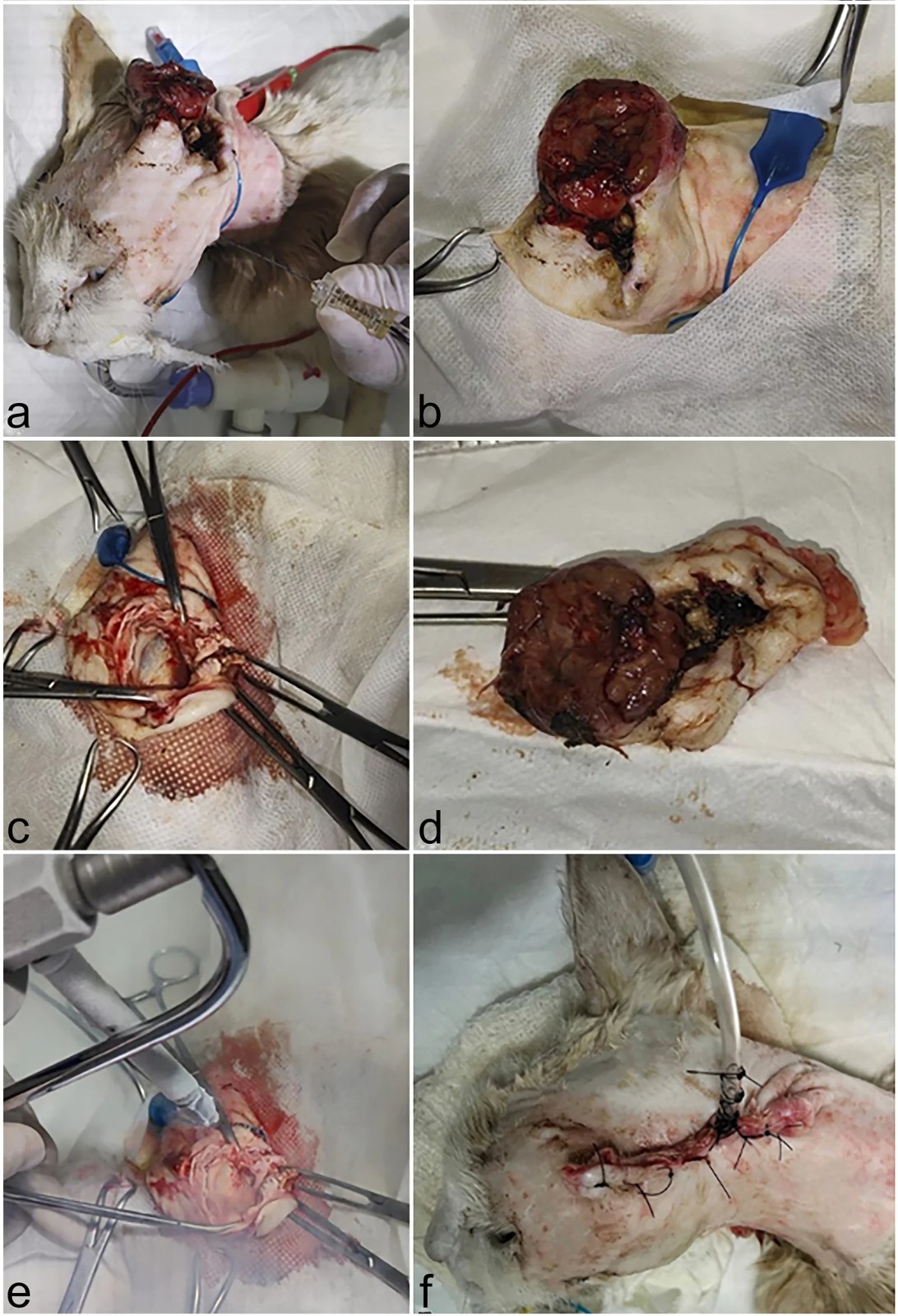
Before surgery, the vet treated the cat's pain and anemia for two weeks to safely prepare her for the operation. He then performed a total ear canal ablation, removing the tumor along with the whole ear canal, and applied a freezing treatment to the surgical area to destroy any remaining cancer cells. The sample was sent to the lab to confirm the diagnosis and check that the removed margins were healthy.
🖼️ The case in pictures
①Before treatment
②Treatment
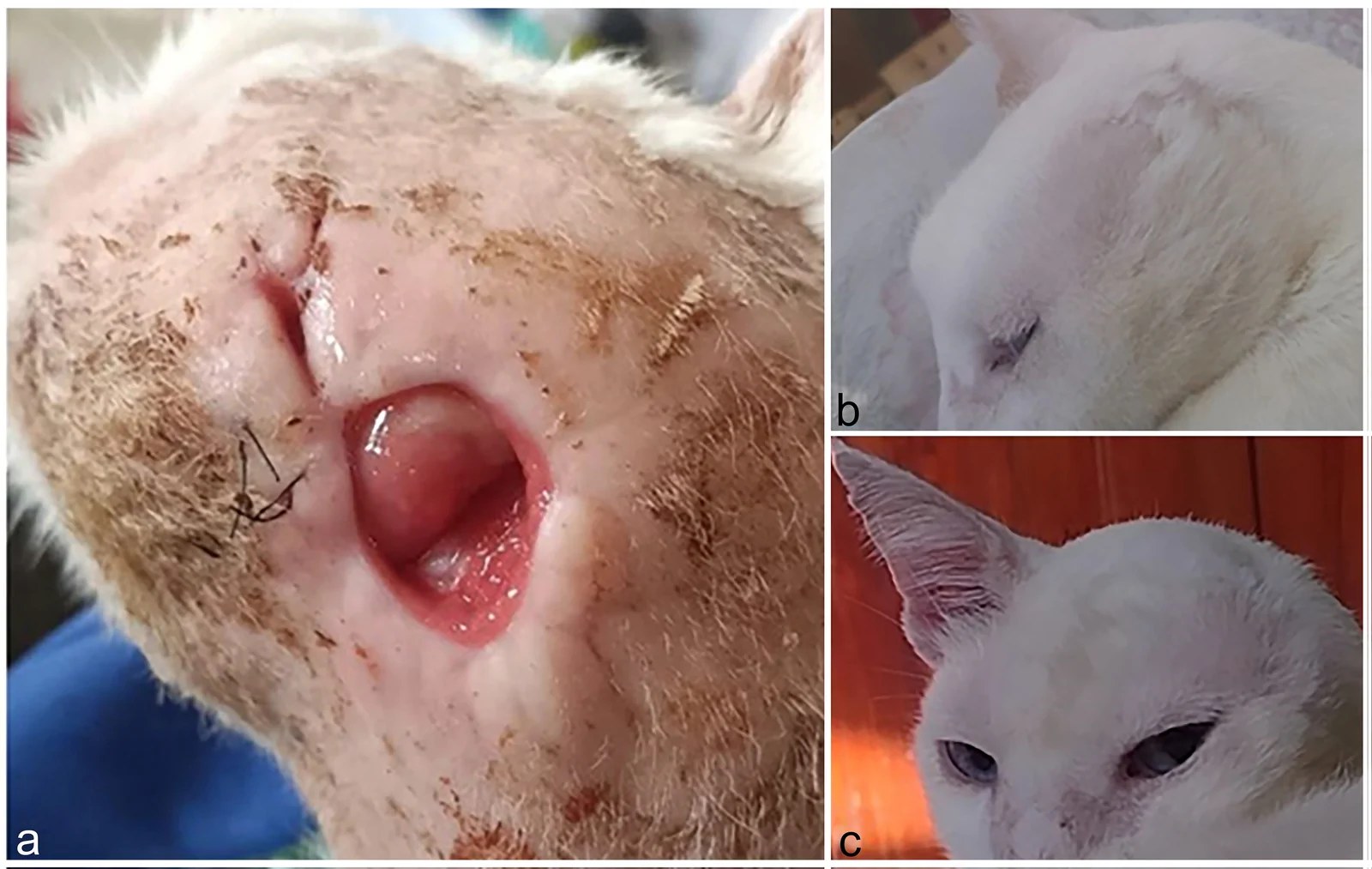
③After treatment
✅ What happened next?
After surgery, the cat had a temporary loss of the eyelid reflex, which returned to normal. The owners could not stop her from scratching, so the wound partially reopened but fully healed within two months. One year after the surgery, the cat showed no signs of tumor recurrence or spread.
⚠️ Advice for the farmer
After removing a tumor, always ask for a full laboratory analysis of the sample: it tells you if the disease could come back, so you can act earlier next time.
Publicité
📚 Source
Source
PubMed Central
Title
Total ear canal ablation for the treatment of auricular hemangiosarcoma in a cat: case report.