A dog with a perineal hernia that kept coming back
📍 KR🐕 Dogs🎂 Over 10 years🩺 Surgery52 Views
Share :
Photo: Figure 1 — Park J, Lee WJ, Kim DH. (PubMed Central, 2026)
⚠️ This information is provided for awareness only and does not replace an examination by a veterinarian.
🤖 Summary produced automatically from the scientific publication cited at the bottom of the page.
When the pelvic muscles are gone, how do you fix a hernia that keeps returning?
What happened?
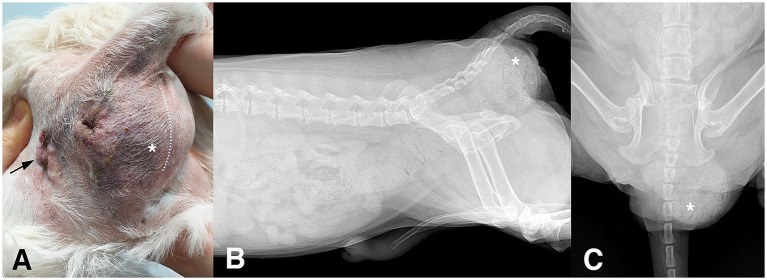
A small mixed-breed dog, over 10 years old and neutered, had been taken in by a shelter four months earlier. Staff noticed he was constipated and had a firm, painless lump on the right side under the tail. He had scars from old operations on both sides.
🔎 What did the vet find?
The vet found a perineal hernia: the rectum formed a pouch full of hard feces. He also felt foreign material under the skin from old operations. Other tests were normal. During surgery he saw that the pelvic muscles were so wasted they could no longer be sewn together.
Publicité
Publicité
🩺 What did the vet do?
ℹ️ Treatment given to THIS animal, decided by its veterinarian. It is not a prescription: never apply it without veterinary advice.
He first emptied the feces by hand and gave a laxative. Then he removed the old mesh and inflamed stitches. He used a strong strip of tissue taken from the dog's thigh to rebuild the pelvic wall. That night the rectum pushed out through the anus, so the next day he fixed the colon to the belly wall using a keyhole camera technique.
🖼️ The case in pictures
①Before treatment
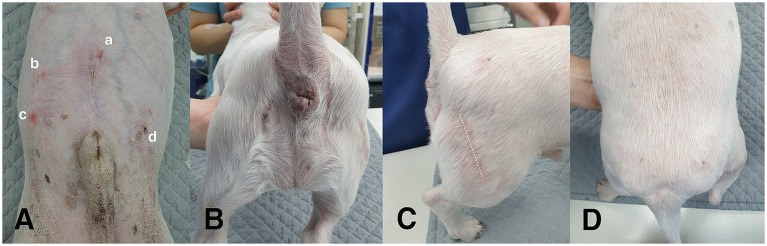
②After treatment
✅ What happened next?
The dog recovered well, with good appetite, normal stools and urination, and healthy wounds. He was adopted 26 days after surgery. Twenty-seven months later he was still well, with no recurrence.
⚠️ Advice for the farmer
Treat constipation and straining early in older dogs, as they weaken the pelvic muscles.
Publicité
📚 Source
Source
PubMed Central
Title
Case Report: Fascia lata transposition for chronic recurrent perineal hernia followed by laparoscopic colopexy for subsequent rectal prolapse in a dog.