Veterinary case
A cat with crusted skin and a resistant infection
⚠️ This information is provided for awareness only and does not replace an examination by a veterinarian.
🤖 Summary produced automatically from the scientific publication cited at the bottom of the page.
How a cat cleared an antibiotic-resistant skin infection without another oral antibiotic.
What happened?
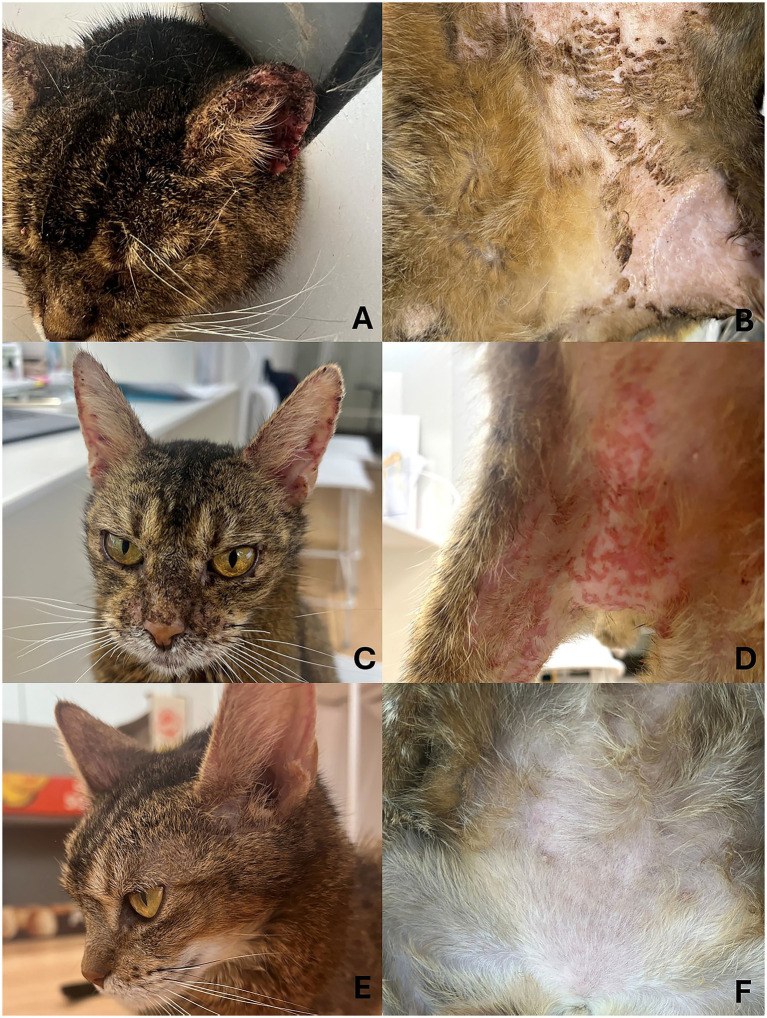
An 8-year-old spayed cat had itchy skin lesions, first on the ears and then spreading. Several treatments over two months failed, so she was referred to a hospital.
What did the vet find?
The ears were red, crusted and thickened, and the belly was bald with crusts. She was severely anemic. Skin tests showed pemphigus foliaceus, an autoimmune skin disease, with a bacterial infection. Later a bacterium resistant to almost all antibiotics was found in a groin lesion.
What did the vet do?
ℹ️ Treatment given to THIS animal, decided by its veterinarian. It is not a prescription: never apply it without veterinary advice.
The vet gave drugs to calm the immune system, plus antiseptic washes and a local cream. When the resistant bacterium was found, the oral antibiotic was stopped and the owner was urged to apply the local treatment regularly. A local antibiotic cream was then used.
What happened next?
The lesions healed and the resistant bacterium was no longer found. Immune-suppressing drugs were stopped after 8 months. A year later the cat was still healthy.
Advice for the farmer
Apply local treatments regularly as prescribed, and have the skin checked closely during treatment that weakens immunity.
Source
- Source
- PubMed Central
- Title
- Case Report: Resolution of a cutaneous infection with methicillin-resistant Staphylococcus pseudintermedius with topical therapy in a cat with pemphigus foliaceus.
- Authors
- Park SW, Kim K, Ro WB, Lee CM.
- Year
- 2026
- DOI
- 10.3389/fvets.2026.1822252
- Licence
- CC BY