Veterinary case
A cow passes bloody urine: a rare bacteria found
⚠️ This information is provided for awareness only and does not replace an examination by a veterinarian.
🤖 Summary produced automatically from the scientific publication cited at the bottom of the page.
A weak Holstein cow passing bloody urine reveals a rare blood infection never described this way in Turkey.
What happened?
A 3-year-old Holstein cow in her first lactation stopped eating well and grew weaker over a week. In the last two days, she started passing bloody urine. Worried, her owner brought her to the veterinary clinic at Sivas University in Turkey.
What did the vet find?
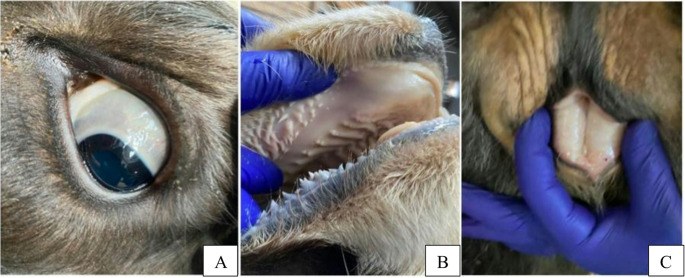
The vet found a depressed, dehydrated cow with pale, yellowish mucous membranes in the eyes, mouth and vulva, signs of anemia and jaundice. She was breathing hard with a fast heartbeat. Blood tests showed severe anemia and a big drop in red blood cells, with digested blood in the urine. Under the microscope, the vet saw tiny organisms attached to red blood cells, confirmed by a genetic test to be a bacteria called Candidatus Mycoplasma haemobos, likely spread by biting insects.
What did the vet do?
ℹ️ Treatment given to THIS animal, decided by its veterinarian. It is not a prescription: never apply it without veterinary advice.
The vet first gave the cow intravenous fluids to correct dehydration. He then gave a long-acting antibiotic in two injections three days apart to fight the infection, plus iron and vitamin B12 to help rebuild her blood.
What happened next?
Twenty days after treatment, the cow seemed to regain her appetite, chewed her cud normally and gained weight. But a month after treatment, she died, apparently from a respiratory infection according to her owner.
Advice for the farmer
If a weak cow passes bloody urine, think of this blood bacteria spread by biting insects, and control these insects on the farm.
Source
- Source
- PubMed Central
- Title
- Hemoglobinuria associated with Candidatus Mycoplasma Haemobos in a primiparous Holstein cow in Turkey: a case report.
- Authors
- Emlik F, Şakar HF, Türk S, Şahin ÖF, Erol U, Altay K, Coşkun A.
- Year
- 2026
- DOI
- 10.1007/s11259-026-11262-9
- Licence
- CC BY