Veterinary case
Newborn calf dies from colostrum curd colic
⚠️ This information is provided for awareness only and does not replace an examination by a veterinarian.
🤖 Summary produced automatically from the scientific publication cited at the bottom of the page.
A healthy newborn calf developed intense pain hours after being fed colostrum, ending in tragedy.
What happened?
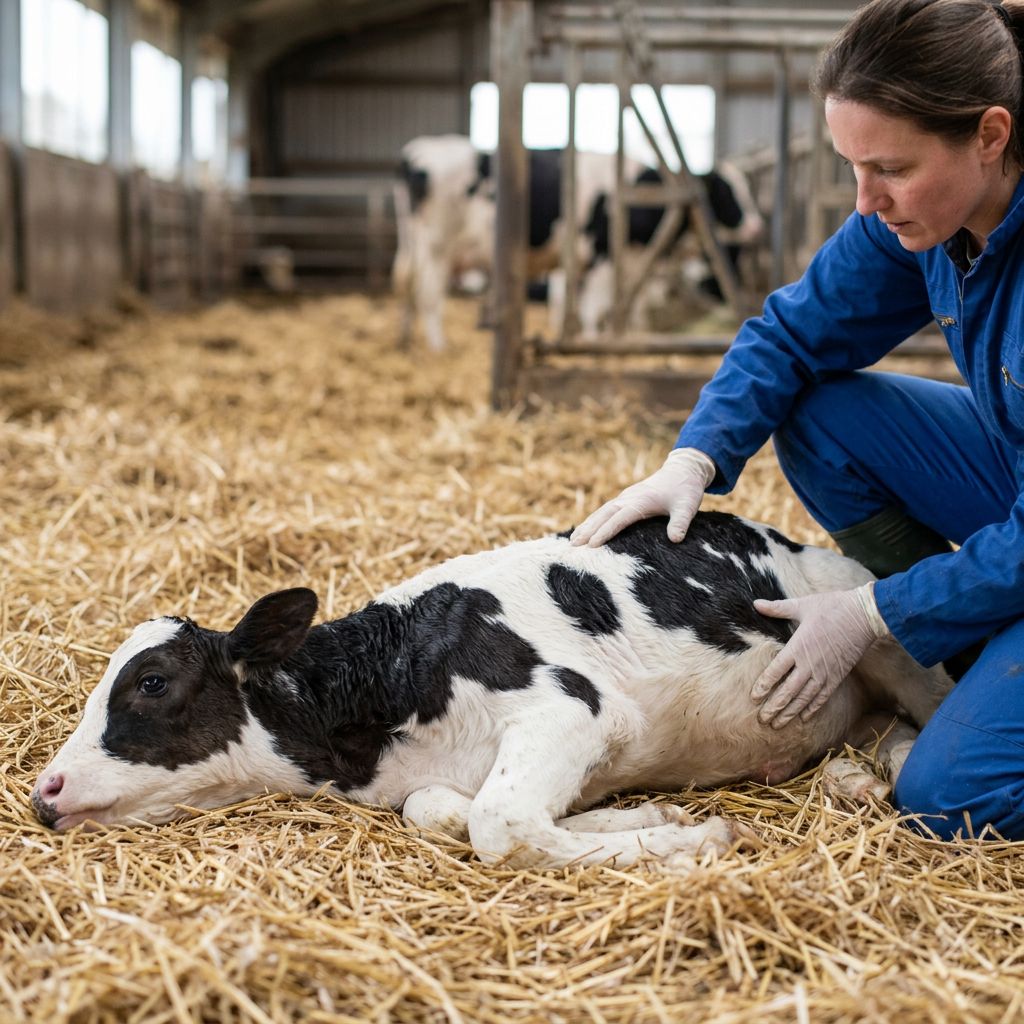
This Holstein calf was born without complications and was fed 4 liters of colostrum through an esophageal tube about 30 minutes after birth, followed by 2 more liters 6 hours later. Shortly after this second feeding, she began showing signs of intense pain and a very swollen belly. This feeding method is very common on dairy farms.
What did the vet find?
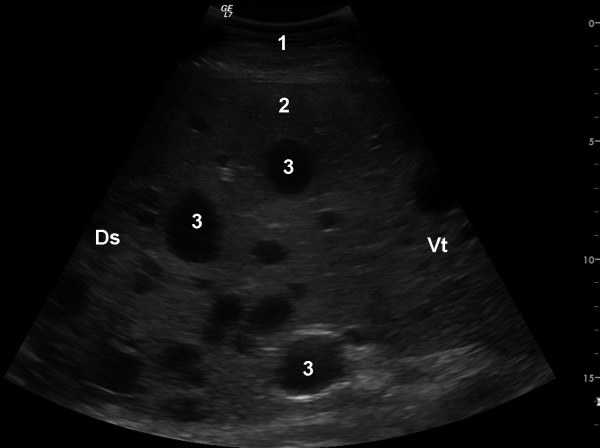
The veterinarian found the calf lying on her side in severe pain, with a very fast heart rate and breathing, a strongly distended belly, and constant moaning. She was not dehydrated and her temperature was normal. After her death, the postmortem exam revealed a large, solid, yellow colostrum curd, 28 cm long, lodged inside her abomasum (true stomach). Tests found no infection or birth defect, confirming that this curd was blocking everything and causing the pain.
What did the vet do?
ℹ️ Treatment given to THIS animal, decided by its veterinarian. It is not a prescription: never apply it without veterinary advice.
The veterinarian first tried supportive treatment on the farm, giving IV fluids to rehydrate her and an anti-inflammatory for the pain. Since the calf did not respond at all and her suffering kept worsening, it was decided to humanely euthanize her without delay for animal welfare reasons.
What happened next?
Despite treatment, the calf showed no improvement and was euthanized about 20 hours after treatment began. The postmortem confirmed that the huge mass of clotted colostrum in her stomach was the cause of all her suffering. The veterinarian noted that several other calves on the same farm, and on other farms following the same feeding protocol, had experienced similar problems that year.
Advice for the farmer
To avoid this problem, it is better to feed smaller volumes of colostrum or leave a longer gap between the first and second feedings (at least 8 to 10 hours), especially when colostrum is tube-fed rather than suckled naturally.
Source
- Source
- PubMed Central
- Title
- Severe colic in a newborn dairy calf caused by a large colostrum curd: a case report.
- Authors
- Sockett DC, Pohly AE, Deering KM, Breuer RM.
- Year
- 2024
- DOI
- 10.3389/fvets.2024.1348084
- Licence
- CC BY