
Presentation
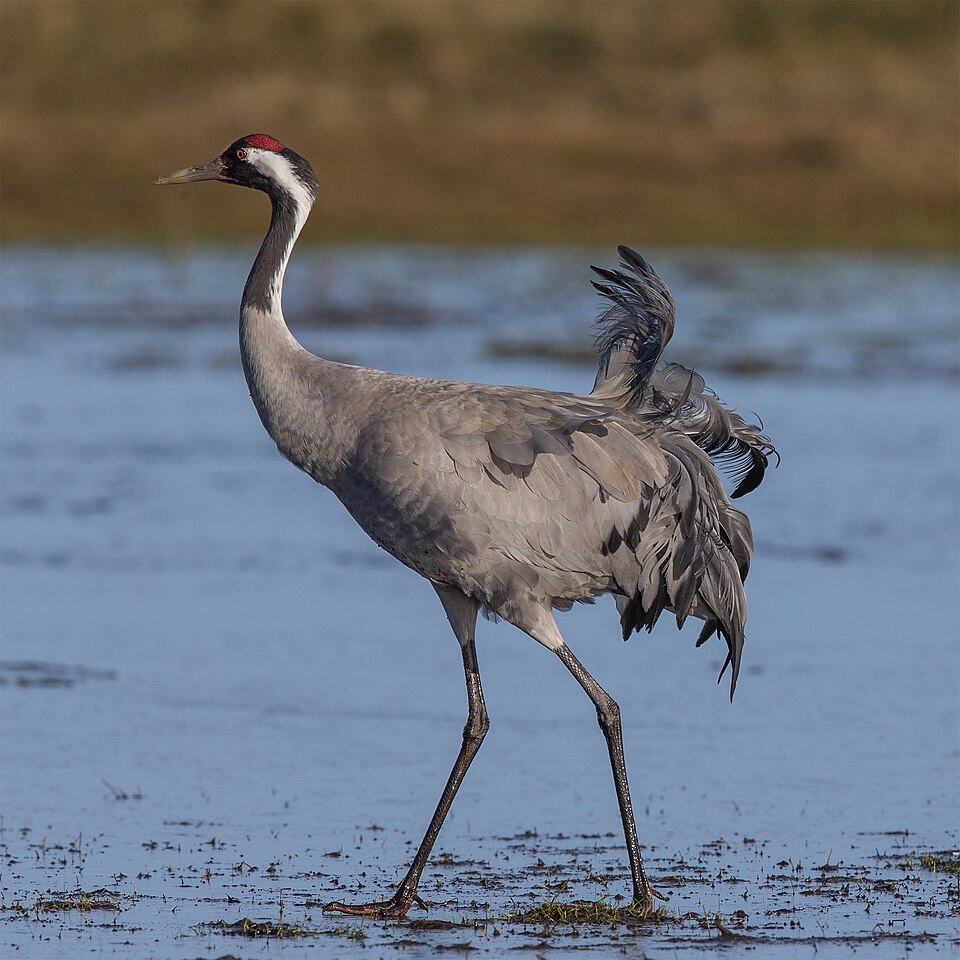
The common crane is a large migratory wading bird recognized by its gray plumage, red crown, and long neck extended in flight. It stands approximately 1.10 to 1.30 meters tall, making it one of the largest flying birds in Europe and Asia. The species lives in family groups or in large flocks during migration, often flying in V-formation. Its powerful, trumpeting call carries over long distances, particularly during migration stopovers. Common cranes frequent wetlands, grasslands, and cultivated fields where they feed and rest. Tunisia serves as an occasional stopover on certain migration routes between Europe and Africa.
The species displays gray ash-colored plumage, a black throat and nape that contrast with a bare red cap on the crown. The legs and neck are long, adapted for walking through wetlands and surveying the environment. The broad wings enable efficient gliding flight over long distances during migrations.
Characteristics
Indicative values: they vary by subspecies, sex and region.
Habitat and distribution
The species frequents wetlands, peatbogs, marshy grasslands, and open agricultural fields. It seeks out areas with both shallow water for roosting at night and open spaces for daytime feeding. During migration stopovers, it favours vast cultivated plains.
CURRENT RANGE
The common crane breeds in northern and eastern Europe and in northern Asia, and winters in North Africa, the Iberian Peninsula, and the Middle East. In Tunisia, it is observed occasionally during migration passages, particularly in the wetland areas of the north and central regions.
Behaviour
Highly gregarious, the species forms large gatherings during migration and at wintering sites. Mated pairs perform elaborate courtship displays featuring jumps, bows, and synchronized calls. Collective vigilance within the group allows rapid detection of predators.
Reproduction
The common crane nests on the ground in isolated wetlands, typically laying one to two eggs per clutch. Both parents incubate the eggs, which takes around 30 days, and raise the young until fledging. Pairs remain bonded over several years, sometimes for life.
Peculiarities
Its characteristic trumpet call is produced by an exceptionally long and coiled windpipe, which amplifies the sound. The spectacular courtship displays, combining jumps and bows, are unique among European birds.
Threats and conservation
Wetland degradation and drainage represent the main threat to the species. Collisions with power lines and human disturbance at stopover sites also affect local populations.
Numbers and trends vary across sources and regions. See the IUCN assessment for the latest reference data.
Gallery
1 documented photographs.
References
Profile updated 07 September 2026 · Reviewed by the TunisieVet editorial team.
Comments (0)
No comments yet.
CONSERVATION STATUS
Least concern (LC)
IUCN source, latest published assessment.
Species health
Documented diseases for this species.
See the 4 diseases of this species Find a veterinarianThis information is provided for educational purposes only and is not a substitute for a veterinary consultation. If you have any concerns about your animal's health, consult a veterinarian.
To discover around: Crane
Videos, facts, stories and records linked to this species.
Similar animals
Other species documented in Animalpedia.

TunisieVet in your pocket 📱🐾 Access your veterinary services wherever you are. [ Download the app ]
Learn more