
Presentation
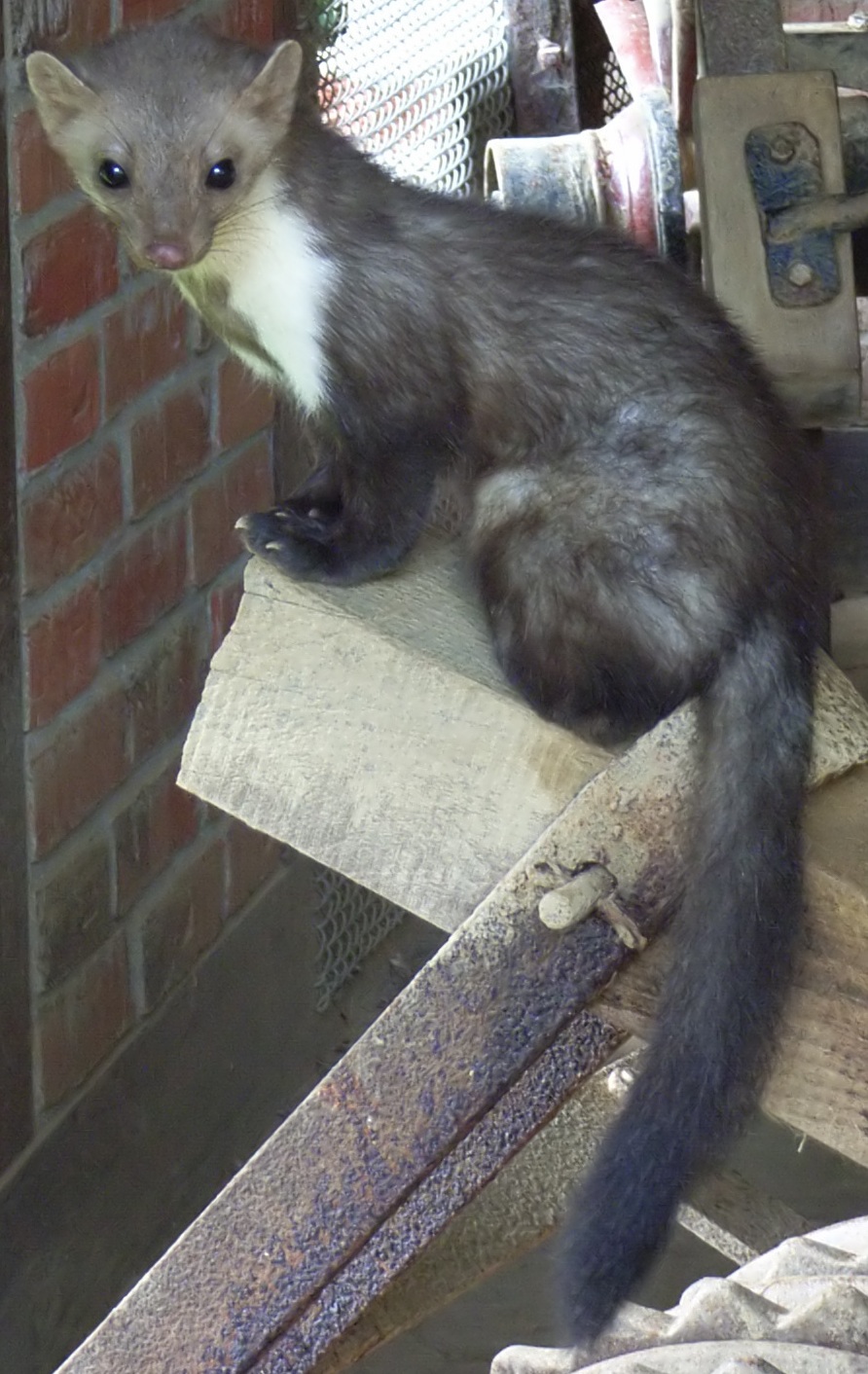
The Weasel (Martes foina) is a small carnivorous mammal of the mustelid family, present in Europe, North Africa and Central Asia. It is distinguished by a white gular bib and a gray-brown coat. Opportunistic, it frequents both wooded environments and areas inhabited by humans. Discreet and mainly nocturnal, it is often perceived as harmful because of the damage it causes in homes and chicken coops. In Tunisia, it is present in certain regions of the north and center of the country.
The Weasel has an elongated and flexible body, short legs and a long bushy tail. Its coat is gray-brown with a characteristic white gular patch, often divided in two, extending to the front legs. Its senses of smell and hearing are highly developed, adapted to a nocturnal and opportunistic lifestyle.
Characteristics
Indicative values: they vary by subspecies, sex and region.
Habitat and distribution
Weasel frequents a wide variety of environments, from forests and rocky areas to agricultural and urban spaces. It adapts particularly well to human proximity, colonizing barns, attics and gardens. This ecological flexibility explains its wide geographical distribution.
CURRENT RANGE
The species is present in Europe, North Africa and Central Asia up to Mongolia. In North Africa, it occupies notably Morocco, Algeria and Tunisia. It has also been introduced into certain regions where it was not originally present.
Behaviour
A solitary and territorial animal, the Weasel is mainly active at night. She is an agile climber and does not hesitate to settle in attics, barns or car engines for shelter. It marks its territory using glandular secretions and can be aggressive towards its conspecifics if encountered.
Reproduction
Mating takes place in summer, but thanks to a phenomenon of embryonic diapause, the actual gestation only lasts about a month after delayed implantation. Females give birth in the spring, giving birth to a litter of three to five young on average. The young are weaned after about two months and reach sexual maturity around a year.
Peculiarities
The Weasel can be distinguished from the marten by its divided white bib and bare foot pads, while those of the marten are hairy. It is renowned for its habit of chewing the cables and hoses of parked car engines, causing significant material damage.
Threats and conservation
The species is not threatened on a global scale and even enjoys broad ecological tolerance. However, it is regularly trapped or hunted because of the damage it causes to homes and poultry farms. The destruction of certain natural habitats remains a factor that can affect local populations.
Numbers and trends vary across sources and regions. See the IUCN assessment for the latest reference data.
Gallery
1 documented photographs.
References
Profile updated 26 August 2026 · Reviewed by the TunisieVet editorial team.
Comments (0)
No comments yet.
CONSERVATION STATUS
Least concern (LC)
IUCN source, latest published assessment.
Species health
Documented diseases for this species.
See the 4 diseases of this species Find a veterinarianThis information is provided for educational purposes only and is not a substitute for a veterinary consultation. If you have any concerns about your animal's health, consult a veterinarian.
Similar animals
Other species documented in Animalpedia.

TunisieVet in your pocket 📱🐾 Access your veterinary services wherever you are. [ Download the app ]
Learn more