
Presentation
Axolotl is a fascinating urodele amphibian, endemic to Mexico, characterized by its permanent retention of larval traits into adulthood. This biological singularity, called neoteny, makes Axolotl a unique animal studied intensely by scientists. Although extremely rare in the wild, the species survives thanks to captive populations, particularly in research and aquaculture.
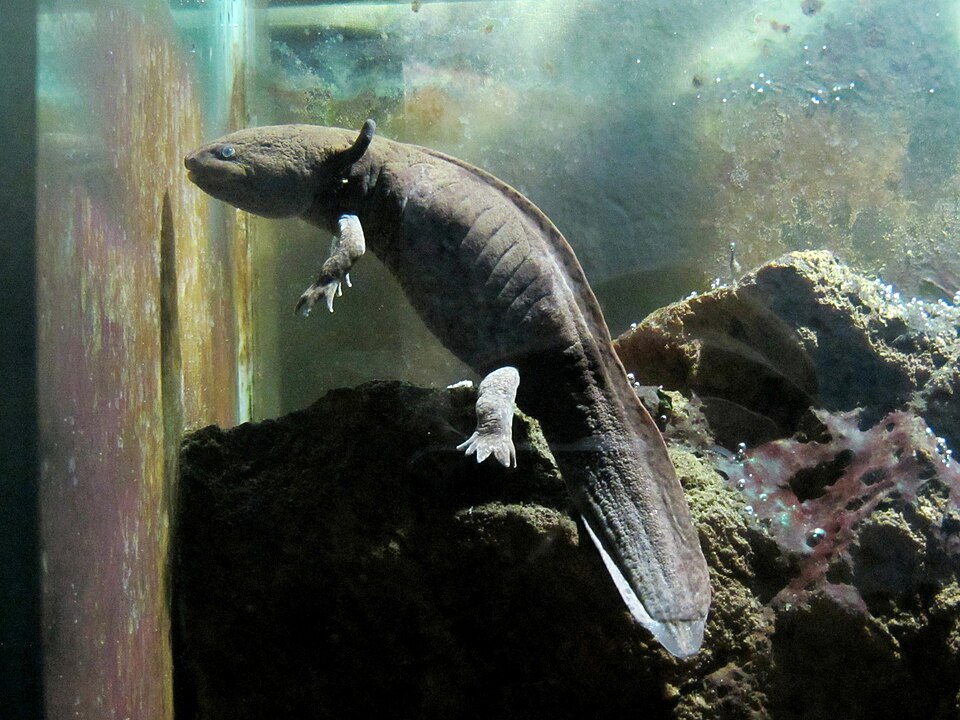
Axolotl has an elongated, smooth body, very distinctive feathered external gills, and a small head with lidless eyes. Its skin is smooth and moist, generally pale pink, white or blackish in color depending on the captive breeding varieties. It has four short, fragile legs and a long, laterally flattened tail used for swimming.
Characteristics
Indicative values: they vary by subspecies, sex and region.
Habitat and distribution
Axolotl is endemic to mountain lakes in central Mexico, particularly Lake Xochimilco located at approximately 2,300 meters above sea level. It prefers cold, stagnant fresh water, richly vegetated with areas of muddy or sandy bottom. The species favors low light conditions and a temperature between 14 and 20°C.
CURRENT RANGE
Axolotl is strictly endemic to Mexico, where its wild presence is now restricted to a few residual areas of Lake Xochimilco and its adjacent channels, near Mexico City. In the wild, the species is virtually extinct. However, significant populations exist in laboratories, research institutions and aquariums around the world.
Behaviour
The Axolotl is a relatively passive and solitary aquatic animal, spending the majority of its time on the bottom or near submerged vegetation. It rarely emerges from the water but can breathe atmospheric air using its rudimentary lungs. Although apparently placid, it reacts to disturbance by rapid flight, and can completely regenerate its limbs and spinal cord.
Reproduction
The Axolotl is a dioecious animal reproducing exclusively in an aquatic environment. Reproduction begins with a complex courtship display by the male who deposits spermatophores. The female captures them and uses them to fertilize her eggs, then laying a few hundred sticky eggs on vegetation or surfaces. The larvae hatch after two weeks and feed on their initial yolk sac.
Peculiarities
The major characteristic of the Axolotl is its complete neoteny: it retains its external gills and its aquatic breathing mode throughout its life, without undergoing metamorphosis into a terrestrial form. Exceptionally, under stress (change in pH, high temperature, low water levels) or during hormonal treatments, it can undergo metamorphosis and become terrestrial. It is also a remarkable champion of regeneration.
Threats and conservation
The Axolotl faces critical threats of extinction linked mainly to the drastic destruction of its natural habitat. Lake Xochimilco was largely drained, polluted and urbanized during the 20th century. The introduction of predatory fish, fragmentation of aquatic ecosystems and contamination by sewage pose additional major threats to the few remaining populations.
Numbers and trends vary across sources and regions. See the IUCN assessment for the latest reference data.
Gallery
1 documented photographs.
References
UICN — Liste rouge des espèces menacées
Profile updated 28 August 2026 · Reviewed by the TunisieVet editorial team.
Comments (0)
No comments yet.
CONSERVATION STATUS
Critically endangered (CR)
IUCN source, latest published assessment.
Species health
Documented diseases for this species.
Find a veterinarianThis information is provided for educational purposes only and is not a substitute for a veterinary consultation. If you have any concerns about your animal's health, consult a veterinarian.
To discover around: Axolotl
Videos, facts, stories and records linked to this species.
Similar animals
Other species documented in Animalpedia.

TunisieVet in your pocket 📱🐾 Access your veterinary services wherever you are. [ Download the app ]
Learn more