
Presentation
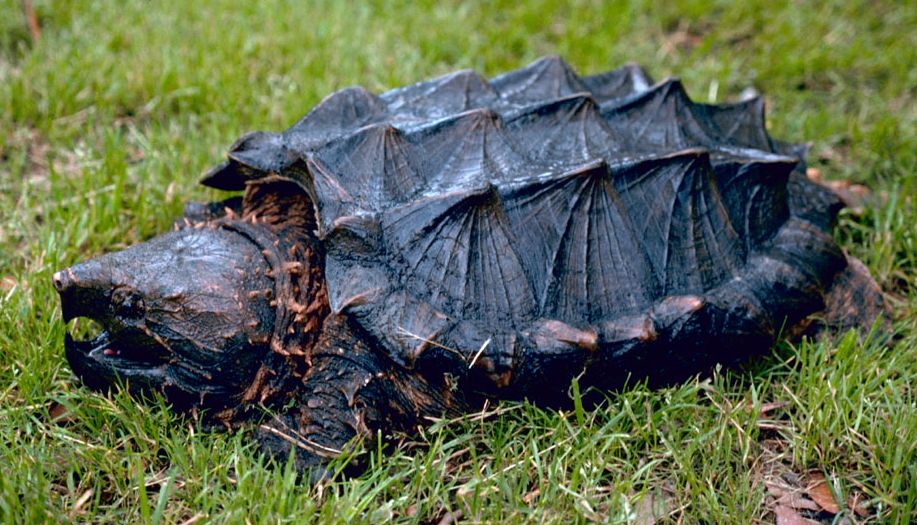
The Alligator turtle is a massive freshwater turtle native to the southeastern United States, known for its prehistoric appearance. Its robust carapace, bristling with three protruding dorsal ridges, gives it its name, evoking the skin of an alligator. It is one of the largest freshwater turtles in the world, capable of reaching considerable weight. It has a large head, a powerful hooked beak and a tongue with a pink worm-like appendage used as a lure to attract fish. Discreet and not very active, it spends most of its time motionless at the bottom of the water. Outside of its native range, it is sometimes held in captivity by NAC enthusiasts because of its spectacular appearance.
The carapace can measure up to 80 cm long and has three protruding longitudinal ridges typical of the species. The head is broad and massive, with powerful jaws ending in a hooked beak. The skin is thick, rough, and grayish-brown to blackish in color, providing effective camouflage in muddy waters. Its tail is long, often almost as long as the shell itself.
Characteristics
Indicative values: they vary by subspecies, sex and region.
Habitat and distribution
The species frequents deep, calm water rivers, lakes, swamps and bayous in the southeastern United States. It likes muddy bottoms where it can hide effectively. It is almost exclusively aquatic and only comes out of the water to lay eggs.
CURRENT RANGE
Alligator turtle is endemic to the southeastern United States, including the Mississippi River basins and Gulf of Mexico rivers, from Florida to Texas and down to Illinois. It is absent in the wild from North Africa and Tunisia. Captive specimens can, however, be found elsewhere in the world in private homes.
Behaviour
This turtle is solitary and mainly nocturnal, remaining motionless for long hours at the bottom of the water. It is not very aggressive towards humans when left alone, but can bite violently if it feels threatened or manipulated. It occasionally comes to the surface to breathe, and may remain submerged for long periods. Its behavior is generally discreet and territorial.
Reproduction
Reproduction takes place in spring, in water. The female lays only once a year, usually between 20 and 50 eggs buried in a nest dug on the bank. Incubation lasts approximately three to six months depending on temperature. The young are independent from hatching and receive no parental care.
Peculiarities
Its tongue lure hunting technique is unique among turtles and fascinates naturalists. Its bite is extremely powerful and can sever a finger. It can live for several decades, with some captive individuals being over 70 years old.
Threats and conservation
The species has been overexploited for its meat and is threatened by the degradation and pollution of its aquatic habitats. Illegal trade for the NAC market also puts pressure on wild populations. Conservation and reintroduction programs exist in several American states.
Numbers and trends vary across sources and regions. See the IUCN assessment for the latest reference data.
Gallery
1 documented photographs.
References
Profile updated 01 September 2026 · Reviewed by the TunisieVet editorial team.
Comments (0)
No comments yet.
CONSERVATION STATUS
Vulnerable (VU)
IUCN source, latest published assessment.
Species health
Documented diseases for this species.
This information is provided for educational purposes only and is not a substitute for a veterinary consultation. If you have any concerns about your animal's health, consult a veterinarian.
To discover around: Alligator turtle
Videos, facts, stories and records linked to this species.
RECORD
up to 100 kg
One of the heaviest freshwater turtles
Maximum weight observed in adult wild individuals from the southeastern United States.
Similar animals
Other species documented in Animalpedia.

TunisieVet in your pocket 📱🐾 Access your veterinary services wherever you are. [ Download the app ]
Learn more