
Presentation
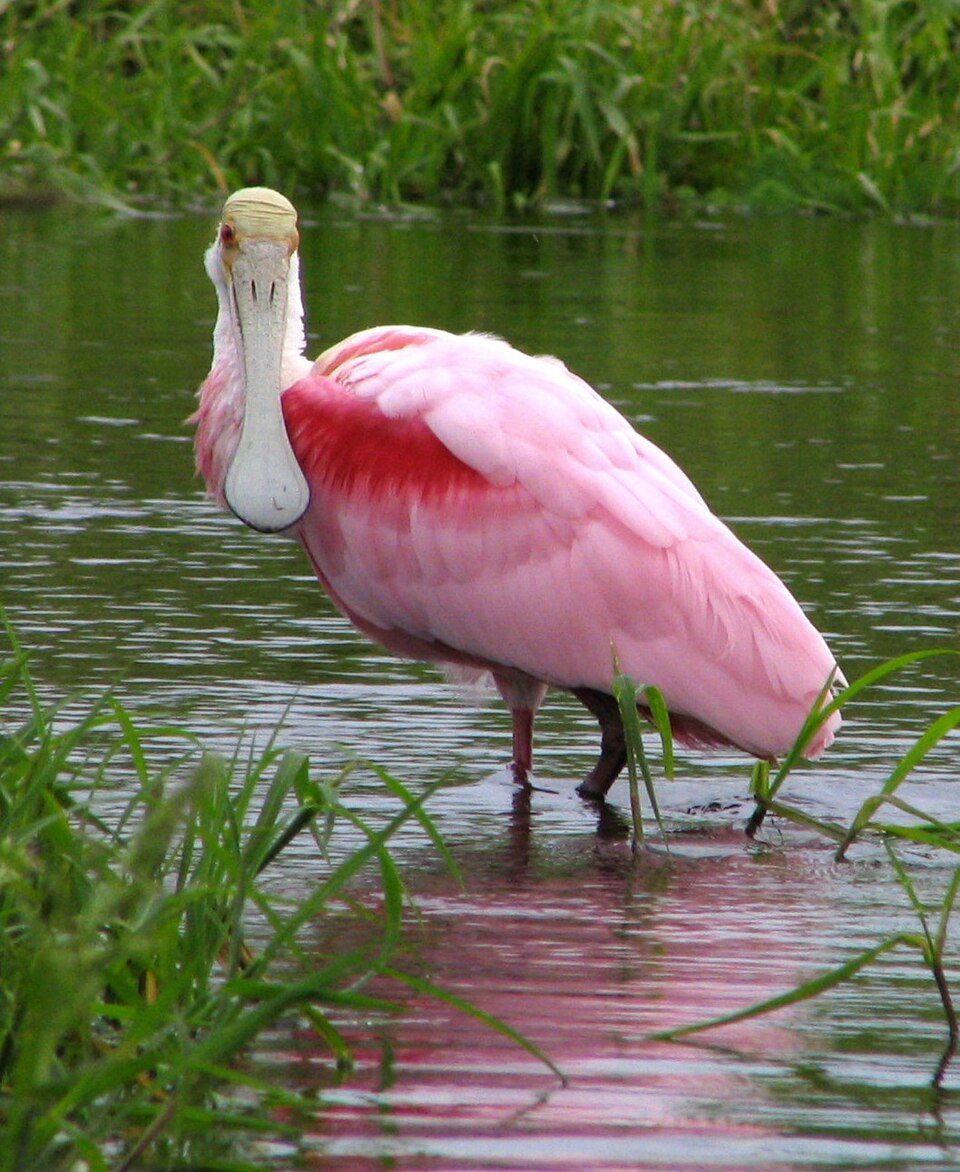
The Roseate Spoonbill is a large wading bird easily identified by its pink plumage and distinctive flat spoon-shaped bill. The pink colouration comes from carotenoid pigments found in the crustaceans it feeds on. The species inhabits coastal wetlands throughout the Americas, ranging from the United States to Argentina. It often moves about in groups and nests in mixed colonies with other wading birds. Its elegant bearing and vibrant colour make it readily recognisable among waterfowl. It does not occur naturally in Tunisia.
The bird has a long neck, long pink legs, and a large flat bill unique among wading birds. Plumage colour ranges from pale pink to bright pink depending on age and diet. The heads of adults are often featherless, revealing greyish or greenish skin.
Characteristics
Indicative values: they vary by subspecies, sex and region.
Habitat and distribution
The species frequents marshes, coastal lagoons, mangroves, and shallow estuaries. It favours calm waters rich in small aquatic prey. These wetland habitats provide both feeding zones and nesting sites.
CURRENT RANGE
The Roseate Spoonbill is found from the southern United States to central Argentina, passing through the Caribbean and Central America. The largest populations occur in Florida, the Amazon basin, and along the Gulf of Mexico coast. It is absent from Africa and Europe, including Tunisia.
Behaviour
This species is gregarious and lives in groups for both feeding and nesting. It is diurnal and often shares roosting sites with other wading birds such as herons or ibises. Courtship displays include twig exchanges and synchronised head movements.
Reproduction
The female typically lays two to three eggs in a nest built from twigs, often located in trees or mangroves. Incubation lasts about three weeks, and both parents participate in rearing the young. Juveniles acquire their full pink plumage after two to three years.
Peculiarities
Its spoon-shaped bill is a highly developed sensory tool that allows it to detect prey without seeing them. The pink colouration of its plumage depends directly on its diet, much like that of flamingos.
Threats and conservation
The destruction of coastal wetlands and water pollution represent the main threats to the species. Historical hunting for its feathers significantly reduced certain populations in the nineteenth and twentieth centuries. Current populations are generally stable thanks to habitat protection measures.
Numbers and trends vary across sources and regions. See the IUCN assessment for the latest reference data.
Gallery
1 documented photographs.
References
Profile updated 08 September 2026 · Reviewed by the TunisieVet editorial team.
Comments (0)
No comments yet.
CONSERVATION STATUS
Least concern (LC)
IUCN source, latest published assessment.
Species health
Documented diseases for this species.
See the 4 diseases of this species Find a veterinarianThis information is provided for educational purposes only and is not a substitute for a veterinary consultation. If you have any concerns about your animal's health, consult a veterinarian.
Similar animals
Other species documented in Animalpedia.

TunisieVet in your pocket 📱🐾 Access your veterinary services wherever you are. [ Download the app ]
Learn more