StoryDesertSteppeFarmland & grasslandsBeliefs and teachings
100 Islamic teachings on animals: mercy, responsibility and respect
From the ant that speaks to Solomon to the camel that complains to the Prophet ﷺ, Islam's sacred texts weave a constant thread: animals are creatures worthy of respect, care and mercy.
3 min read · Published 6 days ago · 13 views
An army commander comes to an abrupt halt before a valley. It is not a human obstacle that stops him, but the voice of a small ant warning her sisters to take shelter. This scene, drawn from the Qur'an, captures in itself the spirit with which Islam regards the animal world: a world populated by creatures that have their own value, their own community, and who deserve consideration and compassion.
Solomon's ant and the animal nations
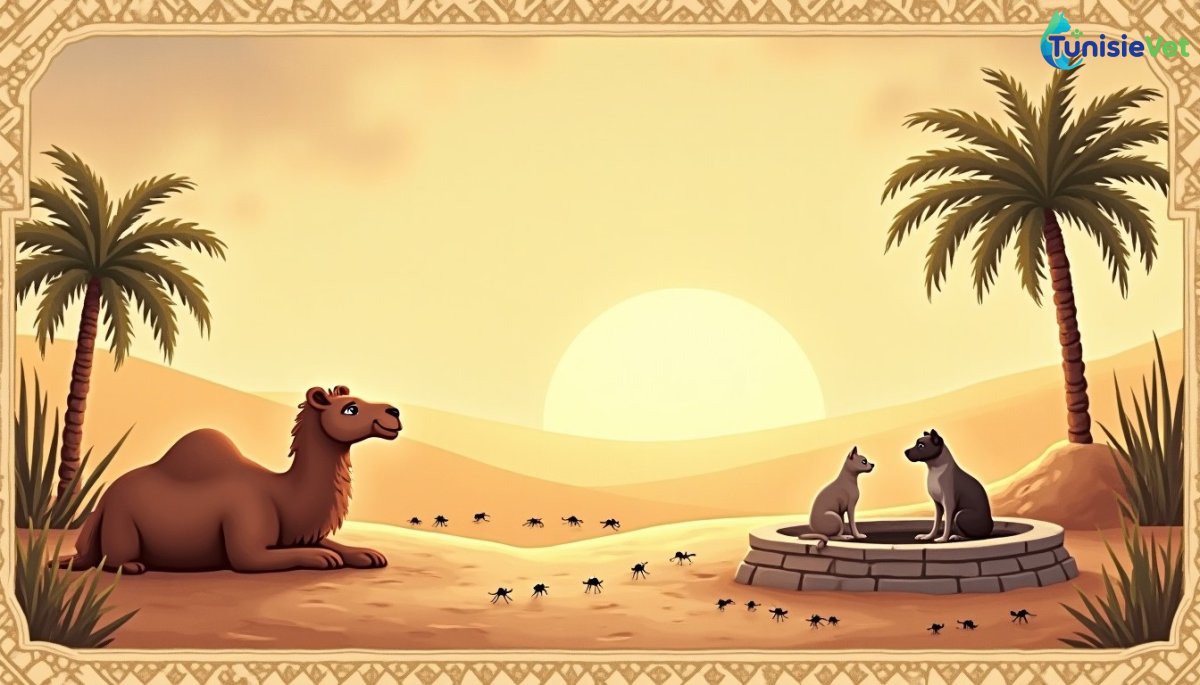
In Surah An-Naml ("The Ants"), the prophet Solomon, alaihi salam, hears an ant ordering her companions to enter their dwellings so as not to be crushed without their knowing it. Far from ignoring this, Solomon smiles, amused and moved by this speech, and thanks God for granting him the ability to understand the language of creatures.
"When they reached the valley of the ants, an ant said: 'O ants, enter your dwellings, lest Solomon and his armies crush you unawares!'"
(Surah An-Naml, verse 18)
This verse reminds us that the Qur'an regards ants, like other creatures, as organized communities, worthy of care so as not to harm them, even through mere carelessness.
The camel that complains to the Prophet ﷺ
A hadith reported in the Musnad of Imam Ahmad recounts that the Prophet ﷺ once entered a garden where a camel was found. Upon seeing him, the animal groaned and its eyes filled with tears. The Prophet ﷺ approached, stroked it, and the animal grew calm. He then asked who was the owner of this camel, and reminded him to fear God concerning this creature: it was complaining, he explained, of being overworked and poorly fed.
This account illustrates a central principle: the human being's responsibility towards the animals he possesses or uses. To feed, to spare from hardship, not to overburden: these are duties, not mere options.
Publicité
Publicité
The woman punished, the woman forgiven
Another teaching, reported in Sahih al-Bukhari and Sahih Muslim, speaks of two opposite fates linked to animals. The Prophet ﷺ recounted that a woman was condemned to the Fire for confining a cat without feeding it or allowing it to hunt freely, until it died. Conversely, he related the story of a man, or according to another account a disreputable woman, who gave drink to a thirsty dog at the edge of a well, and who obtained divine forgiveness for this act of compassion towards a creature.
These two accounts, transmitted through authentic channels, show that kindness or cruelty towards animals is never a neutral act in the eyes of Islam: it carries real spiritual weight.
A hundred teachings, a single spirit
Throughout the Qur'an and the Hadith, accounts of animals number in the dozens: Salih's she-camel, the crow that taught a son of Adam how to bury his brother, the dog of the People of the Cave, Solomon's ant, the complaining camel, the cat and the dog of the well. Each of these teachings, taken separately, seems to relate a small scene. Together, they sketch a coherent vision: animals are not mere objects at our disposal, but creatures of God, with an existence and a sensitivity of their own.
From these multiple accounts emerges a single red thread: to feed a hungry animal, not to overburden it, not to mistreat it, such are the acts that Islamic tradition elevates to the rank of acts of faith. To care for the creatures around us, whether domestic or wild, remains thus one of the finest concrete expressions of the mercy taught for centuries.