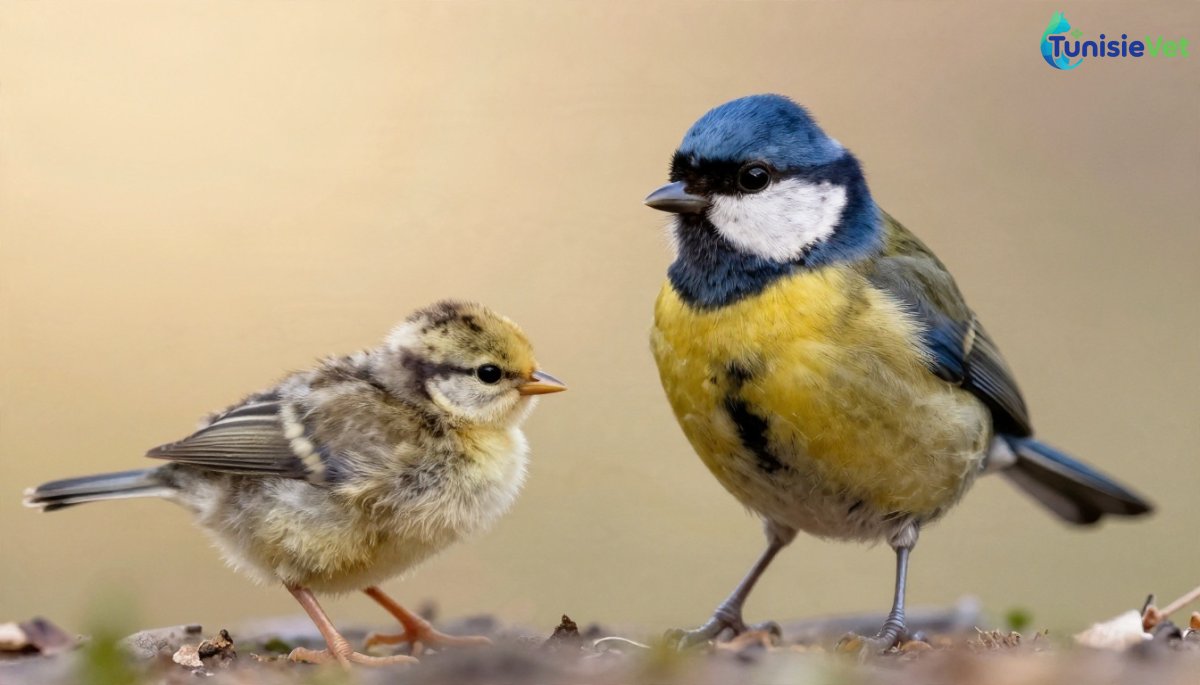
During a journey, some companions take the chicks of a bird. The mother's return draws the attention of the Prophet Muhammad ﷺ, who asks that the chicks be returned to her.
During a journey, companions of the Prophet Muhammad ﷺ notice a small bird with its two chicks. They take the young birds. Their mother then comes and begins to flutter her wings. This behaviour draws attention to the distress caused to the bird by being separated from its young.
The Chicks Returned to Their Mother
This account is reported in the Sunan Abi Dawud. The companion who transmits it relates that the Prophet Muhammad ﷺ had moved away for a short time. On his return, he sees the bird and asks who has caused it distress by taking its chicks. He then orders that they be returned to it.
The account does not specify what led the companions to take the young birds, nor what happened to the bird family after this order. It does not describe the location of the journey either. The few facts transmitted are nonetheless enough to show what stands out: a mother looks for her young, and the response is to return them to her.
The bird in this story is free. It does not live with the travellers and does not belong to them. Yet its agitation is not ignored. The Prophet Muhammad ﷺ takes into account what is happening to it and asks that the separation be brought to an end. The care shown to the animal is therefore not limited to those who live in houses or on farms.
Attention to Living Beings
In reading this account, one can observe the place given to a fragile being. The chicks are small, and their mother cannot explain in words what is happening to her. Nevertheless, her movements make her distress visible. The companions are invited to respond to this situation with an action: returning the chicks to their mother.
This story also reminds us that wild animals have their own lives and take care of their young. Encountering them may awaken our curiosity, but observing them does not necessarily require touching or taking them. Watching carefully also means allowing the animal the peace it needs.
To live this kindness every day, we can admire wild animals from a distance and avoid disturbing their young. Respecting their space is a simple way of leaving them a place in the world we share with them.