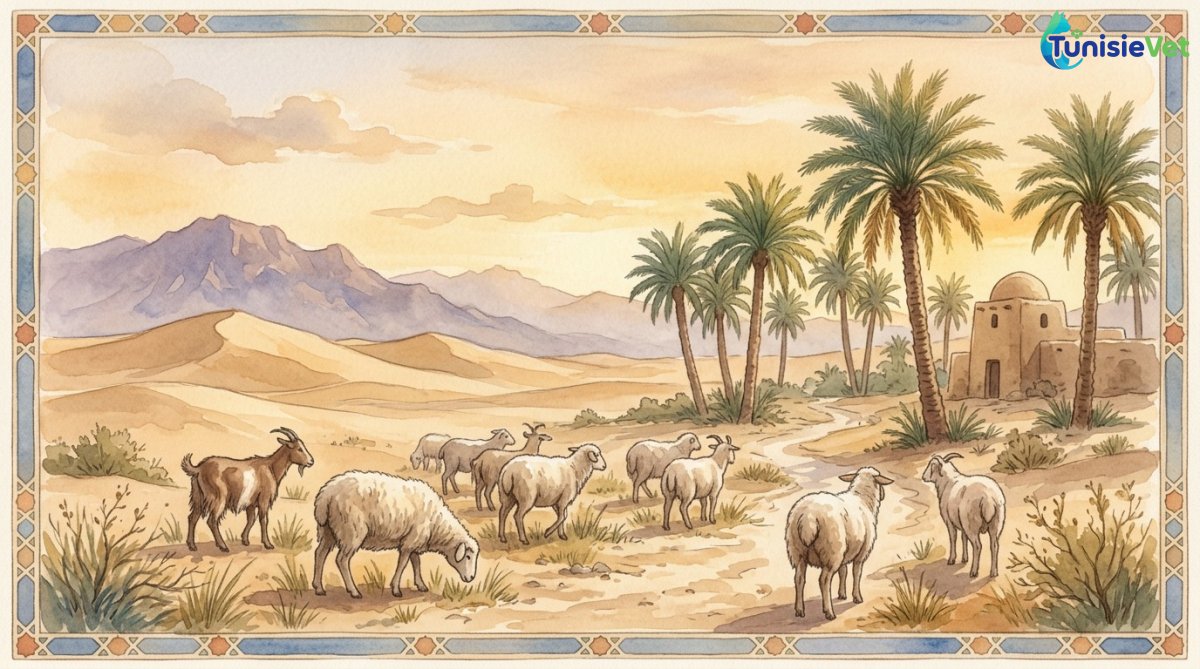
Before receiving his prophetic mission, Mûsâ (Moses) ﷺ spent many years in the service of a righteous man from Midian, tending to his flocks. This humble and patient daily life shaped the heart of the future messenger of God.
After fleeing Egypt, Mûsâ (Moses), upon whom be peace, arrived exhausted at a watering place in Midian. It was there, while helping two young women water their livestock, that a new chapter of his life began—a story recounted in Surah Al-Qasas. Their father, a virtuous man, welcomed him into his home and offered him, in exchange for marriage to one of his daughters, to work for him for a number of years.
Service in Tending the Flocks
The Quran records the words of this man from Midian, who asked Mûsâ to serve him for eight years, or ten if he wished to do so of his own accord:
﴿ قَالَ إِنِّي أُرِيدُ أَنْ أُنكِحَكَ إِحْدَى ابْنَتَيَّ هَاتَيْنِ عَلَىٰ أَن تَأْجُرَنِي ثَمَانِيَ حِجَجٍ ۖ فَإِنْ أَتْمَمْتَ عَشْرًا فَمِنْ عِندِكَ ۖ وَمَا أُرِيدُ أَنْ أَشُقَّ عَلَيْكَ ۚ سَتَجِدُنِي إِن شَاءَ اللَّهُ مِنَ الصَّالِحِينَ ﴾
"He said: 'I wish to marry you to one of my two daughters, on condition that you work for me for eight years. If you complete ten years, that shall be on your own account, for I do not wish to be hard upon you. If God wills, you shall find me to be one of the righteous.'"
(Surah Al-Qasas, verse 27)
Mûsâ accepted and spent many years tending to his father-in-law's flocks. This work, far from being a minor detail, occupied an important part of his youth before his prophetic mission to Pharaoh was entrusted to him.
The Shepherd, a School for the Prophets
It is reported in an authentic hadith, narrated by Abû Hurayrah and recorded in Sahih al-Bukhari, that the Prophet Muhammad ﷺ said: "Every prophet was sent to tend sheep." When his companions asked if he had done the same, he replied that he himself tended sheep for the people of Mecca in exchange for a few qirats.
This hadith sheds light on Mûsâ's time in Midian. The work of watching over flocks—guiding animals that are sometimes fearful or scattered, meeting their needs day after day without rest—develops patience, gentleness, and a sense of responsibility. These qualities, gained through the humility of pastoral work, prepare the heart to bear a far greater message: that of guiding people.
Thus, the years Mûsâ spent with the flocks of Midian were not an unimportant interlude, but a formative stage ordained by divine wisdom. Before he would address Pharaoh and lead his people out of Egypt, he first learned to guide sheep to water and pasture, to protect them, and to watch over them with steadfastness.
This story reminds us that the care given to animals is never an insignificant task. Tending a flock with patience, gentleness, and responsibility is a virtue shared by many prophets, and a precious example for each of us today: to treat the animals entrusted to our care well is also to cultivate goodness and steadfastness within ourselves.