StoryDesertSavannaForestTropical forestMountainSteppeWetlandsCoastlineFarmland & grasslandsUrban environmentBeliefs and teachings
Why Is the Spider's House Used as an Example?
In the Quran, Allah compares the fragility of certain beliefs to a spider's web. Why has this quiet creature, an tireless weaver, become the Quranic symbol of how weak misplaced attachment can be?
3 min read · Published 1 week ago · 14 views
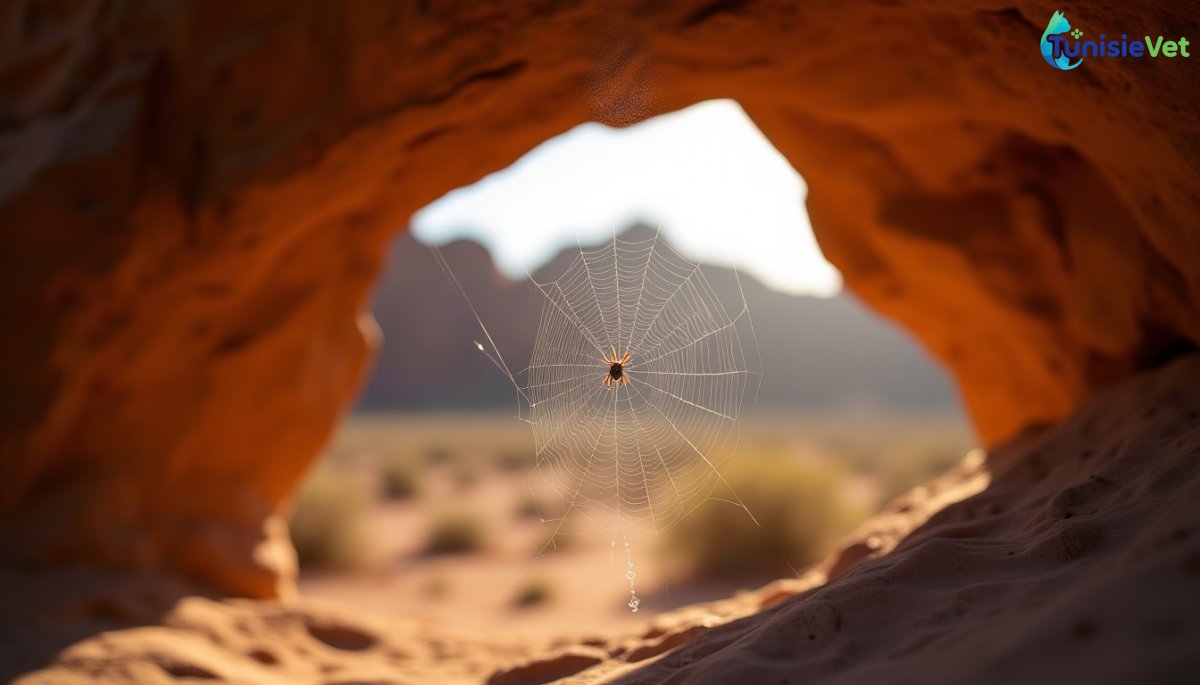
Among the living creatures mentioned in the Quran to teach people, the spider holds a unique place: it even lends its name to an entire chapter, Al-'Ankabout, "The Spider." This choice is far from random, since the image of its house, so apparently fragile, serves as a striking example to describe a deep spiritual reality.
The Quranic Example of the Fragile Web
In this chapter, Allah speaks of those who take protectors or deities other than Him, hoping to find support and security in them. Their situation is compared to that of the spider which builds its home:
"The likeness of those who take protectors other than Allah is that of the spider which builds a house; and the most fragile of all houses is indeed the house of the spider. If only they knew!"
(Surah Al-'Ankabout, verse 41)
An Image for Reflection
This verse seeks in no way to disparage the spider itself, whose weaving is in fact of remarkable ingenuity, but rather to offer an image accessible to all for understanding a spiritual truth: what appears to be a solid shelter may be, on the level of ultimate reality, nothing more than a structure without real substance. A spider's web, despite its complexity and the patience required to spin it, tears at the slightest gust of wind or the gentlest pressure. It protects neither from cold, rain, nor from serious danger. According to certain scholars of Quranic interpretation, this comparison invites the believer to examine what their trust and hope truly rest upon, and not to be satisfied with a support which, like the web, seems present but proves in reality to be without strength.
It is interesting to note that this same creature appears elsewhere in Islamic tradition in a very different way, this time as an instrument of protection rather than a symbol of fragility. It is reported in several accounts from the Sira, the prophetic biography, that a spider wove its web at the entrance of the cave of Thawr, helping to conceal the presence of the Prophet ﷺ and his companion Abu Bakr during their migration to Medina. This account, transmitted by biographical tradition rather than recorded as an authenticated hadith in the major collections, shows that the same creature can, depending on the context, illustrate either the fragility of misplaced attachment, or the way creation as a whole can be put in service of genuine protection.
A Double Perspective on One Creature
These two references, far from contradicting each other, enrich the believer's understanding: they remind us that nothing in creation is insignificant, and that each being, however small and unnoticed, carries multiple lessons depending on the angle from which one considers it.
Watching a spider patiently spin its web, thread after thread, thus invites reflection rather than disgust or indifference. Taking care of animal life, even the most humble, respecting it in its environment, and avoiding the destruction without reason of what contributes to natural balance, is also a way of meditating on the teachings the Quran draws from these creatures. Kindness toward all animals, including those we encounter least willingly, remains thus an essential thread running through faith.