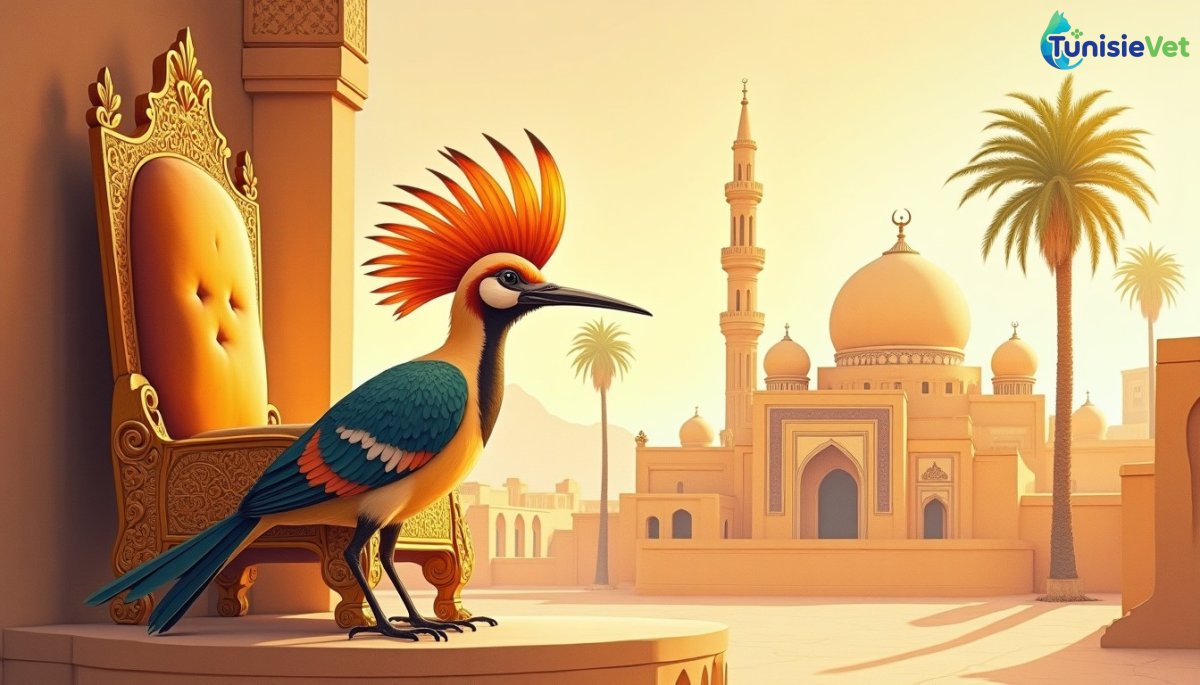
The Hoopoe Who Brought Unexpected News to the Prophet Sulayman
One day, in the vast army of the Prophet Sulayman, a single bird failed to answer the roll call. Its disappearance, and then its return, would reveal news that no one had anticipated.
3 min read · Published 1 month ago · 36 views
The Prophet Sulayman (Solomon), son of Dawud, had been granted by God an extraordinary reign: he understood the language of birds and commanded an army composed of jinn, humans, and birds. One day, as he reviewed his troops, his gaze searched for one specific bird among the ranks: the hoopoe. It was missing.
The Absence Noted
Sulayman was surprised and spoke words recorded in Surah An-Naml ("The Ants"): he declared that he did not see the hoopoe and wondered if it was among the absent, adding that he would punish it severely or slay it, unless it brought him a clear justification. This passage shows how strictly order prevailed in this army, where each creature, no matter how small, held its place and role.
Publicité
Publicité
Soon after, the hoopoe returned. It had not been absent for long, and it brought news that Sulayman did not yet know. This is what the continuation of the Quranic account relates:
"But it was absent only a little while, and said: 'I have learned what thou knowest not, and I come to thee from Saba' with news sure."
(Surah An-Naml, verse 22)
The News of the Queen of Saba
The hoopoe then explained that it had discovered a people ruled by a woman, the Queen of Saba, who possessed a magnificent throne. It reported that this queen and her people prostrated themselves before the sun instead of worshipping God, the One. This information would set in motion the rest of the Quranic account: Sulayman sent a letter to the queen through this same hoopoe, inviting her to acknowledge the Lord of all worlds. The events that followed—the letter, the queen's reply, her coming to Sulayman's palace, and her ultimate recognition of the truth—occupy a substantial portion of Surah An-Naml.
What strikes us in this episode is the central role entrusted to a small bird. It is not a minister, nor a wise human, who brings the decisive information to a prophet: it is a hoopoe, a discreet and modest creature, whose attentive observation of the world surpassed in an instant what the mightiest sovereign of his time could know.
A Lesson for All Creatures
Commentators on the Quran have often underscored that this account illustrates the vast expanse of divine knowledge, distributed with wisdom among all creatures. It is reported that some exegetes saw in the severity announced by Sulayman not unjust anger, but a reminder of the seriousness with which a leader must watch over those for whom he bears responsibility, animals included.
This story teaches us that no creature is negligible in the sight of God, and that wisdom can manifest itself where least expected, even in the flight of a bird adorned with plumage crowned by feathers. In caring for the animals around us, in observing their behavior with attention and respect, we follow the example of Sulayman, who recognized in the words of a simple hoopoe an essential truth. To care for all living things, small or great, is also to honor this balance willed by the Creator.