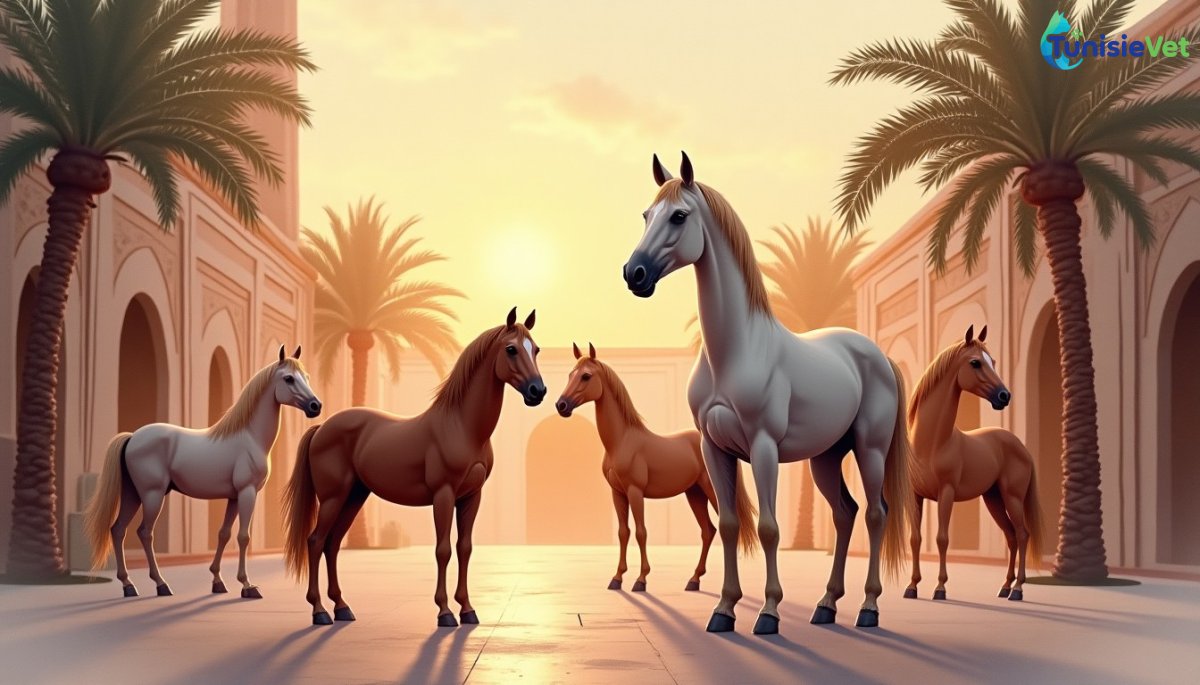
One evening, the Prophet Sulaymân contemplates his purebred horses, so beautiful that they briefly distract him from his prayer. This Quranic account reveals far more than a mere anecdote about these mounts.
In the kingdom of the Prophet Sulaymân (Solomon), son of Dâwûd, wealth was measured not only in gold or power over the jinn and the winds, but also in the beauty of the creatures God had entrusted to him. Among them were horses of rare nobility, presented one evening before him, and they hold a special place in the Quran.
The Quranic Account
Surah Sâd recounts this episode: fine and purebred horses ("as-sâfinât al-jiyâd") are brought before Sulaymân in the evening. He contemplates them with such admiration that he momentarily forgets the time of ritual prayer, absorbed in the contemplation of these magnificent animals.
﴿ إِذْ عُرِضَ عَلَيْهِ بِالْعَشِيِّ الصَّافِنَاتُ الْجِيَادُ ﴾
When presented to him in the evening were the prancing steeds.
(Surah Sâd, verse 31)
The verses that follow report that he declared his love for this possession out of love for the remembrance of his Lord, then that he set about caressing their legs and their necks, according to the interpretation held by many exegetes. Other commentators propose different readings of this passage, particularly regarding the exact nature of Sulaymân's gesture toward these mounts—some see it as an act of affection, others as a more ambiguous action linked to repentance. The Quran does not settle this detail with precision, and one must be cautious about the exact interpretation, retaining the essential teaching rather than disputed details.
A Lesson Beyond the Anecdote
What strikes us in this passage is not so much the splendor of the horses as the place they occupy in the heart of a prophet otherwise blessed with extraordinary gifts: the understanding of the language of birds, command over the winds, authority over the jinn. Despite this uncommon power, Sulaymân remains sensitive to the beauty of an earthly creature, a horse—an animal of labor, of war, and of companionship to man for millennia.
It is reported in prophetic tradition that the horse holds an honored place among animals. In a hadith narrated in Sahih al-Bukhari, the Prophet Muhammad ﷺ spoke of the blessing attached to the foreheads of horses until the Day of Resurrection, emphasizing their usefulness and nobility for the community of believers, whether for work, transport, or legitimate defense.
The account of Sulaymân and his horses thus invites us to reflect on the balance between attachment to the beautiful things of this world and faithfulness to our obligations toward God. Far from being a mere anecdote about a moment of distraction, this episode highlights how animals, through their grace and usefulness, may rightly occupy a place in the lives of believers, provided that this attachment remains measured and does not divert from what is essential.
The Horse, an Honored Companion
In Islamic tradition, the horse is often cited as a noble mount, associated with valor and endeavor. Several accounts relate the attention shown by the Prophet ﷺ and his companions to the welfare of their mounts, whether in feeding them properly, not burdening them excessively, or ensuring their rest.
This account from the kingdom of Sulaymân reminds us, across the centuries, that affection shown to animals is never futile when accompanied by respect and moderation. To care for a horse, a cat, or any living creature entrusted to our care is to honor a part of creation that the prophets themselves knew how to admire and cherish. Whether through the gentleness of a gesture or through attention to their daily needs, each act of kindness toward animals is part of this spiritual heritage passed down since ancient times.