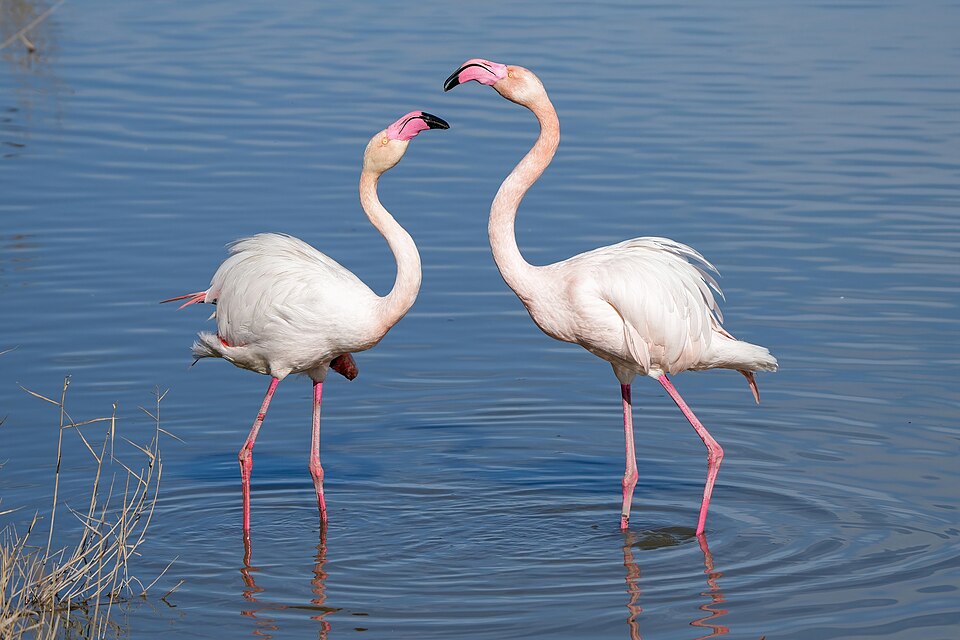
The seasonal return of a bird that has become the symbol of Tunisian wetlands.
Rédaction TunisieVet
2 min read · Published 1 month ago · 98 views
In autumn, the lagoons of northern Tunisia change color. Thousands of pink flamingos settle there for the winter, coming from Camargue, Spain or Turkey, and will leave in the spring for their breeding sites.
A stopover, not a coincidence
Ichkeul and the neighboring sebkhas offer what the bird is looking for: shallow, brackish waters, rich in invertebrates. The flamingo filters the mud with its head upside down, and it is from this diet that it gets its color – the pigments of the small crustaceans on which it feeds.
Publicité
Publicité
The level and salinity of the water make all the difference. A year that is too dry, or a poorly controlled supply of fresh water, and the food resource collapses: the birds pass by without stopping.
The flamingo does not choose a landscape, it chooses a water depth and salinity — the rest follows.
An indicator for the entire wetland
Monitoring numbers from one season to the next therefore amounts to measuring the health of the wetland itself. Winter counts, carried out each year on the same dates, serve as a barometer for the entire site.
Ichkeul, a world heritage site, remains the best place in the country to observe the species. The rule is simple: stay on observation points, and never make a group take off - each flight costs the bird the energy it came to seek.