StoryDesertSteppeFarmland & grasslandsStories from the hadiths
Why did the Prophet ﷺ urge careful treatment of camels during journeys?
During a journey, the Prophet ﷺ found his companions driving their mounts relentlessly. His intervention would remind everyone forever that even an animal's fatigue deserves attention and compassion.
3 min read · Published 2 weeks ago · 18 views
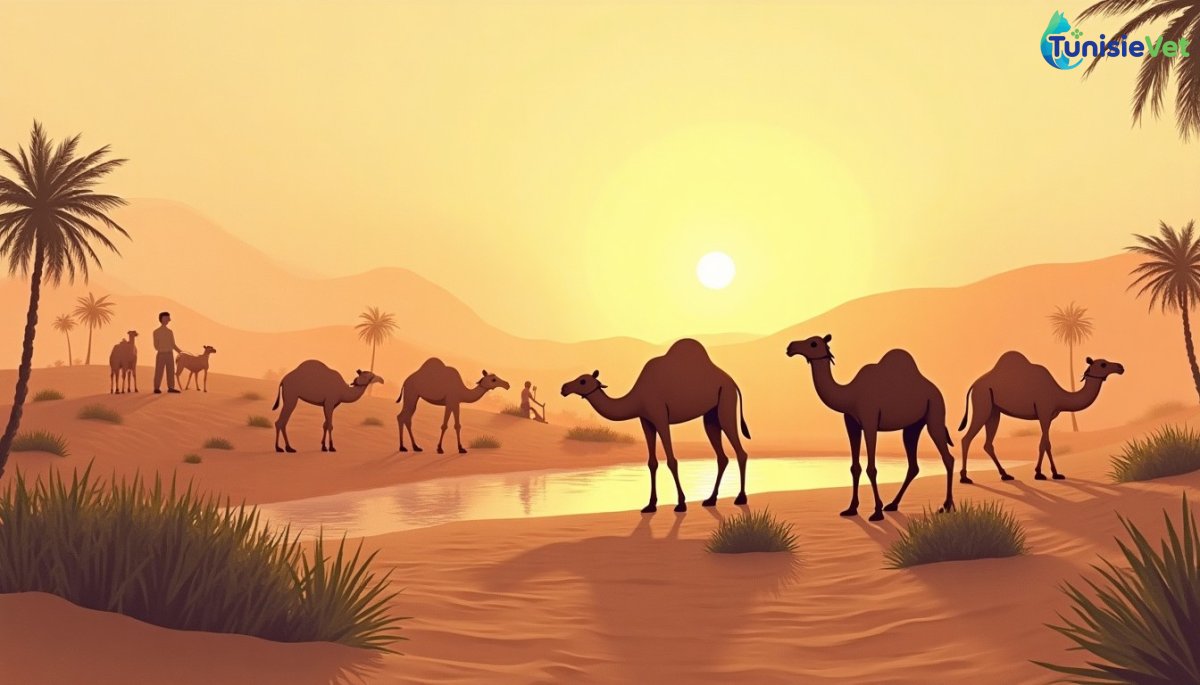
A group of companions traveled on camelback, eager to reach their destination before nightfall. They moved quickly, pressing from stage to stage without allowing their mounts any rest, when the Prophet ﷺ, who was traveling with them, noticed their haste and intervened to remind them of an essential principle regarding how animals should be treated.
A halt to preserve the mounts
According to a hadith recorded in Sahih Muslim, the Prophet ﷺ advised those undertaking long journeys to treat their beasts of burden well and to allow them time to rest and eat before resuming travel. He explained that night is a time when mounts cover ground more swiftly, and that one must therefore be careful not to exhaust them by driving them without respite.
Publicité
Publicité
It is also narrated in an authentic hadith that the Prophet ﷺ said: "When you travel during the season of plenty (abundant grazing), give the camels their share of the land. And when you travel during drought, hasten with them (to reach a place of rest quickly)." This statement reflects practical wisdom: adapting the pace of travel to the animal's condition and its surroundings, rather than imposing a single pace dictated only by human impatience.
Rest, a necessity not a luxury
The companions thus understood that the camel, robust and enduring though it was, was not inexhaustible. The Prophet ﷺ emphasized that the mount had rights over its rider, just as the rider had expectations of the mount. Among these rights:
Allowing it time to graze and drink at rest stops.
Not loading it beyond its capacity.
Avoiding sitting on its back once arrived at a destination, without necessity, so as not to prolong its exertion unnecessarily.
Choosing a reasonable pace—neither too slow so as not to tire the journey needlessly, nor too fast so as not to exhaust the animal.
This attentiveness toward camels, creatures essential to the economic and social life of Arabia in that era, shows that the Prophet ﷺ never separated the practical organization of journeys from the ethical dimension of animal treatment. The camel was not merely a transport tool, but a creature of God deserving the care of the one responsible for it.
A lesson that transcends the desert
This teaching, though rooted in the context of camel travel, carries universal significance. It reminds us that any burden placed on an animal must be measured, that its well-being must be taken into account in the very organization of the tasks entrusted to it, and that animal fatigue is never something to be overlooked.
Even today, this example invites everyone to observe carefully the animals in their care, whether a horse, a draft dog, or any other companion or working animal. Providing rest, water, proper nourishment, and a pace that respects their physical limits is a mark of kindness that honors the teaching conveyed by the Prophet ﷺ. Caring for animals, even in daily details, remains a simple yet precious act, within the reach of all.