StoryForestFarmland & grasslandsBeliefs and teachings
Why Does Allah Invite Humans to Observe the Bee?
In Surah An-Nahl, Allah devotes several verses to a small winged creature whose organization and silent labor contain, according to the Qur'an, a sign meant for those who reflect: the bee.
3 min read · Published 4 days ago · 11 views
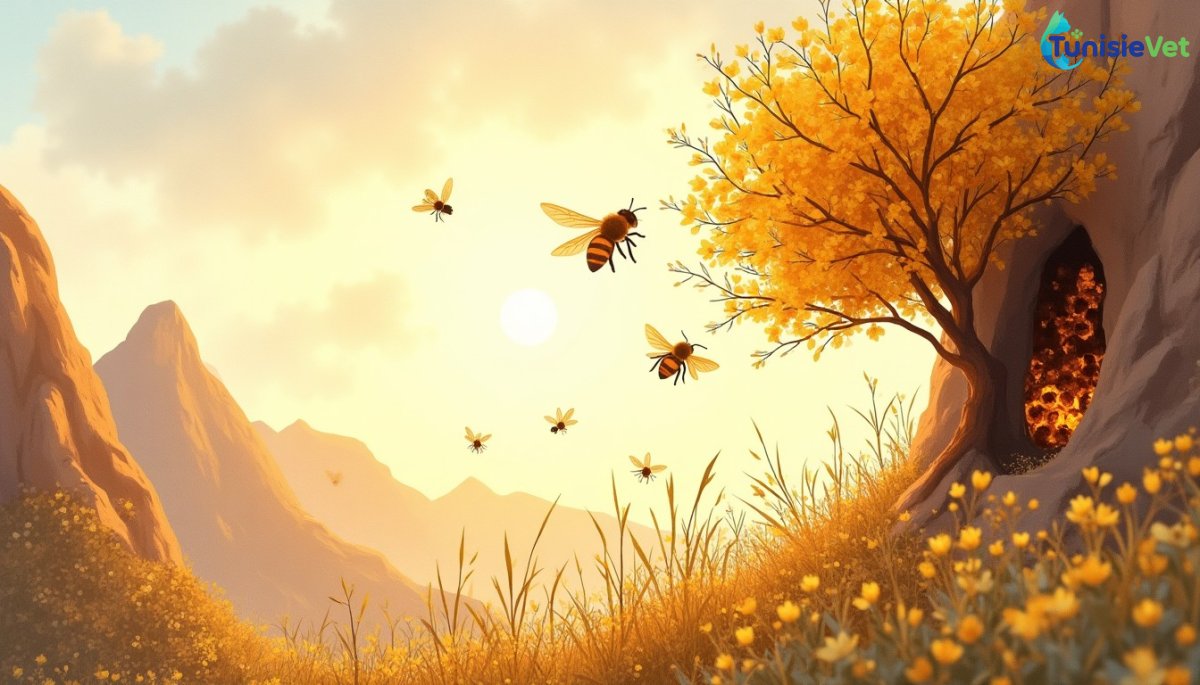
Among all the creatures mentioned in the Qur'an, the bee holds a unique place: it lends its name to an entire surah, Surah An-Nahl, "The Bees." Allah describes not only the behavior of this insect, but inspires it directly, like a divine teaching inscribed in its very instinct.
A Divine Inspiration Described in the Qur'an
In this surah, Allah addresses the bee to show it where to establish its dwelling and how to find nourishment:
Then eat from every kind of fruit and follow the paths of your Lord, made smooth for you. There emerges from their bellies a drink of varying colors, in which there is healing for people. Indeed, in that is a sign for people who reflect.
Publicité
Publicité
(Surah An-Nahl, verse 69)
A Sign for Those Who Reflect
What the Qur'an illuminates here is not merely a natural fact: it is the idea that so humble a creature may receive an inspiration (waḥy) guiding it toward an organization of remarkable precision. Qur'anic scholars emphasize that this term of inspiration, used for the bee, underscores how the wisdom of the Creator manifests even in the smallest creatures. The bee constructs its cells according to a geometry of such regularity that mankind takes centuries to understand it, travels to flowers along optimized paths, and produces a substance, honey, whose virtues are mentioned in the verse itself.
It is precisely this invitation to "reflect" that runs through the entire passage. Allah does not merely expose a biological fact: He makes it an occasion for human meditation, a reminder that the meticulous order of creation, even in its most discrete details, bears the trace of a wisdom that transcends human understanding. According to several Qur'anic commentators, this surah was revealed at a time when the benefits of honey for health were already being discovered, which deepened the awe of the first believers before this verse.
The Prophet Muhammad ﷺ himself recommended honey as a remedy, as reported in Sahih al-Bukhari, where it is mentioned that he advised its use to relieve certain ailments. This practice aligns with the verse that speaks of a "healing for people" arising from the bee's work.
Observing in Order to Better Respect
In inviting humans to observe the bee, the Qur'an does more than offer scientific instruction: it establishes an attitude of humility and gratitude toward creation. Each hive built, each flower visited, each drop of honey produced becomes a silent reminder that nothing in nature is left to chance.
This is why this account invites us to treat bees, like all creatures, with the respect and gentleness they deserve: to preserve their habitats, to avoid destroying their colonies without necessity, and to remember that their quiet labor sustains the whole of the natural balances upon which human life itself depends.