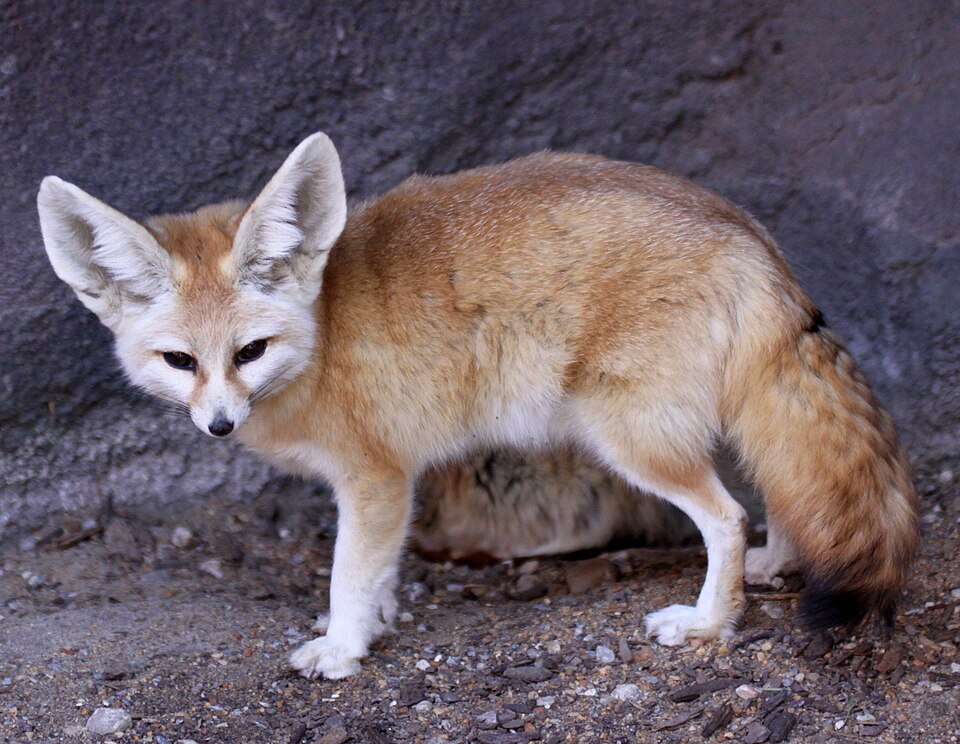
No, the fennec almost never needs to drink free water: it covers most of its water needs thanks to the metabolic water produced by the digestion of its prey and extremely efficient kidneys to limit losses.
Publicité
Publicité
A metabolism adapted to total aridity
Insects, rodents, eggs and plants provide the fennec with the water contained in their tissues, but also so-called water “metabolic”: it is generated chemically during the oxidation of fats and sugars in these foods. This internal source is more than sufficient for an animal weighing only 1 to 1.5 kg whose overall needs are reduced.
Its kidneys play a key role: they are capable of producing extremely concentrated urine, reducing the quantity of water evacuated to a minimum. The feces themselves are very dry, a sign that the body is recovering as much moisture as possible before excretion. This capacity for renal concentration places the fennec among the most water-efficient mammals known.
The lifestyle reinforces this strategy: strictly nocturnal, the fennec hunts and moves during the coolest hours, avoiding skin and respiratory evaporation linked to the high daytime heat of the Sahara. During the day, it retreats into a deep burrow, sometimes dug several meters, where the temperature remains much more stable and the relative humidity higher than on the surface. This underground microclimate further limits water loss through transpiration and respiration.
An extreme adaptation, not a total absence of need
If free water is available, the fennec will drink it willingly; the species is not completely independent of water, but it can survive sustainably without a water source, which is rare among canids. This combination – diet rich in metabolic water, concentrator kidneys, nocturnal behavior and burrow buffering thermal differences – illustrates a joint physiological and behavioral adaptation, well documented in small desert mammals.