FeedingOcean & seaAfricaEuropeAsiaAmericasOceaniaPolar regions
How can a whale feed on tiny animals?
72 views · 1 month ago
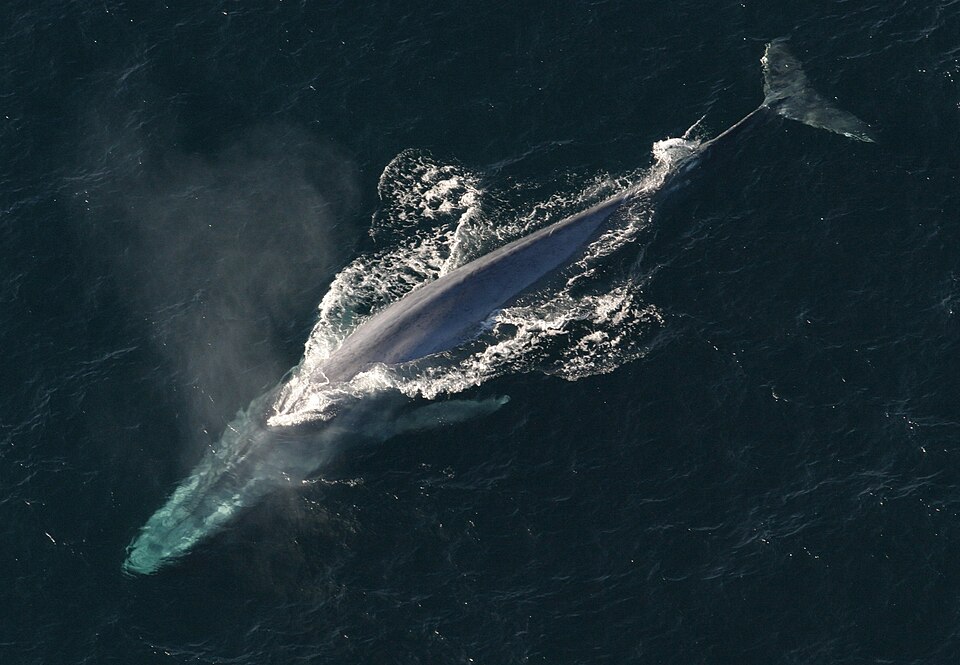
The blue whale captures its tiny prey using a filtration system: it swallows a mouthful of water containing schools of krill, then expels the water through its baleen plates which retain the crustaceans, then swallowed in a single mouthful.
The throating mechanism
The throat of the blue whale is covered with 60 to 90 extensible ventral furrows, which allow it to to swallow a volume of water that can reach more than 100 m³ in a single mouthful, more than its own body weight. Once the throat is distended and closed, the animal contracts its muscles and tongue to force water outward through the hundreds of keratin baleen blades attached to its upper jaw. The krill, too large to pass between these fringed blades, remains trapped and is then scraped and swallowed.
In peak feeding season, a blue whale can ingest around 4 to 6 tonnes of krill per day, making several hundred mouthfuls daily when the schools are dense. This colossal quantity compensates for the small individual size of the prey: each krill only weighs about one gram, so millions of them must be captured to cover the energy needs of an animal weighing more than 100 tonnes.
An energetically profitable... but expensive strategy
Each engorgement maneuver is physiologically costly: the acceleration towards the school of krill, the opening of the mouth which suddenly slows down the animal, then the expulsion of water require a significant expenditure of energy. Studies on baleen whales show that this expenditure is only profitable if the density of krill encountered is sufficiently high; below a certain threshold, effort exceeds energy gain. This is why the blue whale specifically targets areas of high concentration of krill, often located thanks to the memory of upwelling sites where plankton proliferates seasonally.