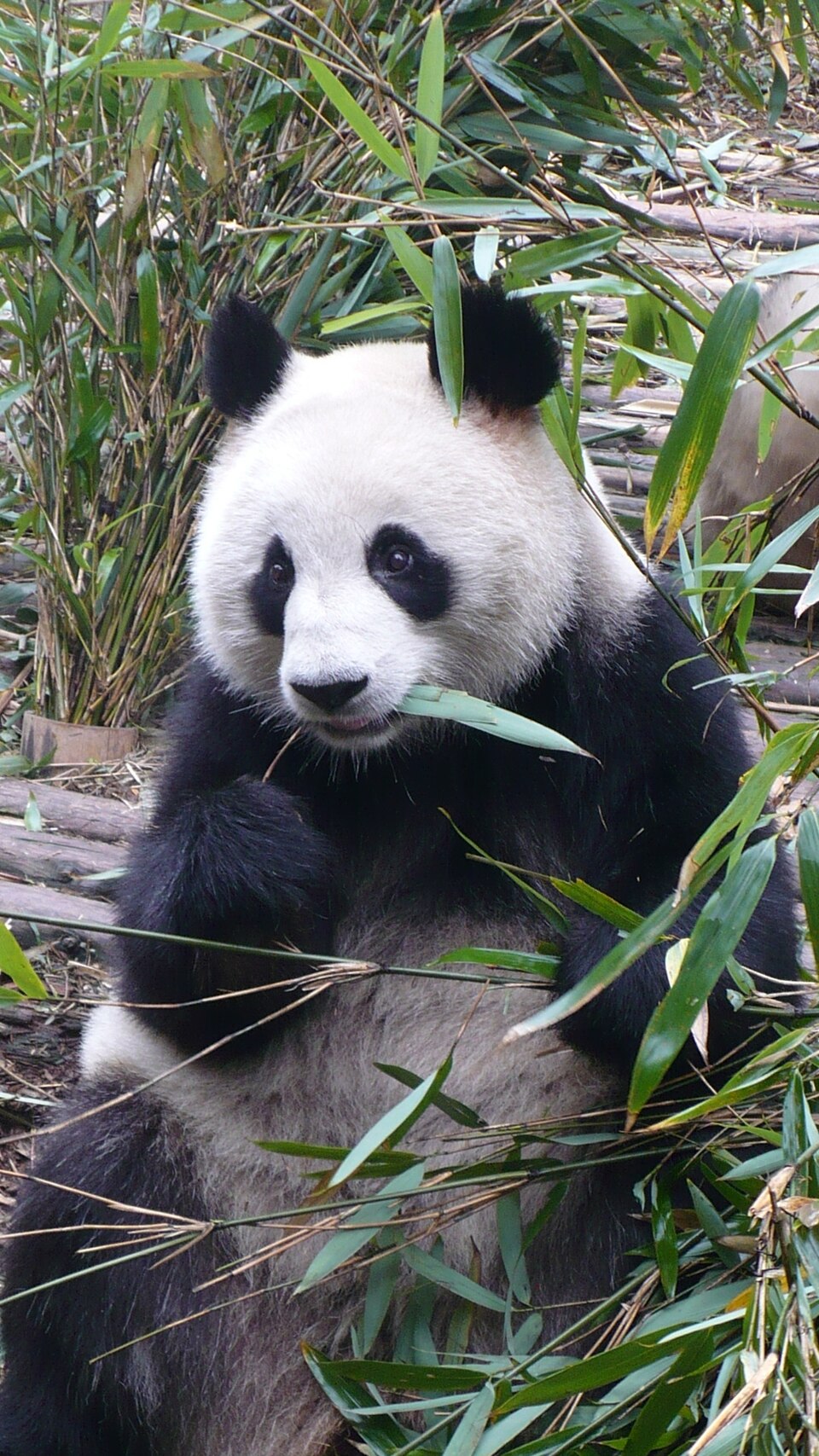
The giant panda gets around 99% of its diet from bamboo: stems, leaves and shoots. However, its digestive tract remains that of a carnivore, short and not very efficient in digesting cellulose, which forces it to eat very large quantities for 12 to 14 hours a day.
Publicité
Publicité
A carnivore forced to graze
Classified in the order of carnivores, the panda has retained a simple digestive system, without the fermentation compartments of specialized herbivores such as ruminants. It only efficiently digests a limited fraction of bamboo cellulose, around 20%. To compensate for this low energy yield, it must ingest between 12 and 38 kg of plant matter each day depending on the season and the part of the plant consumed: the tender shoots of spring are richer and less bulky to absorb than the woody stems of winter.
This digestive constraint explains a particular rhythm of life: the panda alternates feeding phases and short naps throughout the day, without much prolonged rest, because it must constantly renew its intake. Bamboo being low in fats and proteins, the animal also limits its energy expenditure, moving little and avoiding costly activities.
The panda's famous "thumb", which it uses to dexterously grasp stems, is not a real finger: it is a radially enlarged sesamoid bone of the wrist, a unique evolutionary adaptation to this almost exclusive diet of bamboo.
The remaining 1%
The panda maintains behaviors inherited from its carnivorous ancestry: it occasionally consumes small rodents, birds, eggs or carrion found in its territory. These contributions remain marginal but confirm that its digestive system has never evolved towards a complete herbivorous specialization, unlike other large plant eaters.