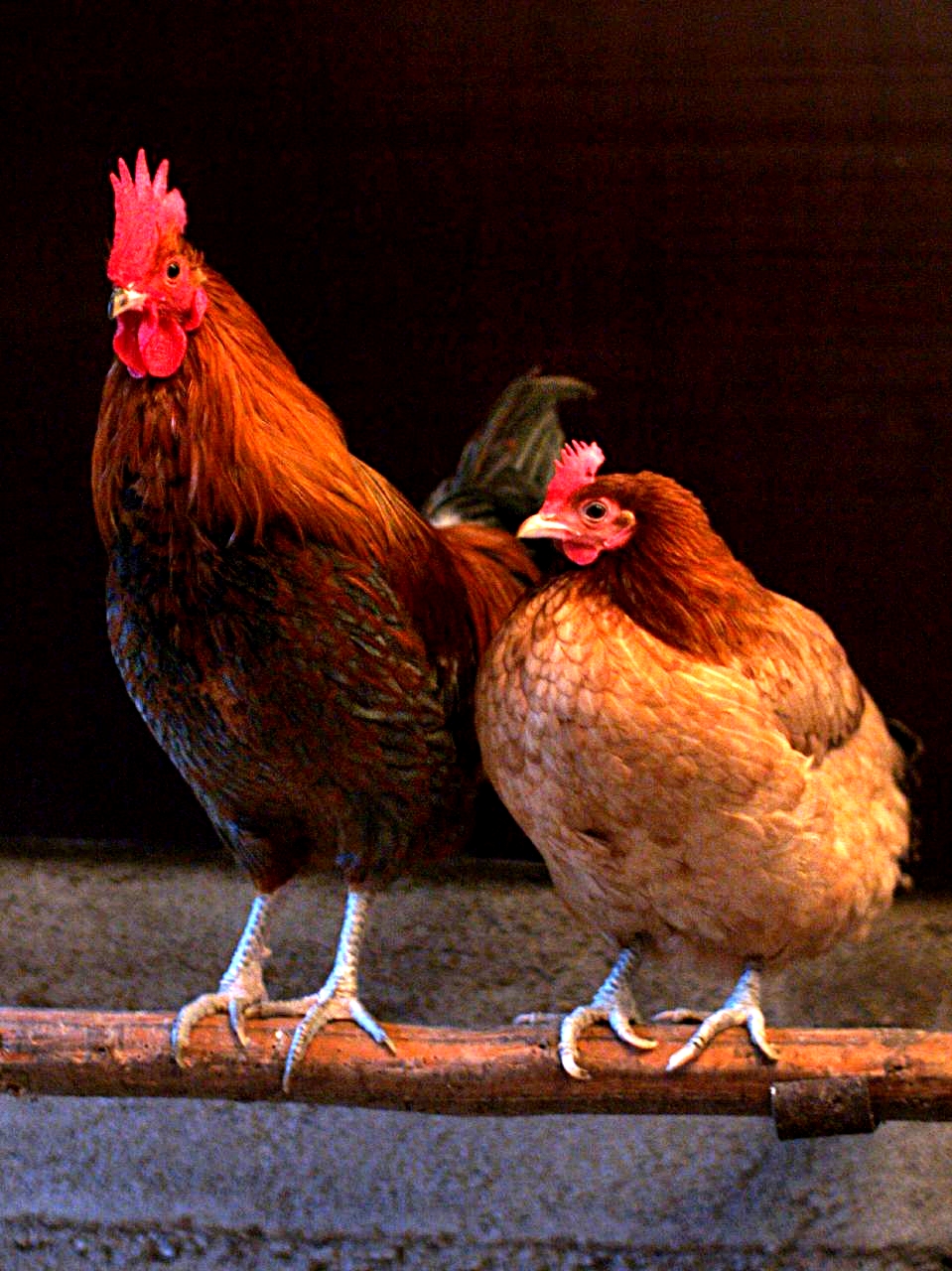
Why can feed that is too rich harm egg laying in hens?
19 views · 2 weeks ago
Overly energy-dense feed (bread, unlimited corn, fatty scraps) causes the hen to gain weight without improving lay: excess calories convert to fat that accumulates around the reproductive tract and infiltrates the liver, disrupting the egg formation cycle and reducing laying frequency.
The mechanism: too much energy, not enough regulation
A laying hen has an appetite calibrated to cover her energy needs: if she receives overly caloric feed in excess (fatty grains, table scraps), she continues to eat beyond her actual requirements because these foods are palatable and unbalanced compared to a complete feed. The surplus energy not used for laying is stored as abdominal fat, a well-documented phenomenon in overfed backyard poultry.
This fat accumulates particularly around the oviduct and ovary, mechanically hindering lay, and can also infiltrate the liver: this is hemorrhagic fatty liver syndrome, seen in overweight laying hens, where a liver overloaded with lipids becomes fragile and loses metabolic efficiency, which directly impacts egg production.
Publicité
Publicité
The visible signs are fairly clear: a hen noticeably heavier than normal, a soft, distended and flabby abdomen to the touch, and laying that becomes irregular, more spaced out, or even interrupted in phases. If in doubt about the bird's health, consulting a veterinarian is recommended.
Restoring balance: layer feed as the foundation
The correction involves reversing the usual proportion: complete layer-specific feed must form the basis of the ration, as it is formulated to meet energy needs without excess, while corn, bread or scraps should remain only an occasional supplement, given in small amounts. Providing these extras free-choice amounts to unbalancing an already complete ration and pushes the hen toward a counterproductive weight gain for laying.