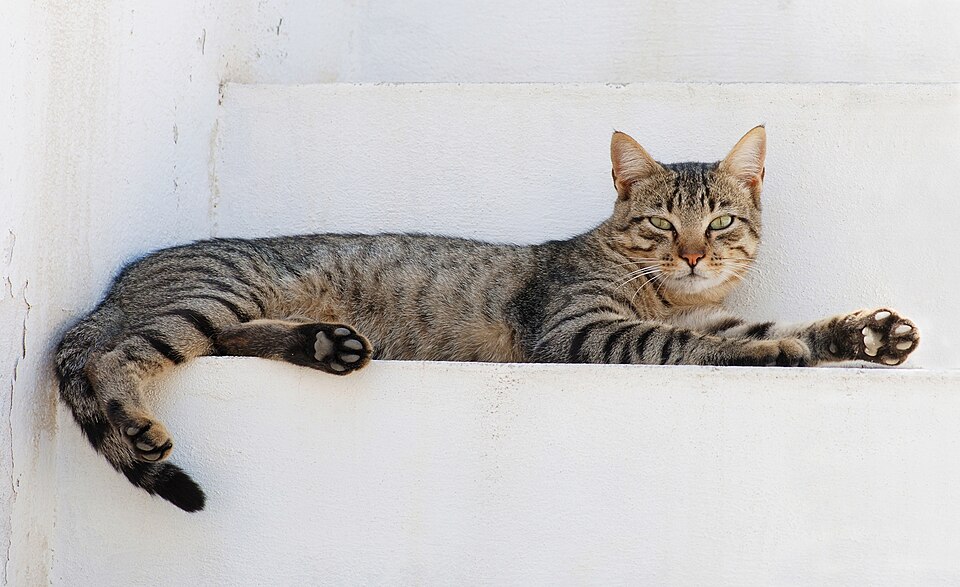
Many cats prefer wet food because it more closely resembles fresh prey: it is moist, highly aromatic, and has a texture similar to flesh—three factors that trigger a cat's feeding behavior more strongly than dry kibble does.
Three signals that mimic prey
The first criterion, and the decisive one, is moisture content. Wet food contains roughly 75 to 80% water, which is close to the water content of a rodent or bird (around 65–70%), whereas dry kibble contains only 6 to 10%. The cat, a solitary predator descended from a desert ancestor, remains sensitive to this juicy texture that evokes actual prey.
The second criterion is olfactory intensity. A cat identifies its food first through smell: wet food releases volatile compounds at room temperature much more quickly than dry, cold kibble, making it more immediately appetizing, especially when slightly warmed.
Publicité
Publicité
The third criterion is the texture itself: mousse, pâté, or chunks in gravy come closer to chewing soft prey, whereas kibble presents an uniformly hard food that is less stimulating for some individuals, even though others appreciate that crunchiness.
Two benefits that complement each other
From a physiological standpoint, the water content in wet food helps maintain more dilute urine, a point closely monitored in cats prone to lower urinary tract disease—a subject worth discussing with a veterinarian if there is a history of such issues. Conversely, dry kibble has a clear practical advantage: it keeps well at room temperature for several hours without spoiling, allows free feeding, and helps reduce tartar buildup through the mechanical action of chewing. The two forms therefore do not oppose one another: many feline feeding protocols combine wet and dry food to achieve hydration, sensory pleasure, and practical convenience.