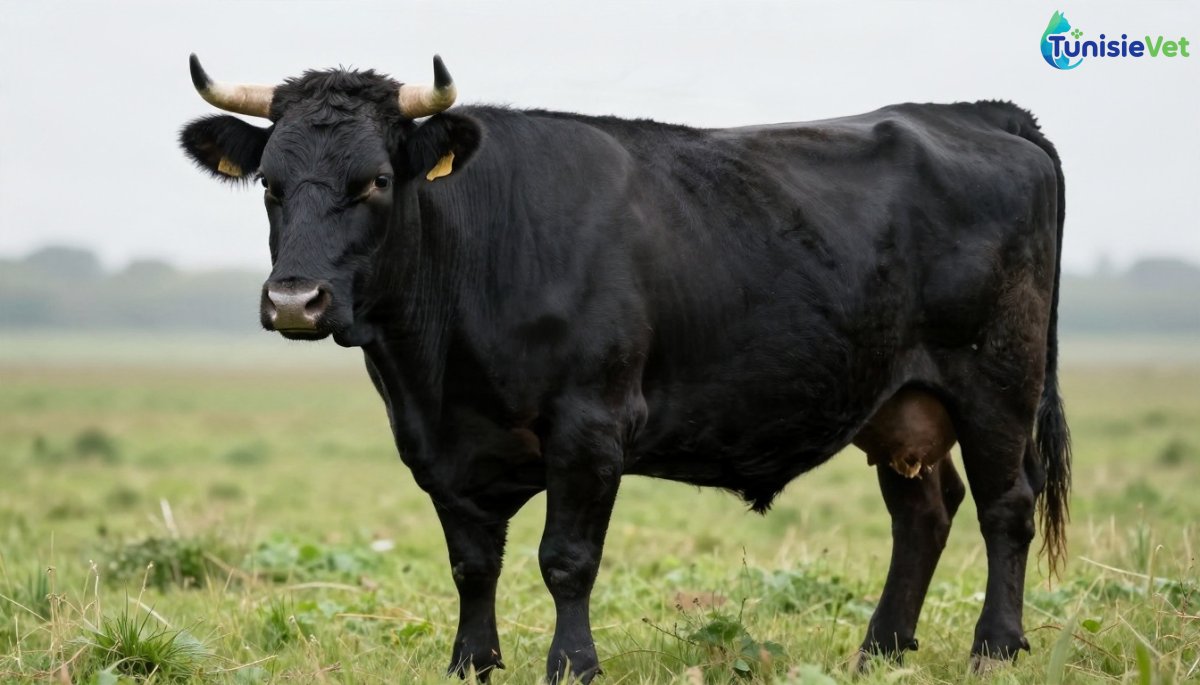
No calf has true horns at birth. Yet some will grow them and others will not. What makes the difference?
Publicité
Publicité
In some cattle, being hornless is written into their DNA. The distinction begins early: in a fetus that will grow horns, a horn bud forms during development. In genetically hornless cattle, that bud does not form.
The trait can be inherited as a dominant one. At the genetic location known as the polled locus, a single copy of the P version is enough to produce the hornless trait. The version associated with horns is recessive.
But there is more than one DNA change behind the trait. A variant known as Celtic is associated with hornlessness in several European breeds, while a different change is responsible in Holsteins.