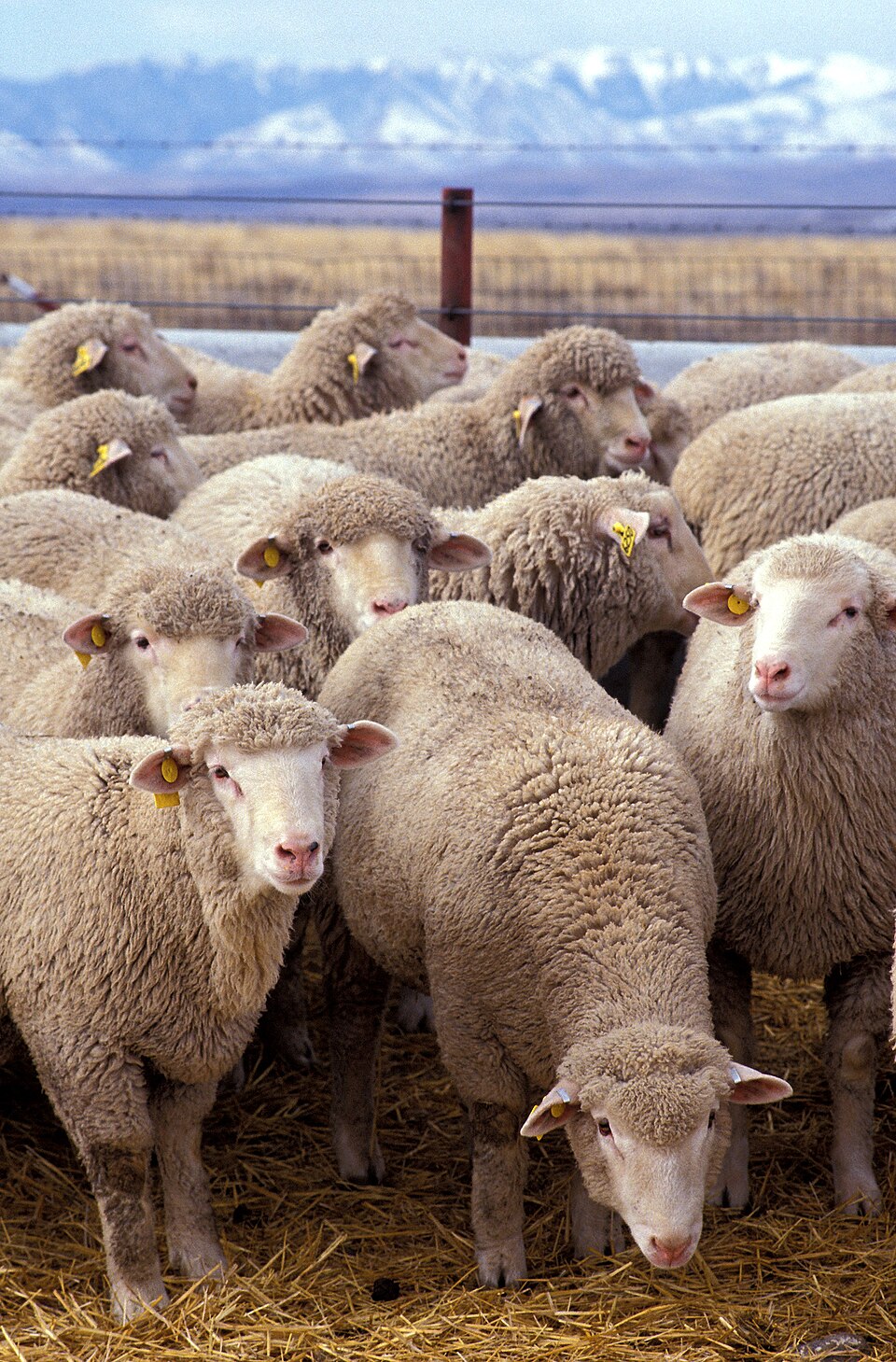
Yes: sheep recognize and memorize dozens of faces, both of their own kind and of humans, sometimes for more than two years. This ability relies on brain circuits specialized in facial processing, comparable to those observed in primates, which contradicts the image of a poorly intelligent animal.
Publicité
Publicité
A brain wired for faces
Behavioral experiments have shown that sheep trained to choose one image from two to obtain a reward manage to distinguish up to fifty different faces, both those of other sheep and human faces photographed from the front. They even manage to recognize a familiar individual when their face is presented from an unusual angle or with different lighting, proof that they do not memorize a simple frozen image but construct a more abstract representation of the face.
This performance is based on a specific cerebral organization: certain areas of the sheep's temporal cortex are preferentially activated when faced with faces rather than other visual forms, an operation reminiscent of that of the facial recognition areas in monkeys and humans. Sheep also use both hemispheres asymmetrically to process this information, suggesting elaborate neural processing and not a simple conditioned reflex.
The memory involved is also remarkable for its duration: in certain protocols, sheep separated from their familiar counterparts were able to recognize them after more than two years without contact, a delay much longer than what is observed in many other livestock for this type of task.
Underestimated social intelligence
This facial recognition capacity is explained by the gregarious lifestyle of the sheep, whose survival in the herd depends in part on its ability to quickly identify its relatives, rivals or dominant individuals. Far from the image of a following and poorly thinking animal, this work shows complex social cognition, comparable in certain aspects to that described in other social mammals studied in animal behavioral sciences.