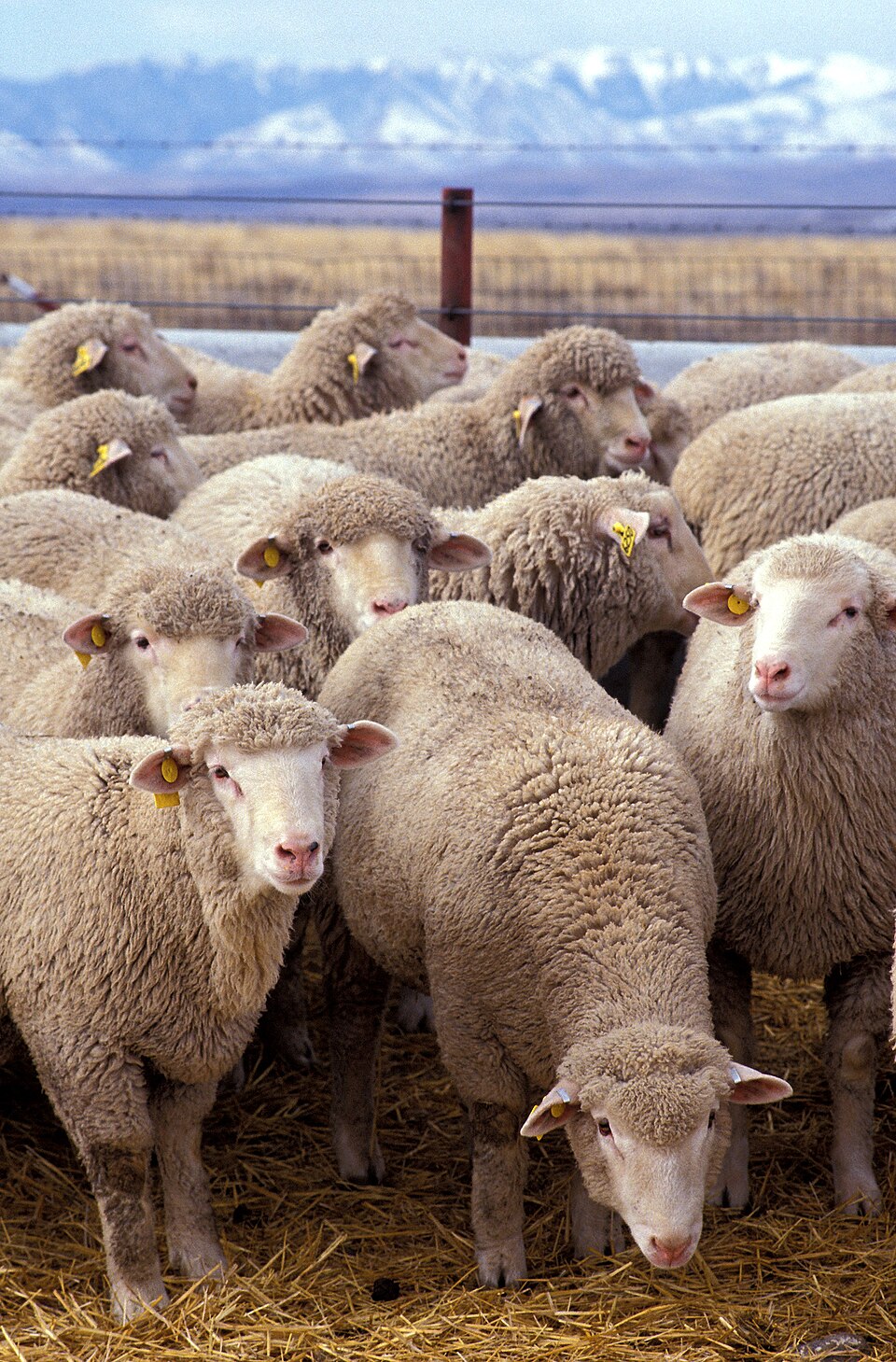
The thick wool of the domestic sheep is the result of millennia-old human selection which has blocked the natural moulting cycle: unlike the ancestral mouflon which loses its fleece every spring, the modern sheep produces wool in continuous growth, never shed alone, hence the need to shear it for its well-being.
A natural molt abolished by domestication
The mouflon, wild ancestor of Ovis aries, has a double coat: a covering and fine insulating down, which it molts spontaneously in the summer. Neolithic breeders gradually selected animals whose down never stopped growing, thus obtaining a longer and more abundant fiber, usable for weaving. This selection had the side effect of deactivating the hormonal mechanism of seasonal hair loss in most dairy and wool breeds.
In modern sheep, wool grows continuously, at a rate of around 10 cm per year depending on the breed. Without shearing, this fleece can reach several tens of centimeters, considerably weighing down the animal, retaining humidity, promoting skin parasitic infestations and hindering thermoregulation. Annual mowing, generally carried out before summer, is therefore no longer a simple collection of raw material but an intervention that has become essential to the comfort and health of the domesticated animal.
Publicité
Publicité
The structure of the wool fiber, composed of keratin and organized into microscopic scales, traps air and confers remarkable insulating power: it protects from the cold by limiting heat loss, but also from excessive heat by forming a screen against direct solar radiation on the skin, which explains why unshorn sheep in hot areas suffer more from thermal stress than regularly shorn animals.
A well-being necessity, not a simple collection
The received idea that shearing is solely motivated by textile production is incorrect: it is recognized as an animal welfare practice, in the same way as hoof trimming. A sheep not shorn for several years can develop locomotor disorders, skin myiasis and hyperthermia, particularly in Mediterranean climates such as that of Tunisia.