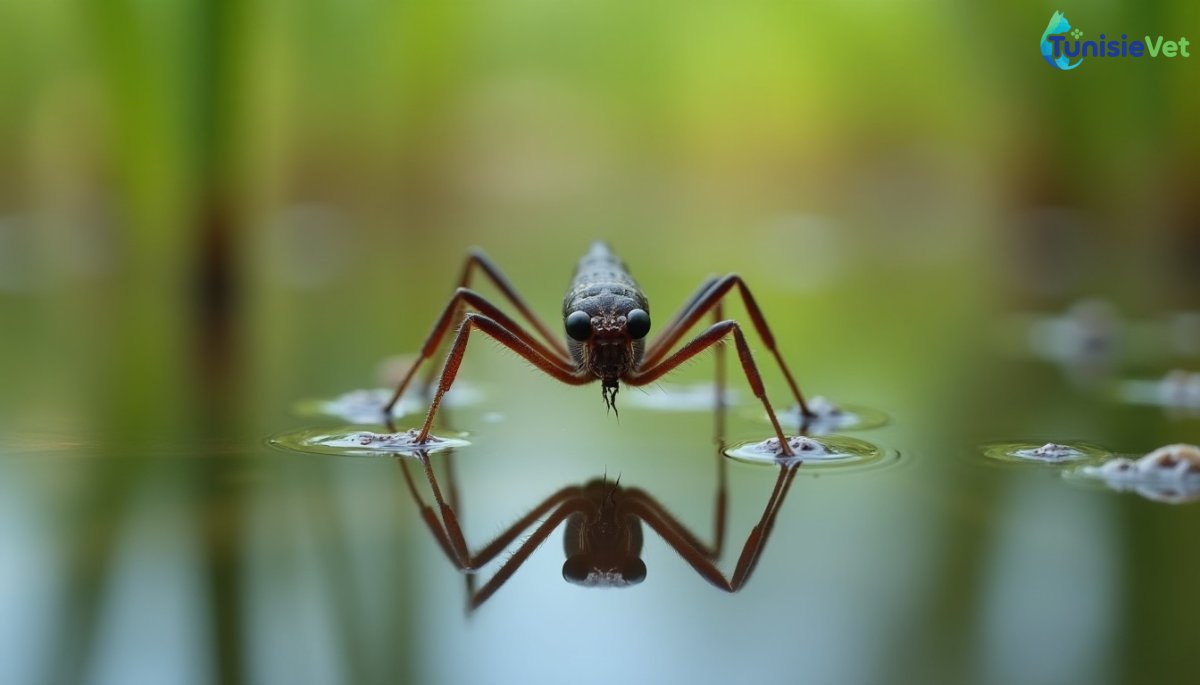
On a pond, the water strider never breaks the surface, yet it glides across it as if on a road. How can an insect so light stay up without ever sinking?
Publicité
Publicité
The answer lies in the surface itself. Each leg presses a small dimple into the water, and surface tension, which holds the film together without breaking it, supports the insect's weight. Its legs are covered in tiny hairs, grooved in a way that traps air, which helps them stay in contact with the water.
Movement relies on the two middle legs, which row like oars and mainly provide the push. In Gerris argentatus, the front and hind legs mostly play a stabilising role, and the load shifts between legs as the insect moves through different phases.
This balance is fragile. A simple detergent is enough to break the surface tension: the water strider can no longer rest on the film, and it sinks.