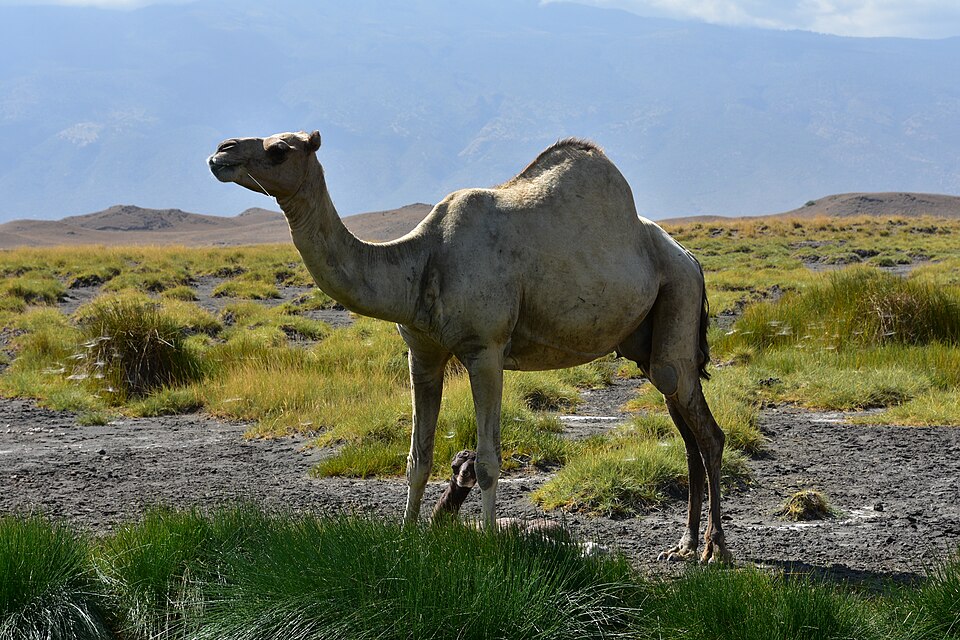
No: the camel's hump does not contain water, but fat. It constitutes a reserve of energy that can be mobilized in times of scarcity, which can weigh up to 35 kg in a well-fed animal, and not a water reservoir.
An energy reserve, not water
The confusion comes from the fact that the metabolic breakdown of fats produces so-called “metabolic” water. But this process is not very efficient in terms of energy: oxidizing 1 kg of fat only releases about 1 liter of water, while consuming oxygen and generating additional heat, which costs a lot of water lost through respiration and perspiration to evacuate this heat. The hump is therefore not designed as an effective water storage system, contrary to popular legend.
True water management in the camel relies on other physiological mechanisms: very concentrated urine, almost dry feces, a variation in body temperature tolerated over several degrees which limits perspiration, and oval red blood cells resistant to dehydration. The fat from the hump serves above all as energy fuel during long desert crossings where food is scarce.
Why concentrate the fat on the back?
Distributing the fat in a single dorsal mass, rather than spreading it under the entire skin as in many mammals, presents a decisive thermal advantage. Fat is an insulator that retains heat: if it enveloped the entire body, it would prevent heat dissipation through the skin, which is permanently exposed to the sun. By grouping it on the bump, exposed directly to the rays, the rest of the body keeps the skin relatively free of fat, which facilitates the evacuation of internal heat through the rest of the body surface. This architecture is a recognized adaptation to life in the arid and hot environments where populations of domestic camels live, particularly in Tunisia and throughout the Maghreb.