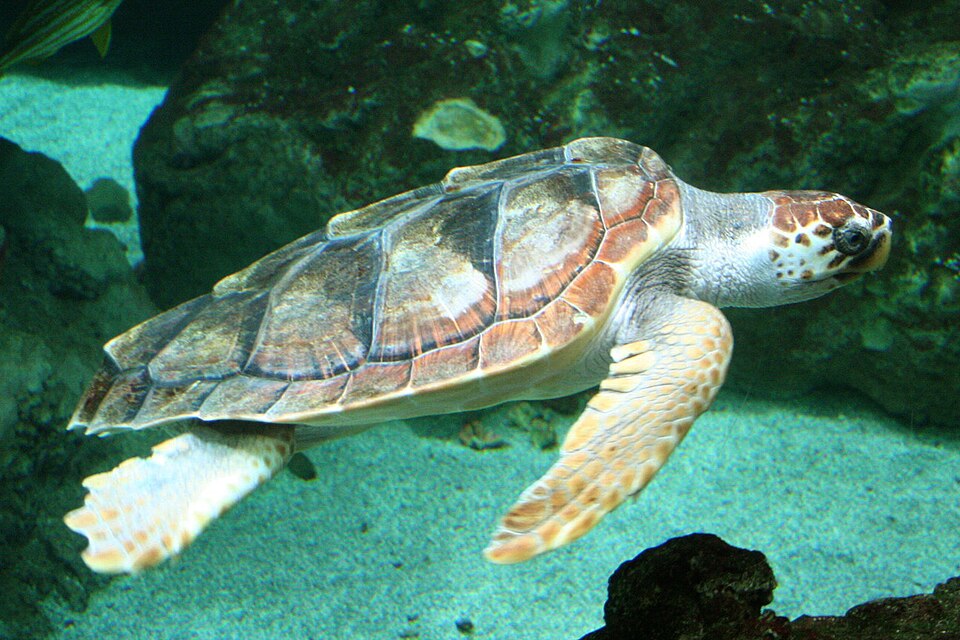
The loggerhead turtle finds its native beach thanks to a unique magnetic imprint, recorded in its brain at birth, which it then compares to the local earth's magnetic field; chemical and olfactory cues refine the final location once close to the shore.
An internal compass inherited from hatching
As soon as it leaves the nest, each newborn memorizes the precise magnetic signature of the beach: a combination of intensity and inclination of the earth's field which varies slightly from one point to another on the coast. This phenomenon, called “geomagnetic imprinting” (natal homing), was highlighted by experimental studies on loggerhead turtles subjected to artificial magnetic fields reproducing different coastal zones. After a phase of oceanic dispersal lasting several years, often a decade or more, the animal sometimes travels several thousand kilometers before returning to lay eggs, mainly on its original beach, guided by this internal magnetic map.
As it approaches the coast, other clues take over: dissolved chemical compounds, odors of sand and sediment, coastal currents, which make it possible to refine the choice of the precise site among magnetically compatible beaches. This dual system explains the remarkable but not absolute fidelity to the natal site: rare navigation errors lead certain females to lay eggs on neighboring beaches, which contributes to the colonization of new sites.
The Kuriat Islands, a Tunisian case followed closely
In Tunisia, the Kuriat Islands, off the coast of Monastir, constitute the main nesting site regularly monitored by local authorities and researchers. Each season, a limited number of nests are recorded and protected there, providing valuable data on site fidelity in this Mediterranean population. The temperature of the sand during incubation plays a determining role: above a threshold of around 29°C, broods mainly produce females, while cooler temperatures favor males, a mechanism of sexual determination by temperature that is particularly sensitive to global warming.
🚀 SWConsulting — Turning Your Ideas into Digital Solutions
Do you have an idea, a project, or a business process that needs to be digitalized?
SWConsulting supports businesses from concept to deployment, delivering custom, reliable, and scalable digital solutions tailored to their real needs.
💻 Web & Mobile Development
⚙️ Business Applications & SaaS
🤖 Artificial Intelligence & Automation
📊 Custom CRM & Management Tools
🛒 E-commerce & Marketplaces
🔗 APIs & System Integrations
Our goal is simple: turn your business needs into practical digital solutions that help you improve efficiency, automate processes, and grow your business.
Have a project in mind? Let’s talk. 🚀
SWConsulting — Digital Solutions, Real Impact.