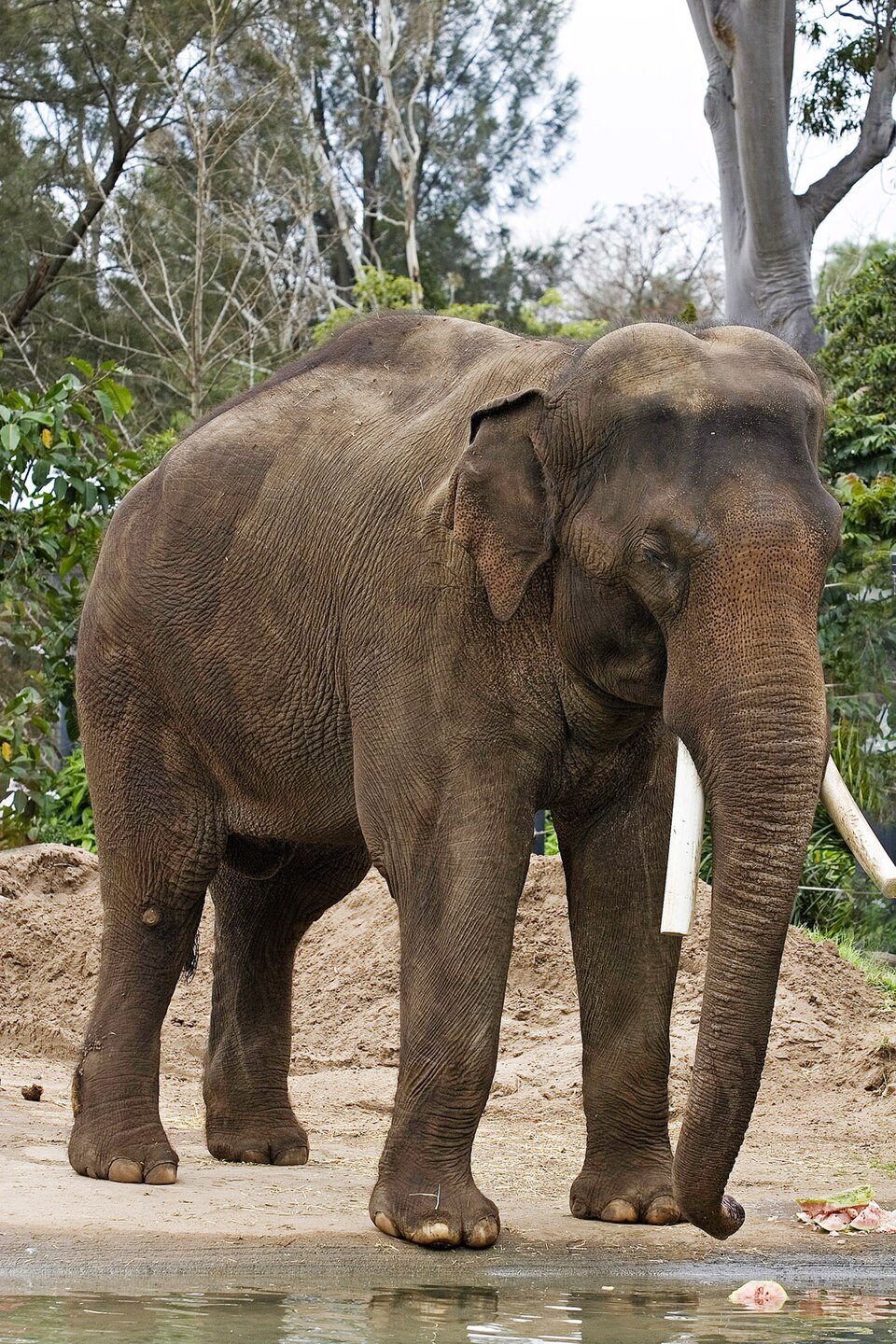
The Asian elephant (Elephas maximus) holds the gestation record among land mammals, with a duration of approximately 18 to 22 months depending on the individual. Excluding mammals, certain marine vertebrates or amphibians display comparable or even longer durations, but with a much greater margin of uncertainty.
Why such a long gestation in this species?
In the Asian elephant, the length of gestation is explained by the size of the newborn (around 70 to 100 kg at birth) and by the degree of neurological maturity already reached at this stage: the baby elephant must be able to move with the herd and suckle from the first hours. This prolonged in utero development also limits the frequency of births: a female only gives birth on average every 4 to 5 years, which makes the population particularly sensitive to any additional pressure on numbers.
This slow reproductive rhythm is a physiological characteristic specific to large mammals with developed brains and long lifespans, a phenomenon documented in proboscidians in general.
Publicité
Publicité
Even longer durations, but less well measured
Apart from terrestrial mammals, two cases are regularly cited as exceeding the elephant. The lizard shark (Chlamydoselachus anguineus), a deep-sea shark, has a gestation period estimated at around 3 and a half years, a figure based on a very limited number of observations and therefore surrounded by scientific uncertainty. The alpine salamander (Salamandra atra), for its part, can retain its embryos for 2 to 4 years depending on altitude and temperature, a record among amphibians linked to the slowing down of metabolism in cold environments. In both cases, the measurements are based on few individuals monitored and the ranges announced vary according to the studies, unlike the gestation of the Asian elephant, well documented thanks to monitoring in captivity and in reserves in Southeast Asia.
Any questions regarding the reproductive health of an animal, domestic or wild, should be addressed to a veterinarian.