
Presentation
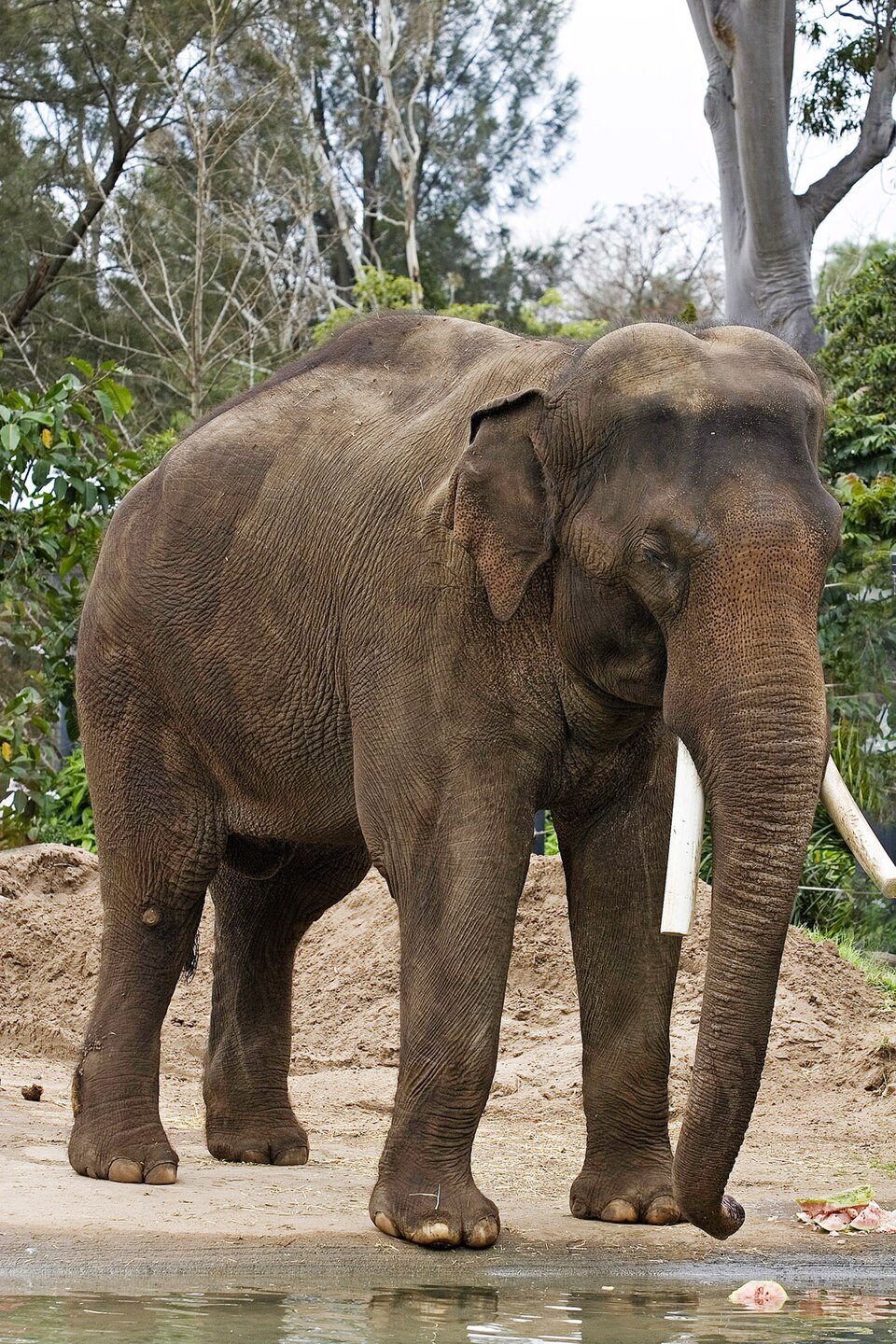
The Asian elephant is the largest land mammal on the Asian continent. This majestic animal is distinguished by its imposing size, prehensile trunk and large ears. It embodies power and wisdom in many Asian cultures.
The Asian elephant has thick gray-brown skin, often with lighter spots on the forehead and back. Its ears are smaller than those of the African elephant, and its forehead has a characteristic depression. The back of males is generally concave. The tusks are only present in males and some females.
Did you know?
Which animal has the longest gestation?
Characteristics
Indicative values: they vary by subspecies, sex and region.
Habitat and distribution
Asian elephant mainly frequents dense tropical forests and monsoon forests. It also adapts to semi-deciduous forests, wooded grasslands and shrubby savannah areas. These habitats provide it with the abundant vegetation and water necessary for its survival.
CURRENT RANGE
Asian elephant is distributed in thirteen Asian countries, mainly in India, Sri Lanka, Thailand, Myanmar, Malaysia and Indonesia. Its presence extends across the Indian subcontinent and Southeast Asia. Populations are fragmented and reduced compared to their historical extent.
Behaviour
The Asian elephant is a social animal that lives in matriarchal groups led by the oldest female. These groups are very united and show great mutual aid. Elephants communicate by infraspells, sounds inaudible to humans, as well as gestures and physical contact. They are intelligent and demonstrate a remarkable ability to remember and solve problems.
Reproduction
Gestation in Asian elephant lasts approximately 22 months, the longest of any land mammal. Females generally give birth to a single young after this exceptionally long period. The young remain dependent on their mother for several years and benefit from the collective attention of the group.
Peculiarities
The Asian elephant has a proboscis with more than 40,000 muscles, allowing it remarkable precision. It uses this extraordinary organ to grasp objects as fine as grass or as heavy as a tree branch. Elephants' unique fingerprints resemble those of humans and allow individual identification.
Threats and conservation
The Asian elephant faces severe threats: habitat loss due to deforestation and urbanization, human-elephant conflicts in agricultural areas, and poaching for ivory. The fragmentation of its habitat reduces populations and limits natural migrations essential to the survival of the species.
Numbers and trends vary across sources and regions. See the IUCN assessment for the latest reference data.
Gallery
1 documented photographs.
References
UICN — Liste rouge des espèces menacées
Profile updated 30 August 2026 · Reviewed by the TunisieVet editorial team.
Comments (0)
No comments yet.
CONSERVATION STATUS
Endangered (EN)
IUCN source, latest published assessment.
Species health
Documented diseases for this species.
This information is provided for educational purposes only and is not a substitute for a veterinary consultation. If you have any concerns about your animal's health, consult a veterinarian.
To discover around: Asian elephant
Videos, facts, stories and records linked to this species.
Similar animals
Other species documented in Animalpedia.

TunisieVet in your pocket 📱🐾 Access your veterinary services wherever you are. [ Download the app ]
Learn more