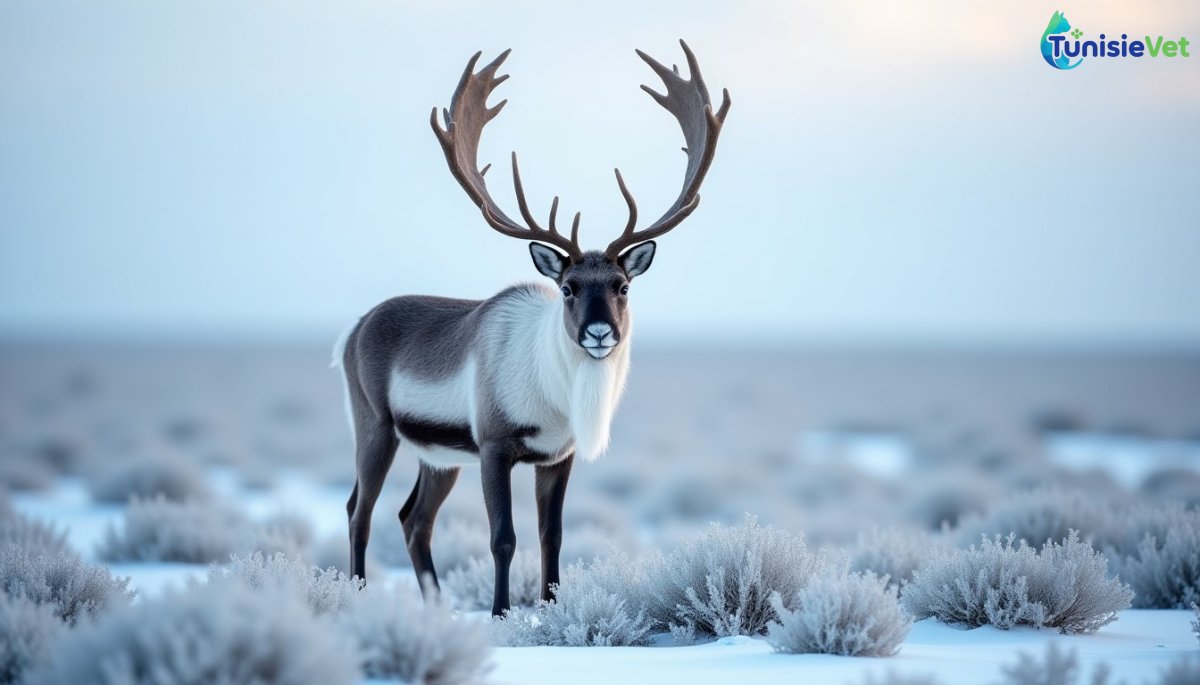
In reindeer, part of the ultraviolet light passes through the eye, while most daytime mammals block it. Why does this animal let in what we cannot see at all?
Publicité
Publicité
Most mammals active by day block UV light with their cornea and lens, which protect the eye. In reindeer, these structures let through up to about 60% of UV, enough to stimulate the cones responsible for colour vision. Physiological studies show that the retina responds to it.
In winter, reindeer feed mainly on a lichen, Cladonia rangiferina. This lichen absorbs UV, while snow reflects it, so to a reindeer the lichen looks dark against a bright background.
One hypothesis suggests this vision may have evolved to spot the lichen under snow, saving energy during foraging. This idea has not yet been demonstrated through behaviour.