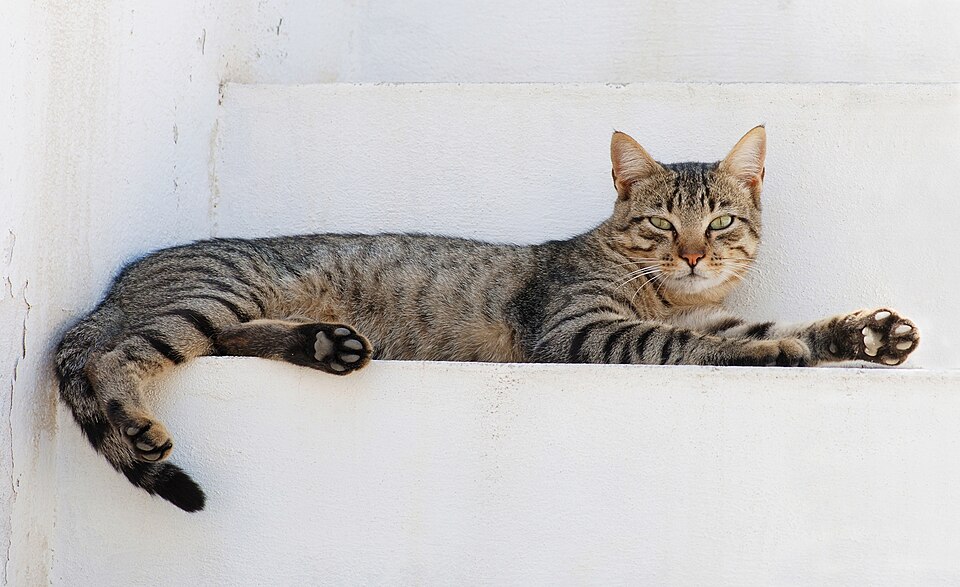
No, a cat sees nothing in absolute darkness: like any living being, it needs a minimum of photons for its retina to function. On the other hand, in dim light, it uses available light approximately six to eight times better than a human eye, which explains its reputation for exceptional night vision.
An eye optimized for low light
This performance is based on two adaptations. First, the cat's retina contains a very high proportion of rods, photoreceptor cells sensitive to the slightest variation in light but of little use for distinguishing colors or fine details. Then, behind the retina is the tapetum lucidum, a reflective layer absent in humans: it sends back to the photoreceptors the light that was not captured on the first pass, giving them a second chance to detect it. It is this same tapetum which, by reflecting the light of a lamp or headlights, makes the cat's eyes “shine” at night.
The pupil also participates in this system: it can open into a very wide vertical slit, letting in maximum light in the dark, then close into a thin line in broad daylight to protect the retina.
The price of this sensitivity
This adaptation to night vision is paid for in image quality. The high density of rods comes at the expense of the fewer cones, responsible for color vision and fine acuity: a cat therefore perceives a more restricted palette of colors than ours and distinguishes details less clearly, particularly at a distance. It compensates for these limitations with a very high sensitivity to movement, valuable for spotting moving prey even in very weak light. If in doubt about your cat's eyesight (collisions, hesitation to jump, abnormal pupils), the advice of a veterinarian remains essential to rule out an eye problem.