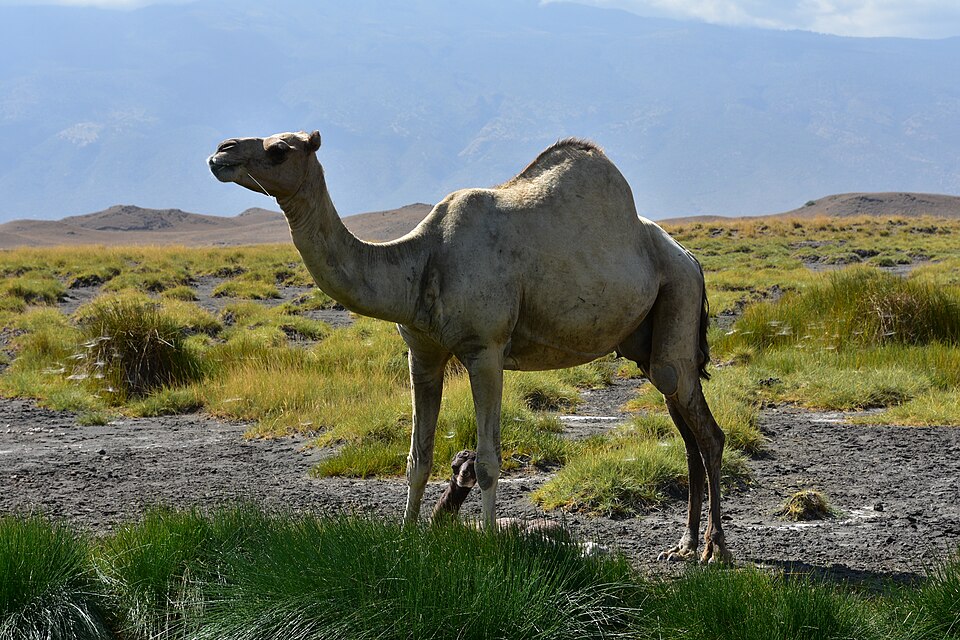
The camel is indeed the animal best known for going several weeks without drinking, but a small North American rodent, the kangaroo rat (genus Dipodomys), does even better: it can go its entire life without ever drinking a drop of free water, thanks to a metabolism that produces the water it needs.
Tolerate thirst versus producing water
The dromedary practices tolerance to dehydration: it accepts losing up to a quarter of its body weight in water without serious damage, an ability made possible by resistant oval red blood cells and thermal regulation which limits perspiration. It nevertheless remains dependent on a rapid replenishment of its reserves as soon as a water point is available.
The kangaroo rat follows a radically different strategy: it produces metabolic water by oxidizing the dry seeds on which it feeds. The biochemical degradation of carbohydrates and lipids releases water as a by-product, a mechanism common to all mammals but which this rodent exploits almost exclusively. Its kidneys, among the most concentrating known among mammals, reabsorb water with such efficiency that its urine is several times more concentrated than that of humans. It lives holed up during the day in a humid microclimate and only comes out at night, further limiting losses through respiratory and skin evaporation.
Two answers to the same desert challenge
This distinction illustrates two evolutionary solutions to aridity: the dromedary is an athlete of water endurance, capable of absorbing a massive deficit then compensating for it in a single dose; The kangaroo rat is an absolute thrifty, constantly balancing its water intake and output without ever depending on an external source. The first remains vulnerable if water is lacking for too long, while the second can theoretically do without any water point indefinitely, as long as its supply of dry seeds remains available.