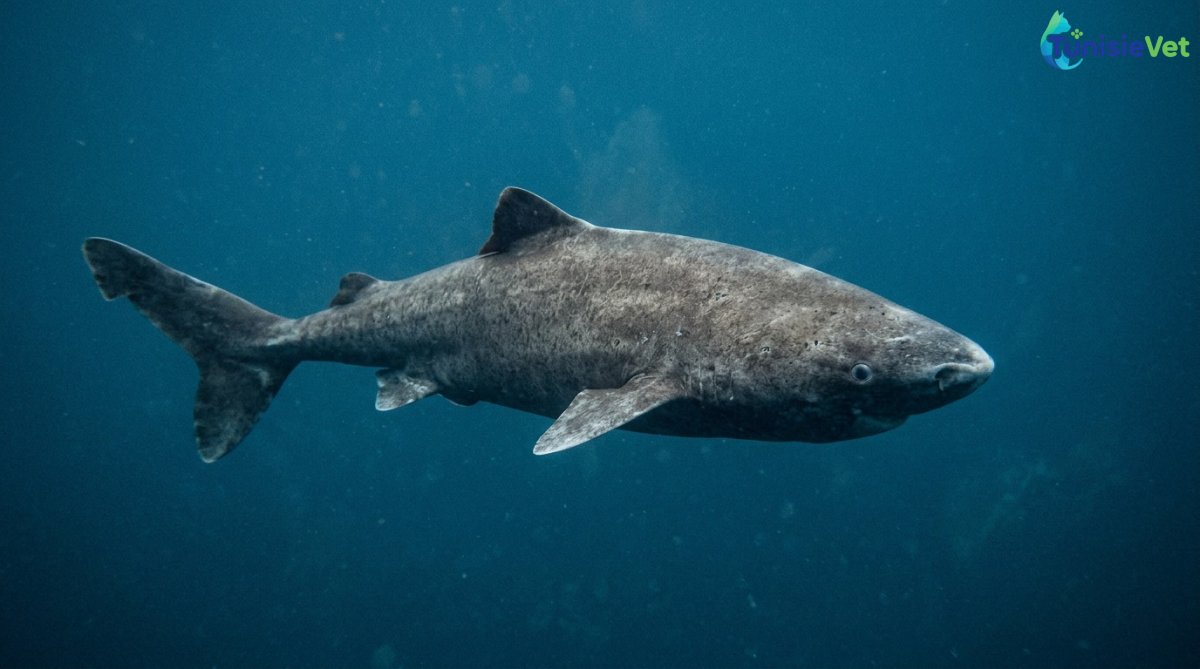
In the icy waters of the Arctic and the North Atlantic, a fish may have been swimming for more than two and a half centuries. How can an animal live that long?
Publicité
Publicité
It is the Greenland shark. In 2016, researchers dated the eye lenses of 28 females, accidentally caught between 2010 and 2013, using radiocarbon. Their conclusion: the species lives at least 272 years.
The largest individual measured, 502 cm long, is estimated at 392 years old, with a margin of error of 120 years. The authors themselves presented this range as uncertain: none of the 28 sharks was identified as being over 500 years old.
This shark's very slow growth and reduced metabolism, in cold, deep waters, are put forward to explain its longevity. This link remains a hypothesis. Living a long time does not prove that aging is slowed, and no one has measured that in this shark.